Ubuntu Linux 25.10 "Questing Quokka" Has Reached End of Life
The interim release is officially dead. Here’s what it means for your systems and how to migrate to Ubuntu 26.04 LTS before the security risks pile up.
Ubuntu 25.10 "Questing Quokka" officially reached its end of life on July 9, 2026. Nine months after hitting the shelves last October, the interim release is now officially on the chopping block. If you're still running it, the clock is ticking on security patches and active repositories.
Non-LTS Ubuntu versions follow a strict nine-month lifecycle. That’s just how Canonical structures the roadmap. Once EOL hits, your machine stops receiving security updates. The package mirrors are already archived, so you’ll need to point your sources to old-releases.ubuntu.com if you’re stuck trying to reinstall. Systems don’t brick overnight. But leaving an unpatched OS running in a connected environment is a slow walk toward trouble.
Canonical unblocked the graphical upgrade path to Ubuntu 26.04 LTS "Resolute Raccoon" back on May 14. You can trigger it through the standard Software Updater application. Hit Upgrade, confirm the prompt, and let it run. Expect it to take an hour, depending on your download speeds. Back up your data first. Head here to the official migration guide if you need step-by-step instructions.
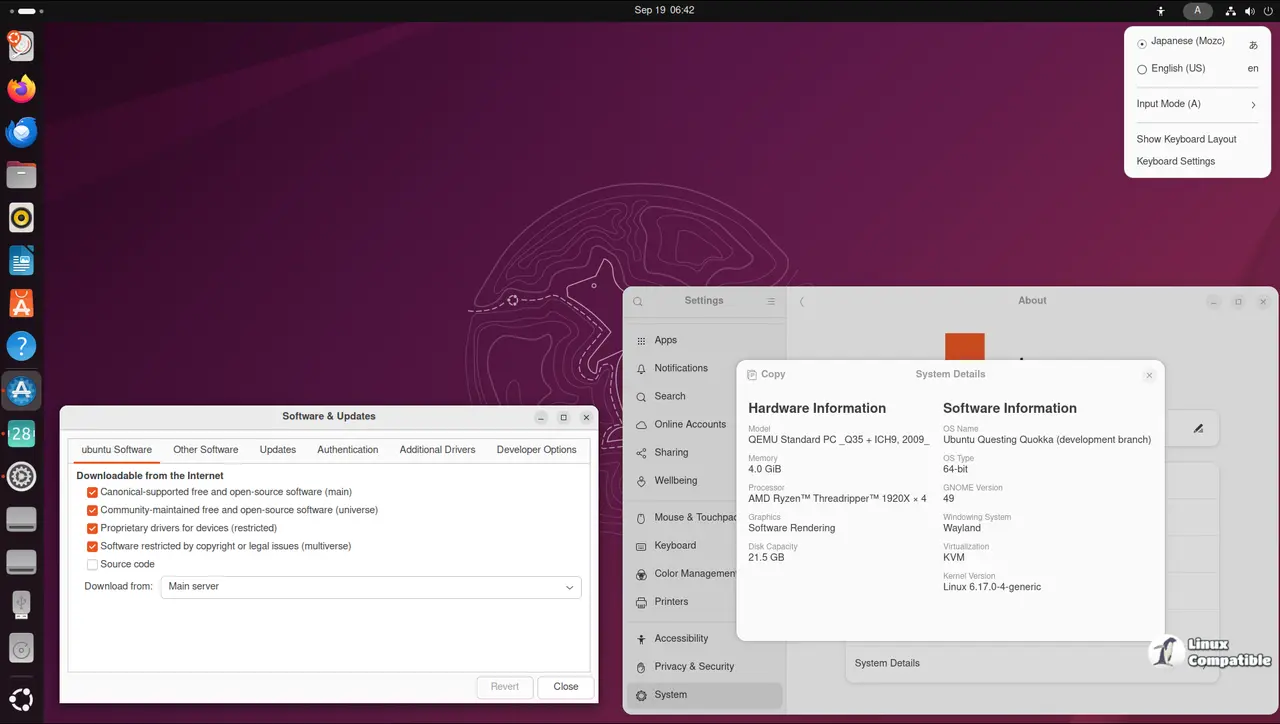
What Changed in Questing Quokka
I remember testing early Quokka builds back in August. The Wayland session was snappy, but the Rust toolchain had a few rough edges that only smoothed out after the October updates. Interim releases are essentially beta testing with extra steps, and 25.10 was no exception.
It shipped with GNOME 49 as the desktop environment. Wayland is the default session now, and X11 is disabled out of the box. Canonical also swapped out several traditional Linux utilities for Rust implementations. sudo became sudo-rs, GNU coreutils got rewritten as rust-coreutils, and the default terminal switched to Ptyxis. You’ll also notice wget vanished from server installs, replaced by wcurl, while Byobu and GNU Screen gave way to tmux.
Other behind-the-scenes shifts include Chrony taking over time sync, Dracut replacing older initramfs tools, and APT 3.1 shipping with custom history features. The installer added an experimental TPM-backed full-disk encryption option, and Raspberry Pi builds got a new tryboot mechanism for testing kernels without overwriting your main setup. It was a lot of moving parts for a six-month cadence release.
The launch wasn’t entirely smooth. Flatpak hit an AppArmor snag on day one, and a buggy date command in rust-coreutils broke automatic update checks until mid-October. Canonical patched both quickly enough. The real takeaway is that non-LTS versions push boundaries. They just don’t hang around long enough to settle in.
The LTS Successor and What Comes Next
26.04 LTS "Resolute Raccoon" dropped on April 23. It’s a proper long-term support release, meaning five years of free updates from Canonical. You can stretch that to ten years with Ubuntu Pro, or fifteen years if you fork out for the legacy subscription. GNOME 50 ships with it, and X11 support has been completely pulled. That might bite users clinging to legacy displays or older hardware.
The kernel is 7.0, and the recommended RAM floor has climbed to 6 GB. Keep in mind that Canonical says they are holding the 24.04 to 26.04 upgrade path back until after the 26.04.1 point release lands in August. They want to ensure the base is stable before opening the floodgates to enterprise and desktop users alike.
Ubuntu’s naming convention has always leaned toward animals, but 26.04 carries a heavier weight. It is named as a tribute to Debian and Ubuntu release manager Steve Langasek before his passing. It’s a quiet nod from the community that sticks with you longer than most software updates.
If you’re still debating whether to stay on an EOL interim release, the answer is pretty clear. The security window is already closing. Upgrade to 26.04 LTS if you want actual maintenance. Livepatch is now available on Arm64, so you can patch the kernel without a full reboot. The roadmap moves forward regardless of your hardware. Make sure you’re riding it, not watching it fade.


