Valve released SteamOS 0.4.4 for the Steam Frame, adding a user-controllable Presence Sensor Sensitivity setting with a new "high sensitivity" mode. The option targets the headset's most common complaint: the screen going black when you look down or turn quickly, including issues for glasses users with spacers. The update also bundles cumulative fixes worth noting, up to 12% better battery efficiency, streaming reliability work that pairs with SteamVR 2.18.2, and new accessibility choices like dominant-eye selection.
Valve pushes SteamOS 0.4.4 beta to Steam Frame, finally giving you a dial for the black screen problem
Valve released SteamOS 0.4.4 for the Steam Frame today. It's the fourth beta in the headset's dedicated "0.4.x" branch, and while the update quietly bundles a pile of streaming and battery fixes, the thing Valve is actually leading with is a setting. You can now control the Presence Sensor sensitivity, and there's a new "high sensitivity" option built specifically to stop the screen from going black when you look down or turn your head.
For anyone who's owned a Frame since September, that's not a minor grievance. It's arguably the single most common complaint about the headset. You put it on, you lean in, and suddenly you're watching a black mirror until the sensor decides you're "present" again. Valve heard it. Now it's handing you the controls.
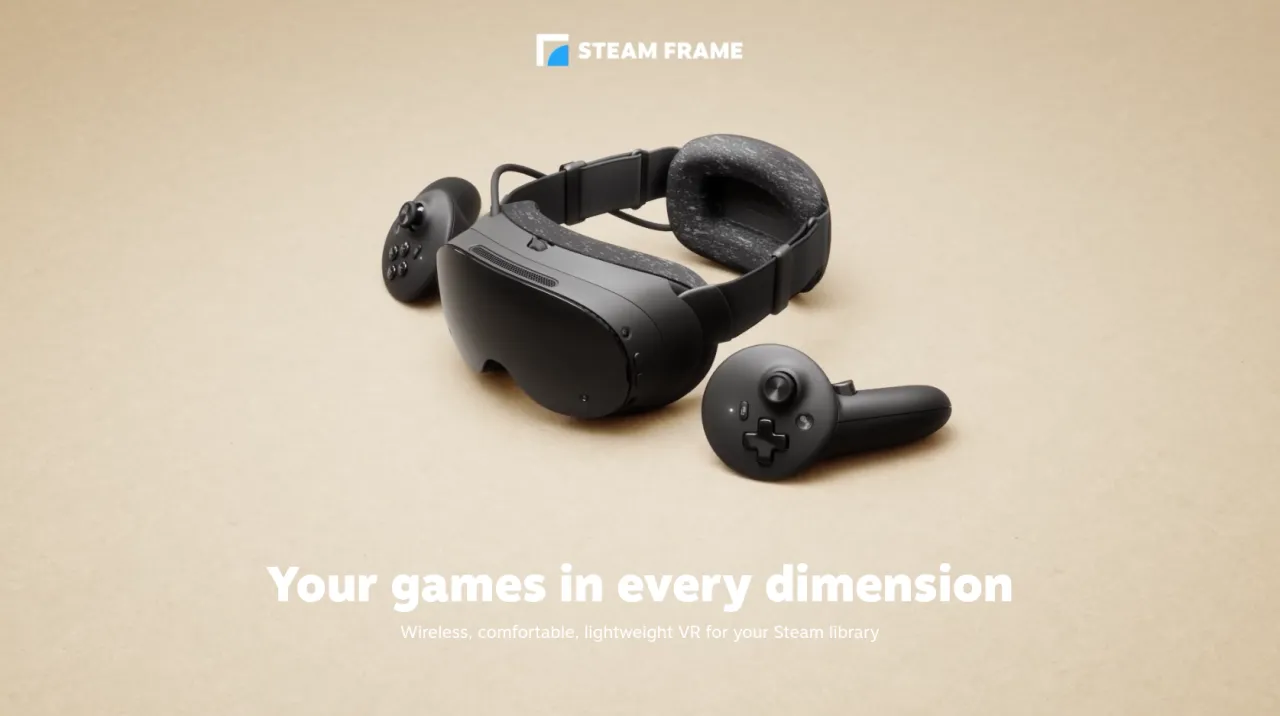
The headline fix, and why it matters
The Presence Sensor figures out whether your head is actually inside the headset. That's what flips the displays on and off. The problem is that fast turns and downward glances trip it into thinking you've stepped away, so the image dies mid-game. Glasses users especially noticed it, since adding a spacer changes how close your face sits to the lenses and throws off the sensor's assumptions.
The new setting lives under VR Settings => Startup / Shutdown => Presence Sensor. "High sensitivity" widens the range of conditions under which the displays stay lit. That should cover the spacer crowd, the quick-turners, and everyone else who's tired of blinking their game back to life.
The rest of 0.4.4 itself is thin on paper, the official post lists tooltip sort ordering as the only brand-new thing. But that's the kind of detail that only matters if you follow this stuff closely. The real value is in the cumulative 0.4.x work Valve surfaces alongside it.
Everything else in the bucket
Let's talk battery, since it's the metric that actually shows up on the spec sheet as a promise. The 0.4.x betas now claim up to 12% better power efficiency and longer battery life during both streaming and local play. Results vary by framerate and content, so treat the number as "up to" rather than a guarantee. Still, it's the kind of quantified claim Valve rarely makes, and for a standalone all-day VR headset it's worth paying attention to.
Streaming is getting harder too. Valve is fixing "Error 17," the connection failure that's plagued VR streaming for a while. There's a catch, though: on the PC side you also need to opt into SteamVR 2.18.2 or later. As of release, that version was sitting on the SteamVR [beta] branch, so you'll want to check there first. Valve also patched the wireless adapter connectivity issues that hit users in some countries, improved audio reliability while streaming, smoothed spectator view by default, and fixed the keyboard vanishing mid-stream.
There's an accessibility stretch as well. You can now limit eye tracking to a single eye via VR Settings => General => Track Dominant Eye Only, and pick your Dominant Eye separately, which controls what shows up in spectator view and screenshots. Both sit behind "show advanced settings."
Head here to the full note list if you want the granular stuff, controller bindings for Google Earth VR and Thumper, dashboard flicker, the embedded browser crash fixes. The point is that 0.4.4 reads less like a feature drop and more like Valve methodically sanding down the rough edges it collected over the first two months of sales.
For the record, the Frame isn't some unproven concept anymore. Announced in November 2025 and launched in September, it's Valve's standalone, wireless-first headset with a Snapdragon 8 Gen 3, 16 GB of RAM, and dual 2160×2160 panels running up to 144 Hz. It went up against Meta Quest territory using inside-out tracking rather than the external trackers its old Index relied on. The 256 GB kit ran $1,059, the 1 TB kit $1,299, and each came with controllers, a Wi-Fi 6E adapter, and Half-Life: Alyx. The charger's still a separate ~$29 purchase, which is a small annoyance. And the reservation/lottery launch drew its share of scalpers flipping slots at inflated prices, for what it's worth.
Here's the thing worth sitting with: despite shipping hardware and rolling out software continuously since September, Valve hasn't slapped a 1.0 on this SteamOS build. It's 0.4.4, sitting on an opt-in beta channel by design. That's intentional, and it mirrors how it's treated Steam Deck and Steam Machine. The OS lives in public. You get fixes fast, but you also know that some of these features are still being tested before they're ready for everyone.
If you want to try it, opt in through Settings => System => System Update Channel and pick Beta. It's not a forced rollout, so you stay on stable unless you choose otherwise.
It's a reasonably satisfying update on balance. The Presence Sensor tuning addresses the complaint that's annoyed people the most since launch, and the battery and streaming fixes are exactly the kind of end-to-end polish that keeps a device like this from feeling half-baked. It's arguably competing with far more mature VR software at this point. Not cheap, given the hardware it pairs with, but the small form factor and the fact that Valve is actually listening do help somewhat.
The 0.4.x betas keep coming, so keep an eye on the Steam News page if the black-screen fix doesn't fully land for you, this looks like an ongoing conversation, not a one-and-done patch.


