Slackware 16 Alpha 1 dropped on September 5, 2026, bringing the oldest maintained Linux distribution into the modern era with Linux 6.18 LTS, GCC 16.2.0, glibc 2.44, and binutils 2.47. Following the nine-year gap between versions 14 and 15, the project is pushing a faster release cycle, though it still retains its traditional LILO bootloader and flat-file pkgtools package manager. The repository contains roughly 1,891 packages totaling 5,099 MB compressed, with KDE Plasma 6.7.4 and Frameworks 6 dominating the tree after landing in June. Alpha 1 is now available for testing, so expect the usual breakage, and the ISOs are ready to download from the official Slackware build directory.
Slackware 16 Alpha 1 Drops, Piles On Modern Toolchain and Linux 6.18
The oldest maintained Linux distribution is aging like fine wine, with a fresh build environment and a full KDE Plasma 6 stack now sitting in the testing repo.
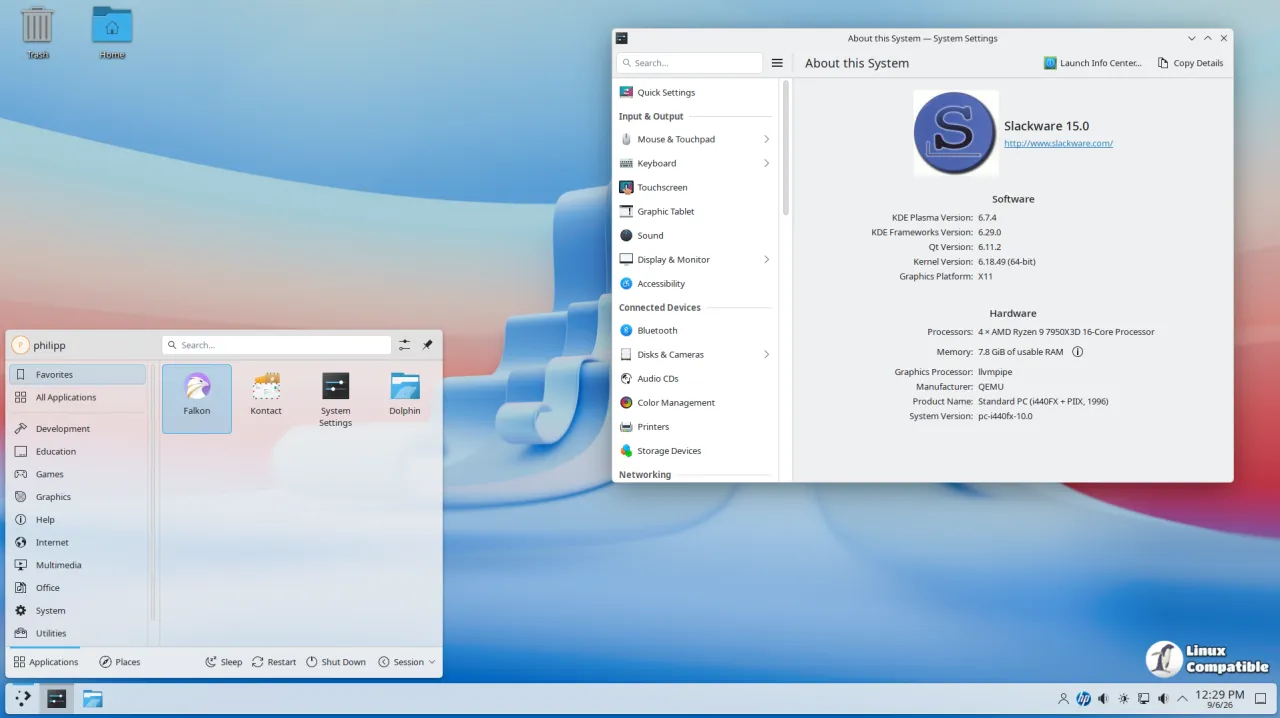
Patrick Volkerding dropped Slackware 16 Alpha 1 on September 5, 2026, and the diff is immediate. The oldest continuously maintained Linux distribution is now running Linux 6.18 LTS as its default kernel, alongside GCC 16.2.0, glibc 2.44, and binutils 2.47 across the entire package tree.
Volkerding’s changelog entry was characteristically brief. He noted he rebuilt everything with the new toolchain and offered a dry remark about a light at the end of the tunnel. It’s the exact same tone he’s been using since the dial-up days, which is exactly why Slackware fans still check the build directory every few months.
The development cadence also deserves a look. Slackware 15.0 shipped in February 2022. The gap between 14 and 15 was roughly nine years, give or take a few months. Volkerding has hinted that 16 won’t follow that same glacial pattern, and Alpha 1 is already available for anyone willing to break their system.
What’s Actually Different
The toolchain bump is the headline. Every package in the repository was rebuilt against GCC 16.2.0, glibc 2.44, and binutils 2.47. That kind of sweeping rebuild usually shakes out compatibility issues in the first few alpha cycles, but Volkerding has been doing this long enough to know which compiler flags cause the quiet explosions.
Linux 6.18 LTS now boots by default. It’s a substantial jump from earlier kernels and gives the build a proper long-term support foundation instead of chasing stable branch tail ends. Mozilla Firefox, Thunderbird, and libxml2 also got routine security and bug fix updates to match the rest of the tree.
The desktop situation is heavier now. KDE Plasma 6.7.4 with Frameworks 6 landed back in June 2026, and the Xfce 4.20 libraries are bundled alongside it. Volkerding credited alienBOB and LuckyCyborg for porting the Plasma 6 build scripts, noting they had been battle-tested by Slackware users for years. X.org Server 21.1.24, Wayland 1.26.0, and FFmpeg 9.0.1 round out the multimedia stack.
Despite the modernization, the foundation remains stubbornly traditional. LILO is still the default bootloader. The pkgtools flat-file package manager hasn’t been replaced. And make_world.sh, the script that rebuilds the entire OS from source, is still there for people who want to.
It’s a rather heavy lift to maintain both a 2026-era compiler stack and a 1990s-era package philosophy, but that tension is exactly what keeps Slackware interesting. The lack of upgradability hurts casual users, though the ability to compile everything yourself is a feature, not a bug.
The Numbers Game
The full Alpha 1 ISO contains roughly 1,891 packages sitting at about 5,099 MB compressed. The KDE category alone claims 497 of those packages, which is close to a quarter of the entire tree. That reflects how deep the Plasma 6 integration actually went when it landed back in June.
Other categories break down as expected: l (libraries) has 504 packages, x (X11) claims 310, n (networking) holds 166, a (base system) sits at 130, d (development) rounds out at 91, ap (applications) carries 89, xap (X applications) takes 54, and xfce holds 33.
The timing also lines up neatly with the recently released Zenwalk Current Milestone 2026 ISO. Zenwalk pulls directly from upstream Slackware current, and both ISOs hit the internet on September 5. Zenwalk adds its own flavor with the BORE scheduler, Xfce 4.20 as the default, and Flatpak baked into the installer, but the base is unmistakably Slackware.
Not cheap to maintain, honestly. But the build logs show the team is moving faster than the historical 9-year gap would suggest. If you want to test the waters, the ISOs and PACKAGES.TXT files are already sitting in the build directory at slackware.com. Keep in mind that this is an alpha, so expect breakage.
Head here to grab the ISOs and start testing before the beta cycle tightens things up.


