Red Hat released RHEL 10.3 and RHEL 9.9 on November 11, 2026, delivering point updates to both supported mainlines in lockstep. The headline additions include sealed images for image mode now generally available in RHEL 10.3, plus an MCP server for RHEL that moved to general availability for production diagnostics. The releases also expand post-quantum cryptography around CNSA 2.0 compliance and refresh developer toolchains like GCC 16.2, LLVM 22.1.8, and Rust 1.97 across both lines. Available through the Red Hat Customer Portal for active subscribers, both ships come with validated Leapp upgrade paths and a 60-day evaluation edition for non-subscribers.
Red Hat ships RHEL 10.3 and 9.9 with sealed images and AI-augmented security
The point releases add generally available sealed OS images, a production-ready MCP server, and a self-managed terminal assistant for air-gapped shops.
Red Hat rolled both Red Hat Enterprise Linux 10.3 and 9.9 on November 11, and the framing makes it clear where the company's head's at these days: defense, plus a bit more defense. The two point releases hit at the same time on purpose, layering AI-augmented diagnostics and cryptographic integrity onto Red Hat's two still-supported mainlines.
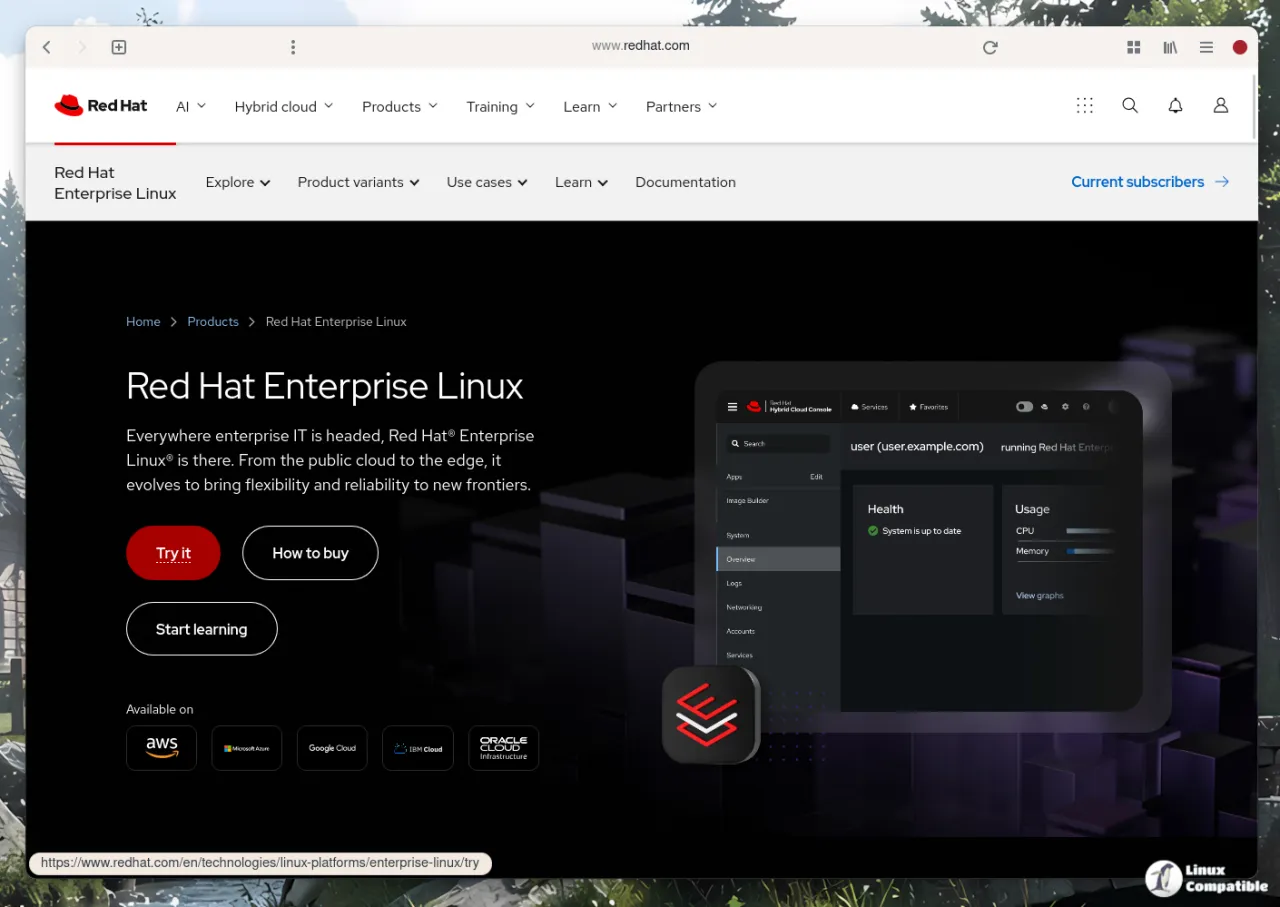
It's a deliberate lockstep. RHEL 10 shipped in May 2025 as the current generation. RHEL 9, now in its ninth point release, still rides in Full Support. Red Hat keeps both moving together so shops on either track get the same security and tooling wins. And no, you're not imagining staggered point releases, the company simply wants both lines current before the next cycle begins.
For the record, a huge share of the Fortune 500 runs RHEL or an RHEL-derived system, and plenty of binary-compatible distros like Rocky and AlmaLinux are built from it. That's beside the point for those already on the real thing, though, so let's get to what actually shipped.
Sealed images hit general availability
The one pulling in the most third-party attention is sealed images for image mode, now generally available in RHEL 10.3. A standard install stays unlocked, meaning any root user can make persistent changes. Default secure boot usually signs only the kernel, so the chain of trust from firmware never reaches your root filesystem or the apps stacked on top. Sealed images close that gap with file-level precision.
Built on composefs and fs-verity plus systemd tooling, the digest of the OS container image gets baked into the signed Unified Kernel Image at build time. At runtime every file is checked against that digest. Change a single file after the image ships and the kernel simply returns an I/O error. No log entry. No serving. The file is just unreadable.
The seal covers the base OS and everything layered on top, but not writable config in /etc or runtime state in /var, that stays configuration management's job. The signing chain is yours, too: you generate the keys, you sign the images, and no vendor sits in your chain of custody.
An AI assistant that can actually investigate
The MCP server for RHEL moved from Developer Preview to general availability. It connects AI assistants directly to system data, with access governed by default so a chatbot can't wander the whole host unmonitored. It ships as an RPM in the RHEL extensions repo and installs alongside goose, the open-source Agentic AI Foundation agent, using a plain dnf command.
What makes it worth more than a basic query tool is the historical Performance Co-Pilot data baked in. The assistant can mine past performance events to pin down the root cause of an intermittent problem, without you manually correlating logs.
You'll see two client paths here. The original read-only command-line-assistant package is still supported but is receiving no new features. The newer goose-redhat package is the extensible one, and it's clearly where the momentum is heading. Keep in mind that this shift from "copy-paste your logs" to "AI that investigates a live host" is the real story of RHEL Lightspeed maturing.
Keeping your data local
Red Hat is also offering a self-managed version of its terminal assistant in Developer Preview. You bring your own inference, keeping operational context and model guidance inside air-gapped or disconnected perimeters. It's a direct shot at the digital-sovereignty crowd: finance, healthcare, government, defense. The hosted path stays available for shops that aren't running in the clouds they can't touch.
Quantum readiness is shipping
Post-quantum cryptography rounds out the headline themes, and RHEL 10.3 brings a batch of ML-KEM and ML-DSA support folded into the Go toolchain. That's specifically aimed at "harvest-now, decrypt-later" attacks, where adversaries stash your ciphertext today and wait for a quantum machine to crack it later.
The list runs through ML-KEM-768 and ML-KEM-1024 key exchange in IKEv2 with libreswan 5.4, hybrid PQC key exchange for SSH in FIPS mode, the ML-DSA signature scheme in Go's crypto/mldsa package, and TLS 1.3 with PQC for remote audit logging. Red Hat frames all of it around CNSA 2.0 compliance, the NSA's updated quantum-resistant standards.
Toolchains on both lines
The developer stack got a real refresh on both RHEL 10.3 and RHEL 9.9. GCC jumps to 16.2 with C++26 Reflection and Contracts support. LLVM lands at 22.1.8. Go is at 1.27.3 with the PQC additions, and Rust sits at 1.97 for its memory-safety protections. You also get GDB 17.2, .NET 11, Node.js 26 LTS, PHP 8.4, Grafana 12.4.3, and PCP 7.1.5.
On top of that, grafana-pcp 6.1.0 ships prebuilt dashboards for NVIDIA GPU metrics and vLLM inference server performance. It's a genuinely useful touch for AI/ML teams actually running inference workloads on the host.
Where you can go from here
Validated Leapp upgrade paths round out the announcement. If you're on RHEL 9.9 you can jump to 10.3, and 8.10 systems can move to 9.9. These are the "standard routes" Red Hat wants to keep upgrades predictable and supported.
The lifecycle math is worth a glance. RHEL 8 is already in Maintenance Support, with Full Support having ended back in 2024. RHEL 9 stays in Full Support until May 2027, and RHEL 10 gives you Full Support until May 2030. So both new Leapp paths either catch customers stepping off an aging line or upgrading within the current one.
Red Hat also leans on its paid extended-life tools, like RHEL Extended Life Cycle, Premium, and the RHEL Long-Life Add-On, for shops managing systems well beyond standard support.
It's a lot to pack into two point releases, but it lands on a foundation most shops already run. Sealed images are genuinely useful for appliance-style deployments, and the MCP server's tie-in to historical PCP data is the piece that separates a real troubleshooting agent from a fancy help menu. The self-managed assistant stays in Developer Preview, so treat it as a promise rather than a production tool for now.
Both releases are available through the Red Hat Customer Portal for active subscribers. If you don't subscribe yet, there's a 60-day evaluation edition you can try first.
Head here to the official Red Hat announcement, written by Gil Cattelain, for the full writeup, and here to try the evaluation edition.


