Bazzite ships a next-day patch to fix regressions from its Fedora 45 / kernel 7.3 leap
Bazzite 45.20261112 patched a boot hang and a Framework display regression within 24 hours of jumping to the new OGC kernel and Nvidia drivers.
A day after Bazzite jumped onto Fedora 45's successor stack, Universal Blue has already shipped a patch to fix what that leap broke.
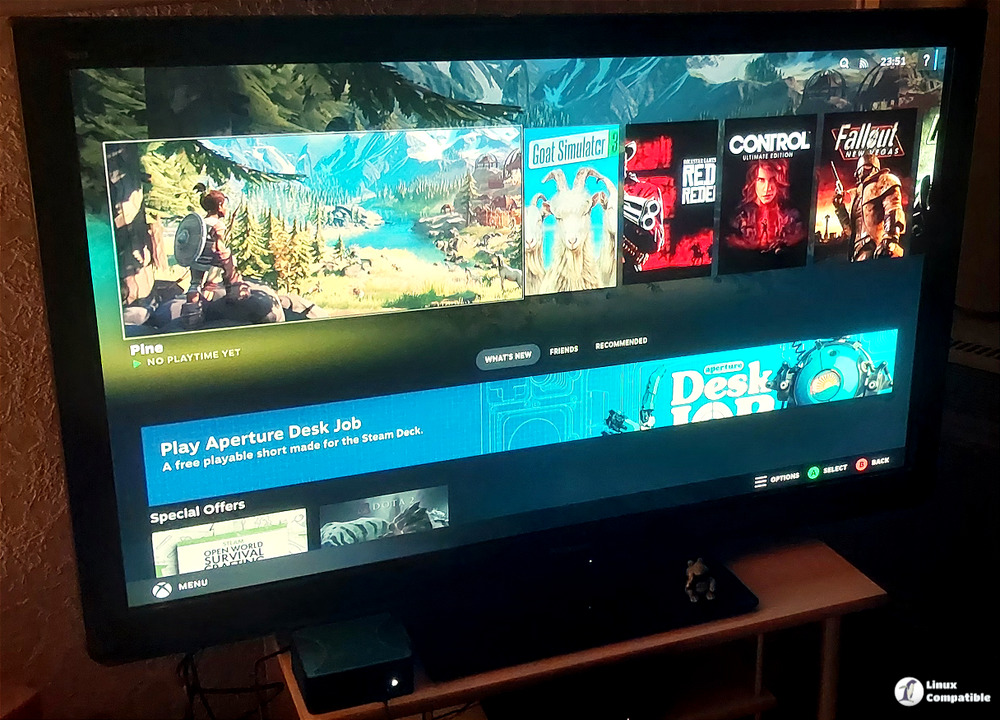
Bazzite 45.20261112 landed today at about 02:55 UTC. The build before it, 45.20261111, went out just 24 hours earlier on 11 November and carried the distro's biggest jump in months: the OGC Linux 7.3.3 kernel and Nvidia's 620.70.06 open drivers. The follow-up's changelog says almost nothing changed. Kernel. Nvidia drivers. Gamescope. Mesa. Every headline package still matches yesterday's numbers.
Peek past the version table and you'll find a different story. This is the engineering team running back the same day to patch the regressions its own release introduced.
A textbook example of the immutable update loop
Bazzite is a custom Fedora Atomic image from the Universal Blue project, led by Kyle Gospodnetich around the forums. Rather than a full independent distribution, it layers gaming configuration, drivers and patches onto an immutable Fedora base (Kinoite for KDE, Silverblue for GNOME), then repackages everything as signed container images. The appeal should feel familiar: SteamOS-like stability without the stale packages and locked-down package manager that tend to annoy people.
What makes that safe is the rollback safety baked into the architecture. Images build entirely in GitHub Actions, are signed with sigstore's cosign, and you can roll back to any build from the last 90 days. A broken update stops being a disaster. That is precisely what happened here.
Issue #6304 went live on 11 November, the day of the kernel jump. A reporter said Bazzite "hangs on boot after today's update", wedged at the bazzite-hardware-setup service with no timeout. A contributor named @Aleviz93 then pulled logs from a Lenovo laptop packing a Ryzen 9 5900HX and an RTX 3080 Mobile, and the culprit came into focus. The new hardware-setup unit reapplies ZRAM settings on every boot, appends a tsc=directsync kernel argument through rpm-ostree, and the transaction finishes. The unit just never reports Finished. The system stalls two to three minutes after hardware setup begins.
The fix corrected a faulty TSC (time-stamp counter) check that misread whether the tsc=directsync argument had already been applied, and it bumped the hardware-setup version so the loop stops. Issue #6304 closed as completed the same day.
A boot-breaking regression reported one morning, patched before the next build shipped. That turnaround is the whole point.
Four fixes, one feature bump
The boot hang was not the only casualty of the 7.3 move. That kernel leap also woke an old AMD foe: Panel Replay instability. The commit simply disables panel replay on Framework laptops to dodge a regression that has been biting amdgpu machines across newer kernels. Intel shipped a parallel fix for the same class of problem back in Linux 7.0, but Bazzite went the hardware-specific route instead.
Two more issues closed out the day. Issue #6302 came from an AMD FX-8350 / RTX 4060 rig running KDE Plasma 6.8.2, and it reported stray RGB coloring leftovers when Konsole autostarts. Bazzite's fix sets TERM=dumb for the glow banner invocations so the terminal stops second-guessing its own colors.
Then there was Bazaar, the app installer. When Bazaar hands a VS Code or VSCodium install off to Homebrew, it now trusts the ublue-os tap automatically. The dependency bot caught the gap: earlier work had added the trust step to the ujust recipes and the Bazzite Portal but missed Bazaar's own hook. Issue #6307, opened from an Acer Nitro V15, was closed the same day.
The one genuine feature bump in the whole release is PowerStation 0.10. The status-bar hardware overlay jumped from 0.9 to 0.10, a full major version. It's the freshest thing in the stack by a wide margin, though honestly it's a minor overlay tweak rather than anything that changes how you play.
On top of the fixes, all images took up their usual batch of routine refreshes. NSS moved to 3.133.0-1 and nspr to 4.39.0-10, the security-relevant libraries, alongside vim, VirtualBox guest additions and a GNOME thumbnailer.
Bazzite can build multiple times per week during active development, so a one-day gap between releases isn't remarkable. A next-day regression fix, though, is worth pausing for.
Most of the time in a release like this, no news is good news. Kernel, Nvidia drivers, Gamescope and Mesa, all frozen. Bazzite deliberately left the major components untouched and only shifted what was needed to stabilize. It's arguably a cleaner look at the project's design than any feature dump could offer.
But at the same time, that kernel upgrade carries baggage. The OGC 7.3 line brings Valve's VRAM-management work and stronger gaming support, yet it exposed a real boot hang and a display regression. Those are exactly the hardware-specific headaches that bite Bazzite's handheld and laptop crowd hardest. Keep in mind that your hardware is only a problem if it lands on the affected list, and you'll want to watch the next build if so.
To move onto the latest stable image, existing users run a two-line helper straight from the terminal:
bazzite-rollback-helper rebase stable
You can pin this exact build instead with bazzite-rollback-helper rebase 45.20261112. Anyone wedged on a pre-fix build can still roll back to something like 45.20261105, provided it sits within that 90-day window. Secure Boot users should read up on the project's docs before rebasing, and for what it's worth, the custom key password is simply "universalblue."
Head here to the Bazzite GitHub release page for the full changelog and commit history, and here to download an ISO image for a fresh installation.


