Valve shipped Proton 11.0-3 today, the second maintenance bump in the Proton 11 series that stabilizes dozens of changes previously only in Experimental and reverts about twenty regressions from the initial launch. The update adds verified support for fifteen more titles, mostly indie, visual-novel, and VR games, while patching a wide range of audio, rendering, controller, and VR issues. A forward-looking highlight is opt-in 32-bit OpenXR support, gated behind the PROTON_USE_WOW64=1 flag, riding on the new WoW64 mode from Wine 11.0.
Valve ships Proton 11.0-3, a major compatibility update that keeps Windows games running on Linux
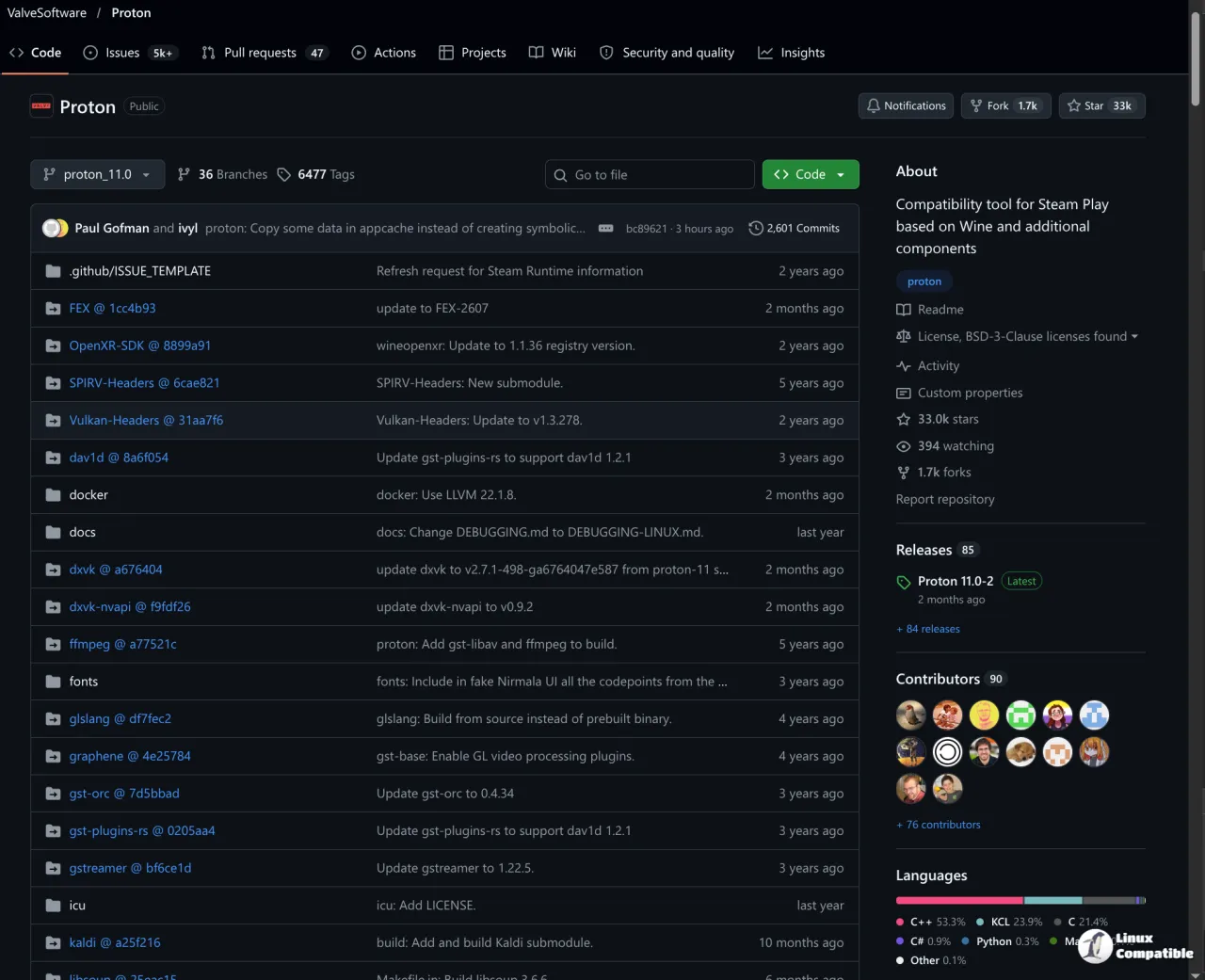
Valve has shipped Proton 11.0-3, the latest stable release of the compatibility layer that lets Windows games run on Steam Deck, SteamOS, and a steadily growing pile of other Linux hardware. It landed today, published by Valve engineer Ivan "ivyl" Solonkin, and it's the second maintenance bump in the Proton 11 series since July.
The story here is less "here's a shiny new feature" and more "we cleaned up the mess." The update reverts about twenty regressions that the original Proton 11 launch introduced, and it locks in changes that had previously lived only in Proton Experimental after QA said they were ready. Fifteen more games become playable out of the box.
What actually changed
The new playable titles skew indie, visual-novel, simulation, and VR. Highlights include Hero Plus, Soul Land: Awakening World, Blair Witch VR, The Eden of Grisaia, and 8Bit Fiesta – The Drinking Game. These are exactly the kind of smaller releases where a single per-title tweak in Proton separates "runs" from "runs and plays cleanly with a controller."
Steam Input got controller tweaks for Far Cry New Dawn, Binding of Isaac: Rebirth, and Split/Second. Then there's the big bucket of game-specific fixes spanning audio, rendering, controller detection, launchers, and VR. Audio cuts out in Touhou Danmaku Kagura Phantasia Lost, now fixed. A memory leak in Plan B: Terraform, fixed. A crash in Terminator: Dark Fate – Defiance, fixed. There are a dozen or so of these crammed into the AMD, Steam Deck, and VR categories alone.
The regression list is the honest heart of this release. Proton 11's initial pull-in of dozens of Experimental fixes had broken a handful of already-working games, so Valve spent this version undoing the damage. Deus Ex: Mankind Divided works with AMD GPUs again. Lords of the Fallen is playable. Command & Conquer: Generals lost its menu glitches. Far Cry stops turning uninteractable when you alt-tab back on SteamOS. It's unglamorous work, and that's precisely what makes the layer feel reliable.
Two things stand out more than the rest. Beyond the regressions, there's a forward-looking change tucked into the changelog: early support for 32-bit OpenXR. It's opt-in, requiring you to set PROTON_USE_WOW64=1 on x86. OpenXR is the VR standard that lets headsets talk to games through a single API, and enabling the 32-bit path widens support for older DX9-era VR titles. It's deliberately marked "early," which is close to Valve-speak for "don't file a bug if it breaks."
Under the hood, the layer refreshes a stack of components. DXVK and VKD3D-Proton ride their latest Proton 11 branches, VKD3D moves to 2.1, Wine Mono hits 11.3.0, Xalia jumps to 0.5.0.1, and FEX lands at 2610.
The bigger picture
That last one, FEX, is the interesting long game. Proton 11.0-3 sits on Wine 11.0, which arrived January 13, 2026 after roughly 6,300 changes. Wine 11 finished out the new WoW64 mode, feature parity for 32-bit-on-64-bit, plus 16-bit support, which is exactly what makes those 32-bit OpenXR paths possible, and it added real Wayland support, clipboard handling, and Vulkan 1.4.335.
Meanwhile Valve is quietly moving past the "Windows on Linux" problem toward something harder: x86 games on Arm. Through FEX, Proton can translate x86 Windows binaries for Arm64EC hardware. Early testing on Nvidia's GB10 Grace Blackwell mini PCs put Cyberpunk 2077 at around 50 FPS and DOOM Eternal at 140 to 170 FPS. Not native, but the point is that Windows x86-64 games can now reach Arm-based SteamOS devices without developers shipping separate ports, the same logic that kept the original Steam Machines from sinking under the weight of their own translation layers.
For context on how much Proton has grown: Valve's October 2026 Steam Hardware Survey puts Linux at 3.95% of all Steam users, edging just under 4%. Two-in-three Linux gamers on the platform run an AMD processor, which tracks the Steam Deck and Steam Machine AMD SoCs. Trackers now count over 30,000 Verified or Playable Steam Deck titles.
Anti-cheat remains the one genuine wall. Kernel-level solutions like Riot Vanguard are still unsupported, while opt-in middleware like Easy Anti-Cheat and BattlEye can work when publishers flip the switch. That's a publisher decision, not a Proton limitation worth pointing the finger at.
Head here to the GitHub release announcement.


