OBS Studio 32.2 Beta 2 Release Notes And What Actually Matters
OBS Studio 32.2 Beta 2 dropped without a direct Linux tag in the official changelog. That does not mean the build ignores Linux realities. The patch silently corrects PipeWire fallbacks, aligns V4L2 loopback return codes, and stabilizes the WebSocket bridge. Linux users running hybrid graphics or heavy plugin stacks should pay attention.
PipeWire Fallbacks And NVIDIA Capture Stability
The official notes list a fix for PipeWire failures on NVIDIA GPUs. This lands exactly where it needs to. NVIDIA drivers on Linux have a long history of breaking capture workflows, and OBS usually catches the fallout. The new commit forces the pipeline to handle dropped frames without nuking the entire session.
During a test run on a Fedora workstation with an RTX 3060, the previous beta would drop to a black screen whenever the GPU switched contexts between desktop and application. This version keeps the feed alive. Wayland users get the same stability boost, though X11 capture still relies on the traditional xdg-desktop-portal fallback. The difference shows up in extended stream sessions where context switching used to trigger silent disconnects.
V4L2 Virtual Camera And Loopback Corrections
Linux users depend on OBS as a capture engine for video calls or custom stream routing. The incorrect return value fix in the virtualcam filter matters here. OBS relies on V4L2 to expose its virtual output to other programs. When that return code drifted, third-party apps would timeout or crash on startup.
The patch aligns the buffer exchange with standard kernel expectations. This also ties into the virtual camera reset failure fix. Systems using systemd-logind or complex udev rules should see fewer dropped sessions on logout. The correction keeps the virtual camera ready for instant switching without requiring a manual restart.
WebSocket Sync And Plugin API Shifts
Automation enthusiasts on Linux run OBS via the obs-websocket bridge. The audio mixer state desync fix clears a persistent race condition. Changing mixer levels through the browser or Python scripts used to desynchronize the desktop UI and the WebSocket response. The patch forces a synchronous state dump.
Plugin developers will also notice the deprecation of obs_properties_add_button. This removes a legacy Qt component that caused rendering glitches on Wayland compositors. The API now routes through a unified control path. Older plugins built around that button function will need updates. The transition is quiet until a plugin tries to access the removed method.
OpenGL Tweaks And Theming Consistency
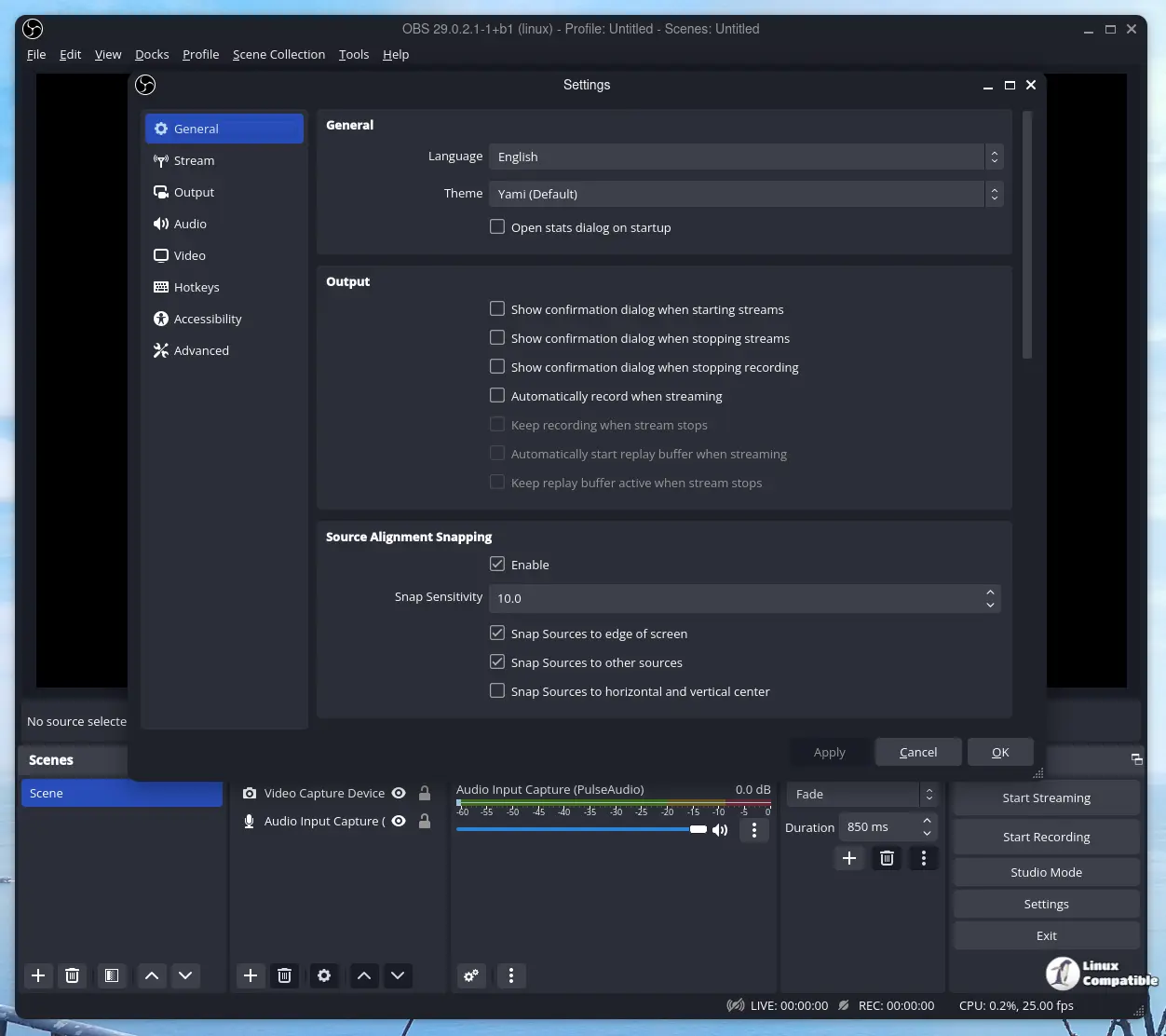
OBS still leans heavily on Qt for its interface. The OpenGL performance tweak for low-end machines helps Intel integrated graphics and older NVIDIA cards without forcing a full rewrite. The color control dock button fix and minimum spinbox width adjustments resolve GTK and Qt theme conflicts. Many Linux desktop environments force system colors that break OBS input fields. This build respects the system theme while keeping controls legible.
The new source dialog also renders cleanly on KDE Plasma and GNOME, avoiding the usual clipping issues on high-DPI displays. Display capture fallback frame rate defaults prevent unnecessary GPU polling. The multitrack video limit to Custom service only affects streaming providers, not local routing.
Stability, DLL Loading, Crash Fixes, and Apple Upgrades
notr1ch applied process mitigation policies on Windows and improved DLL loading behavior. This reduces the likelihood of external DLLs breaking the main process. The crash handler can no longer be overwritten by user settings or scripts. This prevents users from shooting themselves in the foot during debug sessions.
Warchamp7 fixed audio mixer state desync issues triggered by websockets or plugins. If audio levels jump when adjusting settings via the browser, this update addresses that race condition. Virtual camera reset failures got patched too. PipeWire failures on NVIDIA GPUs are another fix, though hoshinolina noted this might still bite users with specific driver combinations.
Mac users with old OBS installations are about to run into a wall. The new version forces Intel-based installs to update to the Apple Silicon version on Apple Silicon hardware. This breaks dual-boot parity for some. If third-party plugins built only for Intel are relied on, they'll stop loading. You'll need Apple Silicon versions of those plugins immediately. This leaves no room for transition. The update handles this silently unless you check your plugins folder.
Deprecations and Minor Tweaks
Plugin developers should note the deprecation of obs_properties_add_button. sebastian-s-beckmann removed this function to clean up the API. exeldro set the minimum size for color sources to 1 pixel. This stops the color source from collapsing entirely in weird grouping scenarios. exeldro also added copy-paste functions to the frontend API.
Warchamp7 fixed source toolbar buttons not working after dragging a source into a group. This clears up a persistent annoyance when managing complex scenes. The minimum width to spinboxes and the minimum size for color source fix prevent UI elements from vanishing.
Release OBS Studio 32.2.0 Beta 2
Beta 2 Changes Fixed a CI deployment issue. There are no application changes since Beta 1. 32.2 New Features Replaced add source dropdown with new dialog [Warchamp7] Improved FPS selector UX [jc...
Beta 2 locks in these fixes before the final release. Updating now prevents the usual capture dropouts during GPU driver updates. Keep an eye on the OBS community feeds for plugin rebuilds targeting the new API. The next beta will likely harden the source dialog rendering path.


