The latest Nobara Linux 44 update is bringing a critical patch for the broken LUKS disk encryption setup that frustrated users on the previous rolling release. The Fedora-based gaming distribution finally unifies its download options, meaning a single ISO now handles both AMD/Intel and NVIDIA GPUs without requiring a separate variant. Five distinct desktop editions continue to ship, ranging from a streamlined Steam-Handheld build to a console-like HTPC flavor designed for living room PCs. With Brave as the default browser and Secure Boot disabled as a hard requirement, the hobbyist project remains a highly polished, low-friction option for gamers and content creators.
Nobara Linux 44 Lands with Unified GPU Images and a Critical LUKS Patch
The Fedora-based gaming distro finally stopped splitting its NVIDIA downloads and fixed a broken disk encryption setup. Nobara Linux 44 shipped on September 2, 2026, and it addresses the exact pain points that have plagued users since the rolling model kicked in.
Thomas Crider, the developer behind the project who goes by GloriousEggroll online, has kept Nobara running as a hobby effort tuned for gamers and creators. It sits on top of Fedora 44, which means you get a familiar upstream base with proprietary drivers, WINE, Proton-GE, and OBS Studio already baked in. You do not have to dig through terminal commands just to get Steam running or tweak multimedia codecs.
"Independent project, not affiliated with Fedora or Red Hat," the site notes. Crider has always treated it as a personal toolkit first, a public release second.
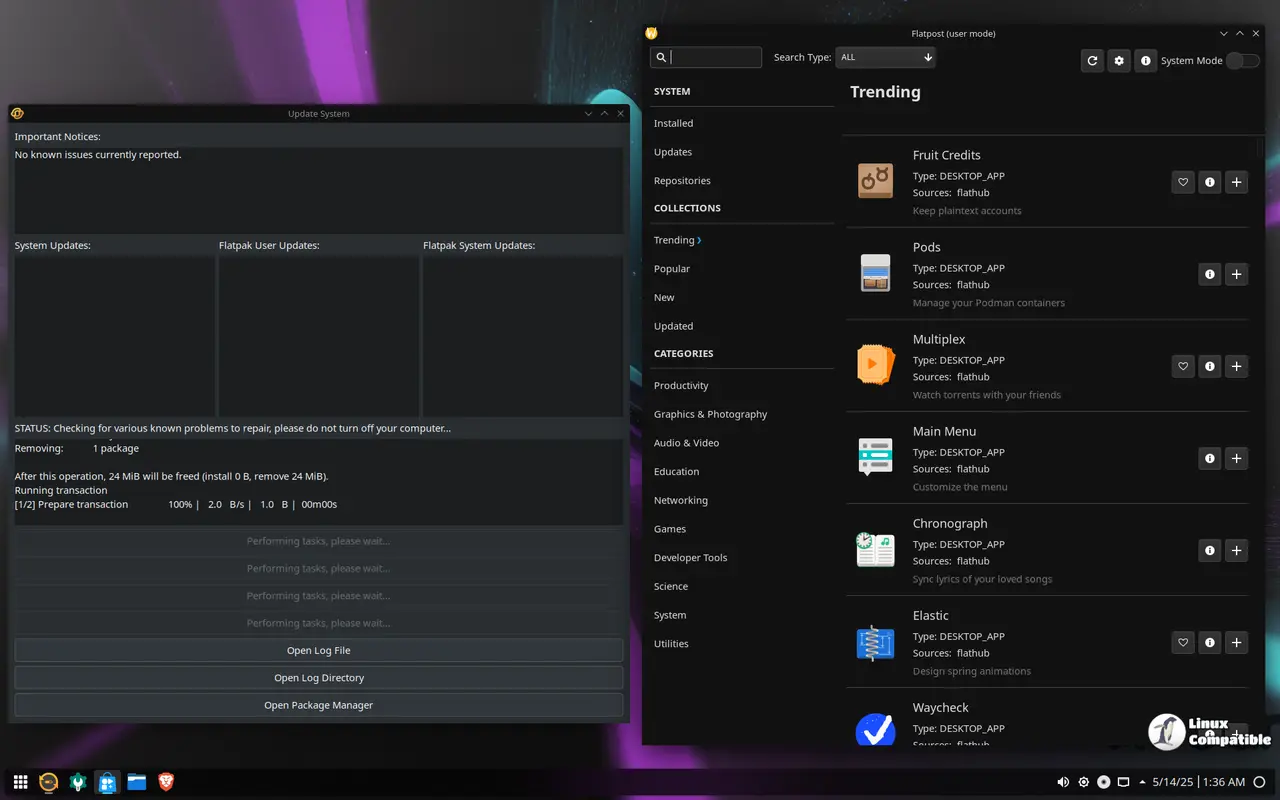
What Actually Changed
The headline shift here is the unified ISO. Previous releases forced you to hunt down a dedicated NVIDIA download, which always felt like a legacy holdover. That separation is gone. One image now handles both AMD/Intel and NVIDIA setups, and the installer picks the right stack automatically. That cuts the download page down to a single choice per edition.
Five desktop flavors continue to ship alongside the rolling release model. The Official build keeps its custom KDE desktop for balanced daily use, while the GNOME edition trims things down for distraction-free content work. The KDE build caters to power users who want deep customization, and the Steam-Handheld variant stays optimized for Deck-style screens. If you are rocking a living room PC, the HTPC build swaps in a console-like interface that actually responds to a gamepad.
Brave remains the default browser, a choice that swapped out Firefox back in v42 and has not budged since. The project also keeps its guided installer and first-run setup wizard, which explicitly tries to keep Windows and macOS refugees from touching a terminal. Keep in mind that Secure Boot is still not supported. UEFI-only installs are the only option.
The whole gaming distro space got a lot quieter after Valve paused its own hardware roadmap last year. Nobara has essentially filled that gap, sharpening its feature set while waiting for the memory and storage crunch to ease. That pause left plenty of room for third-party builds to mature, and Nobara 44 shows it.
Head here to download the new release.


