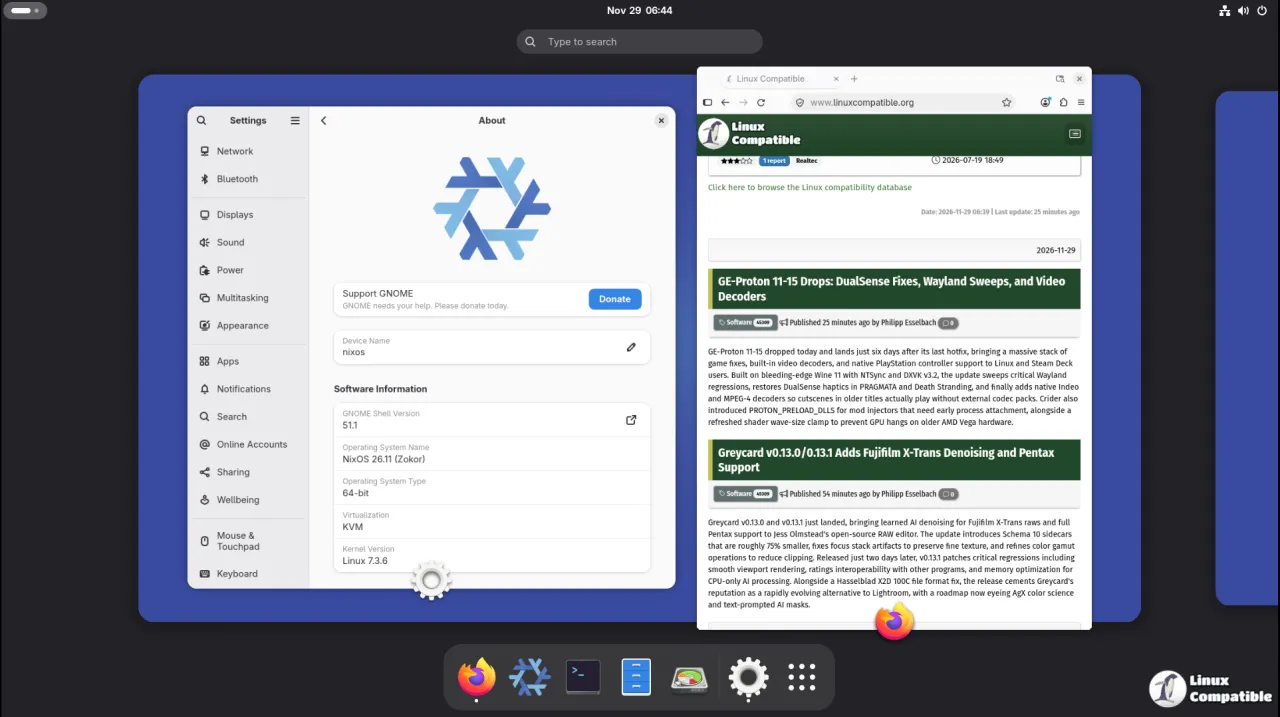
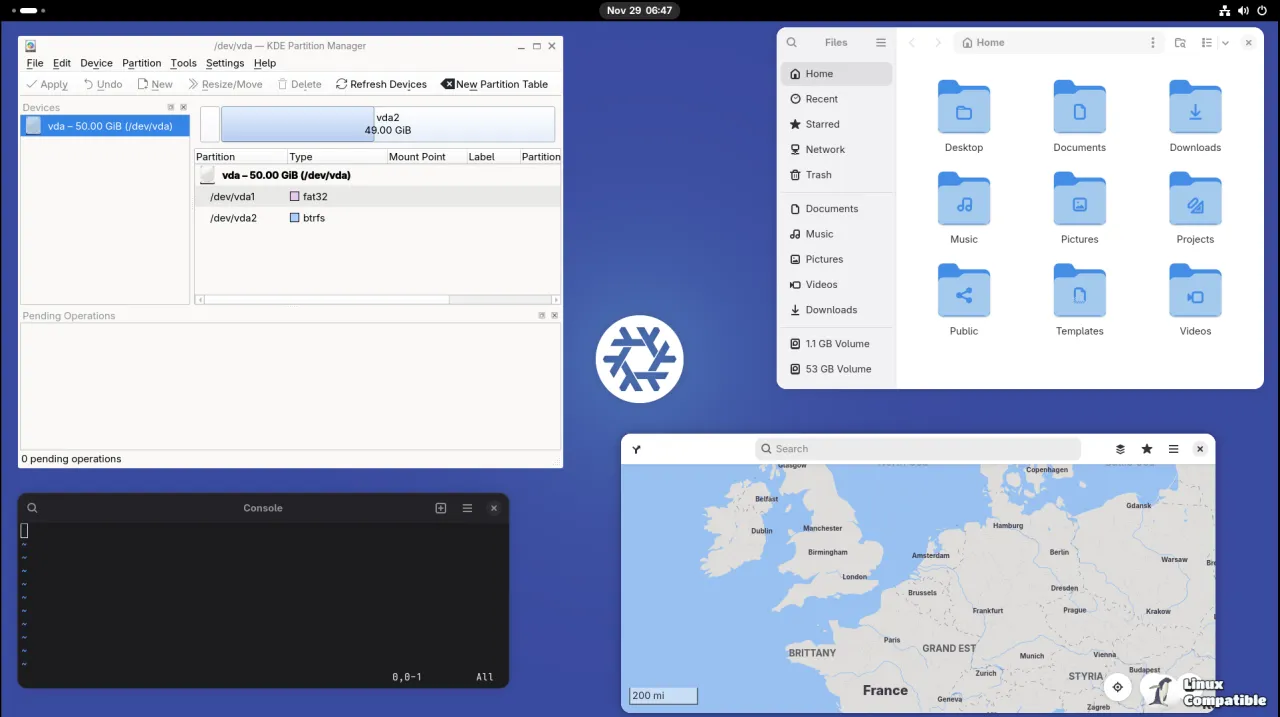
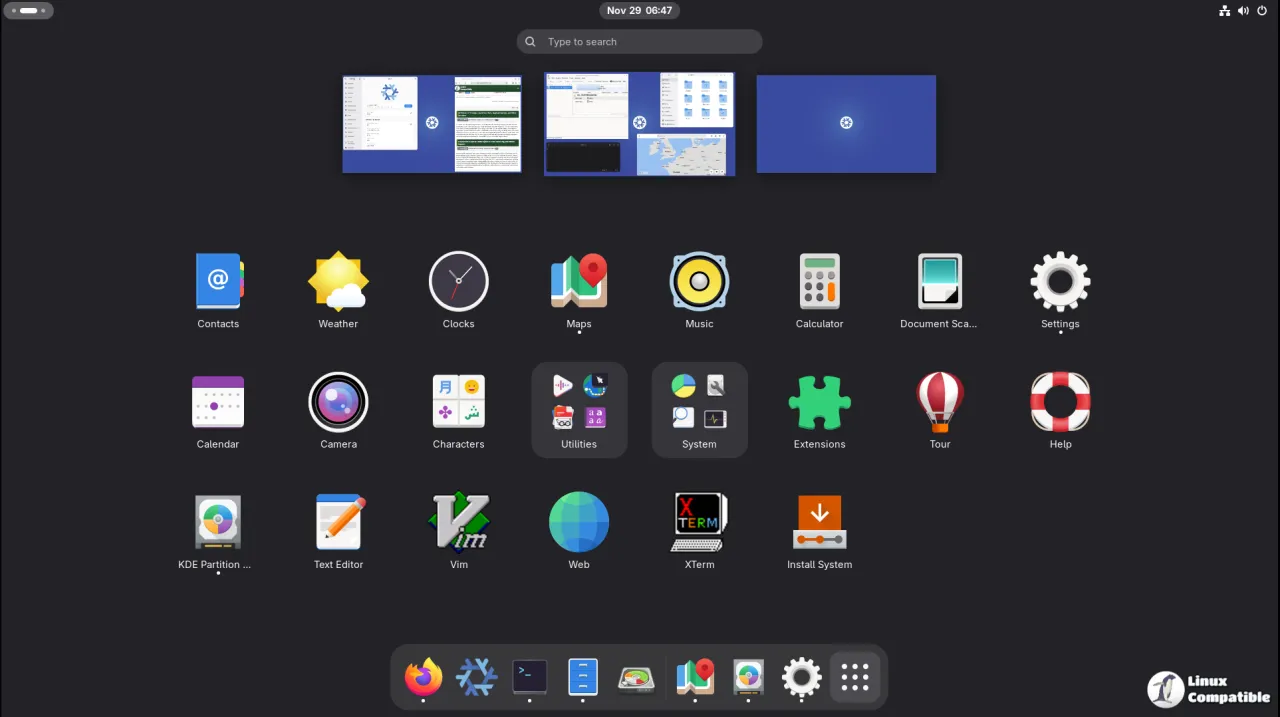
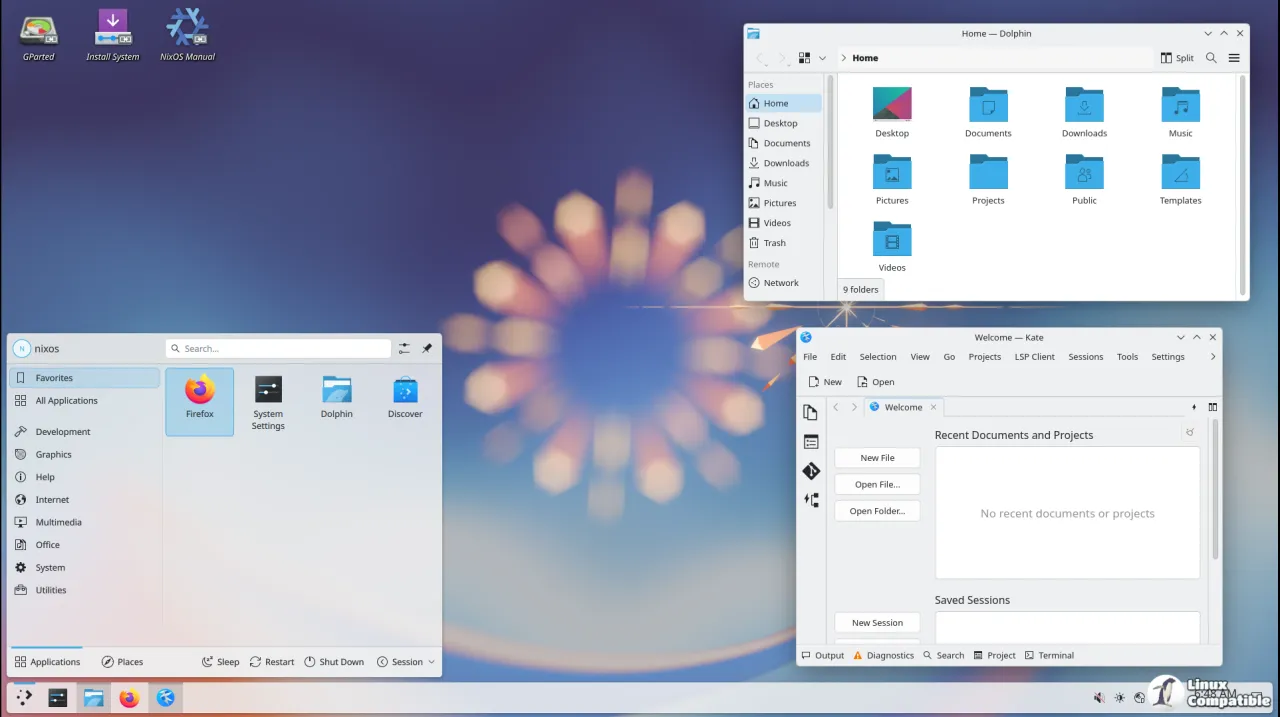
NixOS 26.11 "Zokor" is now available as the latest stable release, shipping with the Linux 7.3 kernel by default and the Nix 2.35 package manager featuring a new daemonless mode. The update introduces post-quantum cryptography by defaulting to hybrid ML-DSA 44/Ed25519 SSH host keys, while desktop ISOs now include GNOME 51 and KDE Plasma 6.8. Over 80 new declarative modules cover everything from AI gateways to self-hosted media servers, alongside a jump to GCC 16 and PostgreSQL 18 for fresh installations. The release drops x86_64-darwin support and removes several unmaintained packages, while major components like Podman 6 and GitLab 19 require migration to newer defaults.
NixOS 26.11 "Zokor" Ships with Post-Quantum SSH Keys, GCC 16, and 80 New Declarative Modules
NixOS 26.11 "Zokor" is here. Released November 28, 2026, this six-month cycle stable drop pushes the Linux kernel to 7.3 by default, updates the Nix package manager to 2.35, and slaps hybrid ML-DSA 44/Ed25519 host keys onto OpenSSH out of the box.
The release follows the June 2026 "Yarara" drop and keeps the distribution firmly planted in production territory. The release schedule itself followed a fairly standard six-month cadence, beginning with a GitHub issue in late September and wrapping straight through November 28. I remember tracking the Hydra failure reports back in October when the staging branch started merging, and it took a couple of weeks of targeted fixes before the build queue finally went clean. That steady grind paid off. The package set now ships GNOME 51, KDE Plasma 6.8, PostgreSQL 18 for fresh installs, and Nix 2.35 with a daemonless mode that finally lets you stop manually pruning /nix/store/logs.
Core Upgrades and Security
Linux 7.3 is now the default across the board, though the live ISOs still carry the long-term-supported 6.18 LTS build for those who want a familiar baseline. ReiserFS and eCryptfs are gone, following their upstream removal in 6.13. The linux_hardened and linux-rt kernels have been quietly dropped due to lack of maintenance, so if you need either, you'll be building from source or rolling your own configs. Nix 2.35 introduces a new daemonless mode and an automatic build log cleanup flag, which should cut down on the usual monthly storage churn.
Head here to find the full upstream changelog if you're tracking every patch. The desktop environments on live ISOs match the latest upstream features, while new installations will get PostgreSQL 18. Existing systems can stick with their current version until you run the official upgrade path documented in the NixOS manual. OpenSSH now generates hybrid ML-DSA 44/Ed25519 host keys by default, combining classical Ed25519 with the NIST-standardized ML-DSA 44 algorithm to cover both traditional and quantum threats during the transition period. systemd-boot now tracks boot counts, and dnscrypt-proxy defaults to random resolver selection with DNSSEC enabled out of the box.
NixOS 26.11 adds over 80 new declarative services, which means you can now configure everything from AI proxy gateways to Minecraft servers without writing custom derivations. There's native support for Brave, Portmaster, Falco, Ghostfolio, MeshLLM, and the newer ATProto implementations if you're running your own Bluesky PDS. Open-source tools like Gradient, Atlantis for Terraform automation, and a Rust-based Minecraft server called Pumpkin all ship out of the box. The breadth is notable. It signals that the ecosystem is finally maturing fast enough to replace most of what I used to write in raw scripts.
Breaking Changes and What's Being Cut
The migration tax is real this cycle. Podman jumped to 6.x and ditched BoltDB for SQLite, removed iptables entirely in favor of nftables, and rewrote its config around the UAPI.6 spec. Gitea moved to 28.0 with self-registration disabled and the DOMAIN option gone. GitLab 19 now demands PostgreSQL 17 or newer, and Apache Kafka has gone KRaft-only, killing ZooKeeper support completely. StrongSwan 6.1.0 defaults to IKEv2 connections, and PHP's default version is now 8.5. It's a rather aggressive upgrade cycle for enterprise deployments, though the security and performance gains from running modern defaults are hard to ignore. Keep in mind that Firefox no longer allows silent downgrades by default, and the pkexec wrapper is now opt-in via security.polkit.enablePkexecWrapper.
Alongside the additions, the project is shedding dead weight. GCC has jumped to version 16, which introduces backwards-incompatible changes that anyone compiling heavy packages should review carefully. Support for x86_64-darwin has been dropped entirely due to Apple's platform deprecation and limited build infrastructure. Python 2 is gone from the top-level package set, the hime input method has been replaced by fcitx5, and several unmaintained packages like pghero, podgrab, and the old overseerr/jellyseerr split are no longer tracked. The boot.vesa option has been removed, as has the legacy scripted stage 1 initrd, both pushed aside by systemd-based alternatives years ago.
You'll also need to switch from the deprecated nixexprs.tar.xz URLs to the .tar.zst format before December 31, 2027, once Nixpkgs 27.05 drops. The channel tarballs are smaller, faster, and support IPv6, so migrating now saves you a headache later. Modules can now be disabled via disabledModules, and Nixpkgs overlays may be specified with a single .nix file instead of a directory, which cleans up a lot of the usual overlays/ sprawl. The installer also got a copy-to-RAM option that lets you eject the install media after boot for tethering, and kernel log verbosity has been lowered to upstream defaults.
If you want to run the bleeding edge without pinning a specific commit, point your channels at https://channels.nixos.org/nixos-26.11/ and rebuild with nixos-rebuild switch --flake nixpkgs#nixos-26.11. ISO downloads for GNOME, KDE, and a minimal CLI variant are live at nixos.org/download. The full release notes break down every migration path, and the GitHub issue #567567 tracks the schedule from proposal through final approval.


