Raspberry Pi Imager v2.0.12 ships its biggest update since the Qt 6 rewrite
Raspberry Pi has rewritten the write path, restored WPA3 networking, and shut off a footgun that could overwrite your eMMC drive.
Raspberry Pi has published Imager v2.0.12, and by the commit count it's the most substantial change to the disk-imaging tool since it moved onto Qt 6. Roughly 208 commits landed since the previous tag, drawn from about 35 merged pull requests across the whole team. That's a different scale entirely from what came before.
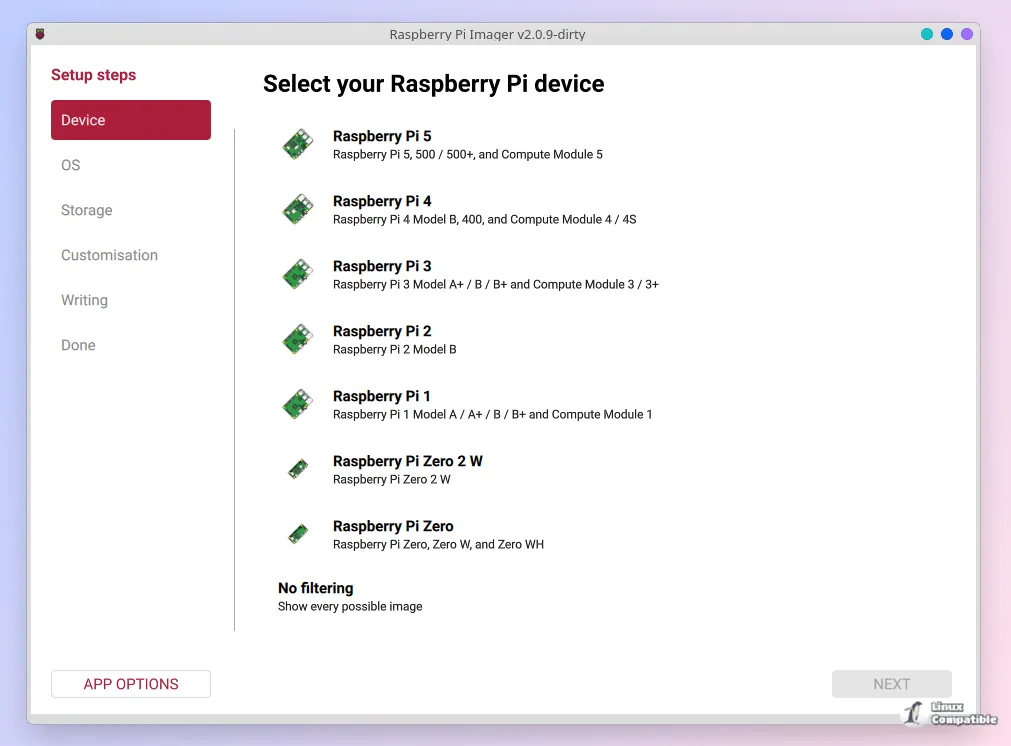
The previous release, v2.0.11.1, was a small hotfix on 17 August. Three items: a stuck Raspberry Pi Connect "Next" button, a version-component bump for Windows build metadata, and some test-suite cleanup. v2.0.12 rewrites how writes are performed and verified, rebuilds the embedded installer, and hardens every privileged operation.
The write path was rebuilt from scratch
The headline fix targets two pretty embarrassing failure modes. A cancelled write used to report success, leaving you staring at a done screen while half your card sat blank. A truncated download could be "written" and declared complete as well. Both are now handled, and the low-level I/O has been reworked on every platform.
Images are now sized by content rather than filename. That matters. It means a truncated .img.xz file, the format every Raspberry Pi image ships in, gets refused rather than silently accepted.
The Linux path took the deepest cut, honestly. Sequential writes now happen at the logical cursor, I/O completions are reaped while a buffer slot frees up, and a failed final flush no longer calls std::terminate(). There's a chunk of that detail that only someone actually reading the diff would bother with.
macOS now ejects in the background with live status, plus a separate fix that kills a crash when you cancel an SD-card write. Windows records why a write failed, clears stale error codes, and detaches a virtual disk instead of just ejecting the media.
WPA3, embedded mode, and the rest
Wi-Fi customization previously stored a PBKDF2-derived key rather than the real passphrase. A derived key can't negotiate WPA3/SAE, so NetworkManager just fell back to WPA2 or failed outright on SAE-only networks. Nobody really noticed. It looked like it connected fine. Now the actual passphrase is stored and written, with correct escaping for NetworkManager's keyfile where backslashes and leading spaces used to vanish.
The embedded build inside the network installer had real gaps that the last release never touched. A slow-to-negotiate PHY could stay marked "down" at first poll because embedded mode never started the netlink monitor that would normally clear the offline state. The installer just stopped there, having never seen a network at all.
There's now a proper wait for a usable address rather than just a link, since a link comes up well before DHCP answers. On top of that, a clock-sanity check was tripping whenever a board booted to 1970 without an RTC battery, making every certificate look invalid. The installer image now sets the clock before Imager even starts.
A few other real fixes landed too. The eMMC is no longer mislabeled as an SD-card reader, which was a genuine footgun since the wrong name invited people to overwrite an actual system drive. Raspberry Pi tracked that as issue #1658. Embedded mode can also run a QR-based Raspberry Pi Connect sign-in now, another workaround for a build with no browser, and it can import SSH keys straight from a GitHub username. The Done screen's reboot button now actually reboots, having previously tried to run /sbin/reboot, which isn't even in the installer image.
The build has moved on to Qt 6.11.2, carrying a fix for a fontconfig crash that segfaulted the AppImage on some machines. OpenSSL is dropped from the Windows build in favor of CNG for secure boot keys, and a new test suite now spans the write path, extraction, rpiboot, fastboot and more. ThreadSanitizer runs actually found and fixed data races in the CA bundle lookup, the icon fetcher and the drive-list poll thread.
Tom Dewey (tdewey-rpi) authored the release and did the bulk of the work, with elibosley and bovirus rounding out the notable contributors. Four people made their first-time contributions to the project: roliver-rpi, amah853, phattmatt and yuefdev.
Here's my quick take. This reads as a milestone release in the truest sense. The write-path fixes and content-sized validation cover real data-loss scenarios, the WPA3 change will free people stuck on broken fallbacks, and the eMMC rename shuts off a real footgun. For headless or kiosk deployments, the embedded overhaul is honestly the part that matters most.
You can grab the downloads now. Available are the Windows .exe, the macOS .dmg, Debian .deb packages (CLI and desktop across amd64, arm64 and armhf), AppImages, a Compute Module embedded package and the full Debian source. At the time I checked, the macOS .dmg had drawn about 820 downloads and the Windows .exe around 295, with the Linux formats trailing in single digits.
Keep in mind that this is Imager, not some throwaway utility. People rely on it to put operating systems onto boards, and a silently corrupt write is exactly the sort of thing that turns into a support ticket weeks later. Worth the update.
Head here to the full changelog and the download.


