Manjaro Linux 26.1.0-rc4 Ships with Linux 7.1 as Default Kernel
The fourth release candidate pushes a mainline kernel to the top of the stack across KDE, GNOME, and Xfce editions.
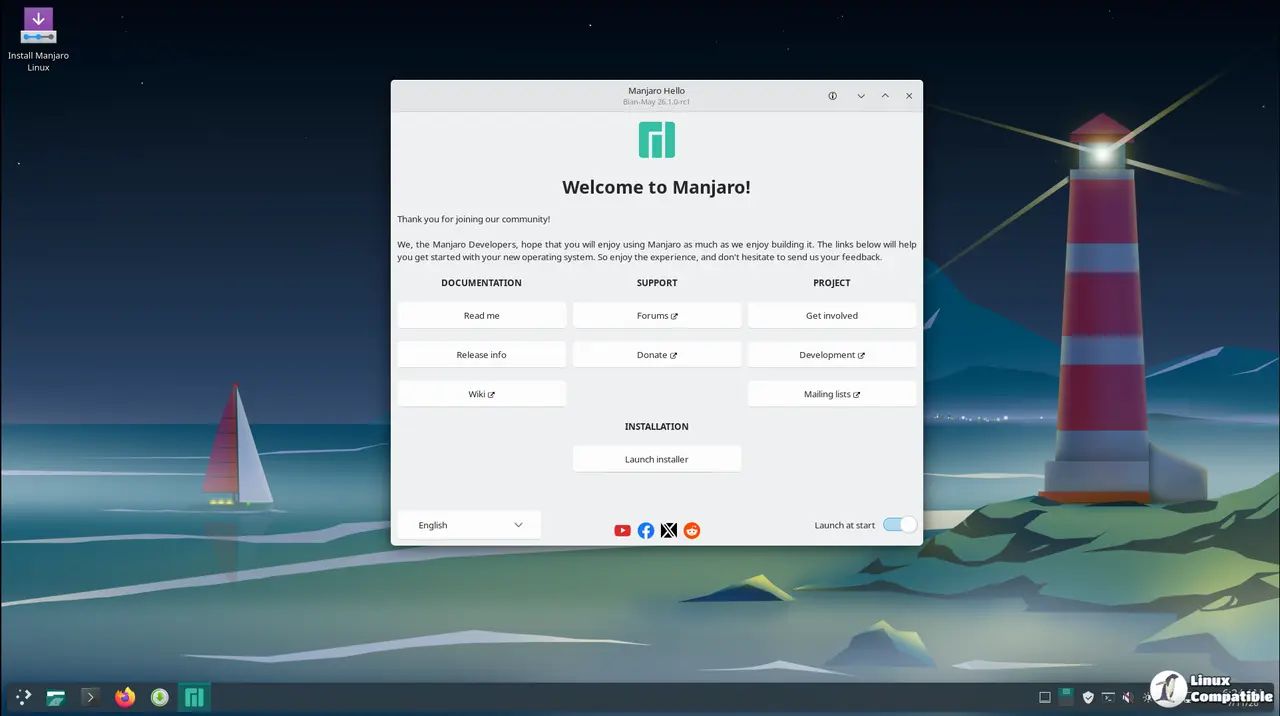
Manjaro Linux dropped its fourth release candidate for 26.1.0 this morning. If you run Arch-based distros for the bleeding edge, pay close attention to the kernel column. Linux 7.1 is now the default across all three official desktop editions, replacing the more conservative 6.18 baseline that shipped with the March stable release. ISOs are live on SourceForge as of 08:29 UTC today.
The naming convention follows Manjaro's established year-based pattern. "26" is the calendar year. The ".1" marks this as the second major push of 2026, sitting above the current 26.0.x stable line. Release candidates are not feature drops. They are stress tests. The community runs these builds, files bugs, and the project trims the edges before declaring a stable version. The gap between the March 26.0.4 release and now gives developers roughly five months to shake out regressions from that aggressive upstream pull.
The Kernel Shuffle
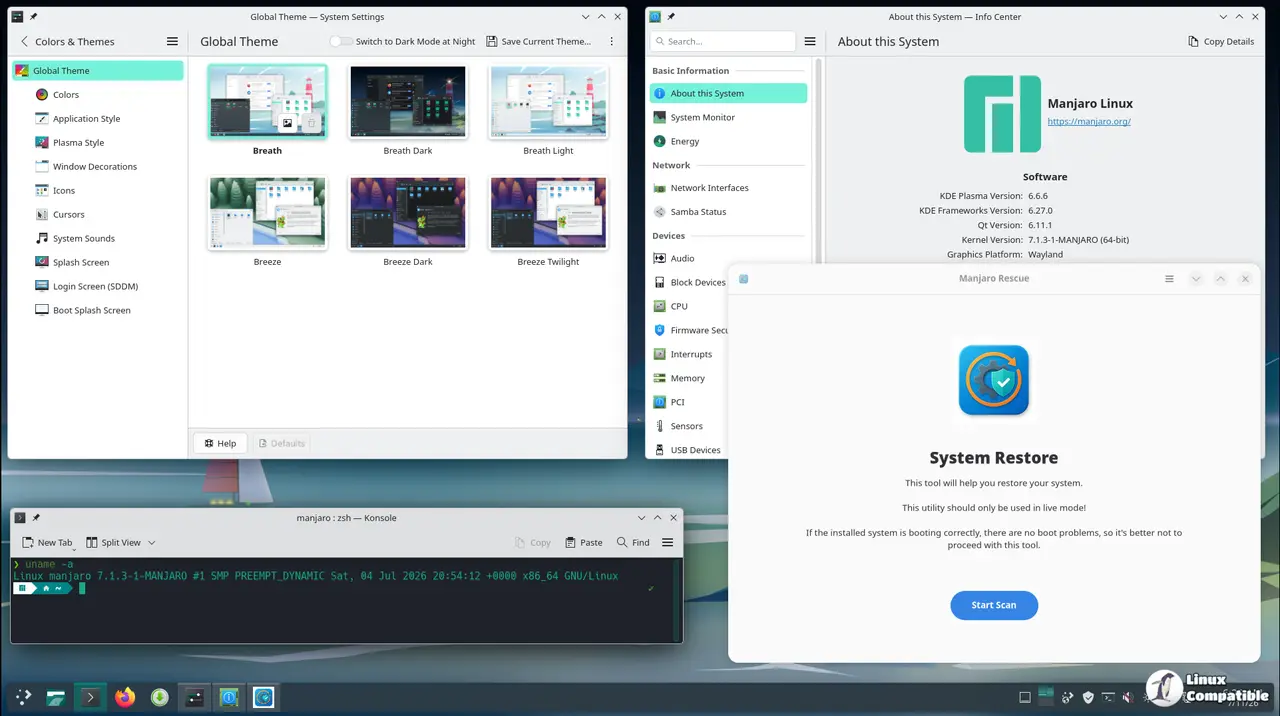
Here is where the real shift happens. Manjaro traditionally shipped its default ISO with a long-term support kernel. Last cycle, that was 6.18. This cycle, the headline kernel is 7.1. Arch Linux users have watched mainline kernels climb past 7.0 for months, and this is Manjaro finally bridging the gap. The cascading stability model that filters Arch's testing branch takes time to settle, which is why release candidates exist in the first place.
You can still fall back to 6.18 or 6.12 if you prefer a more proven stack. The project is clearly banking on mainline stability. Manjaro says the shift reflects "growing confidence in mainline stability" and aims to deliver hardware support out of the box. Linux 7.1 brings updated GPU drivers, refreshed Wi-Fi and USB subsystems, and newer filesystem support. It is a meaningful jump in compatibility, though rolling a kernel this fresh as the default will ruffle a few feathers among purists who like their systems sitting still.
ISOs come in full and minimal flavors. Full KDE weighs in at 5.5 GB. Full GNOME sits at 5.3 GB. Full Xfce lands at 5.1 GB. If you prefer a clean slate, the minimal variants strip out the curated app bundles and sit between 4.0 GB and 4.7 GB depending on the desktop. All three kernel options are available for every edition, so you are not locked into 7.1 if your workflow demands otherwise.
What You Actually Get
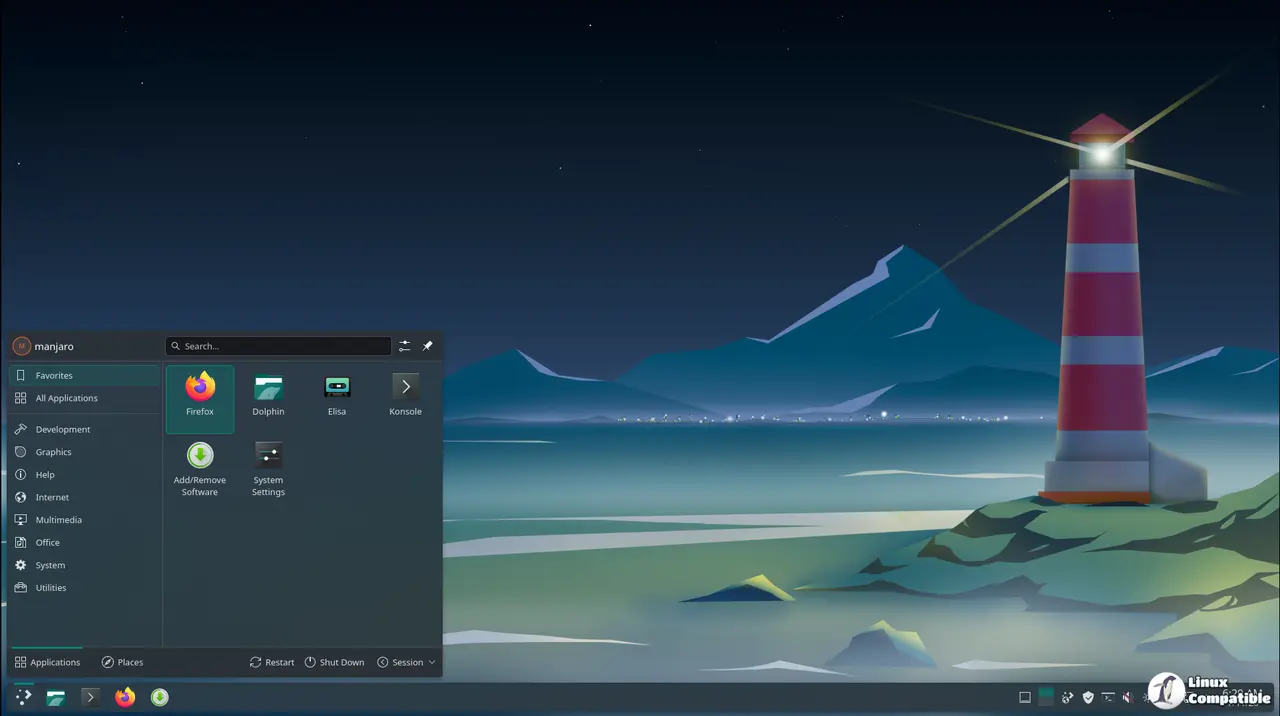
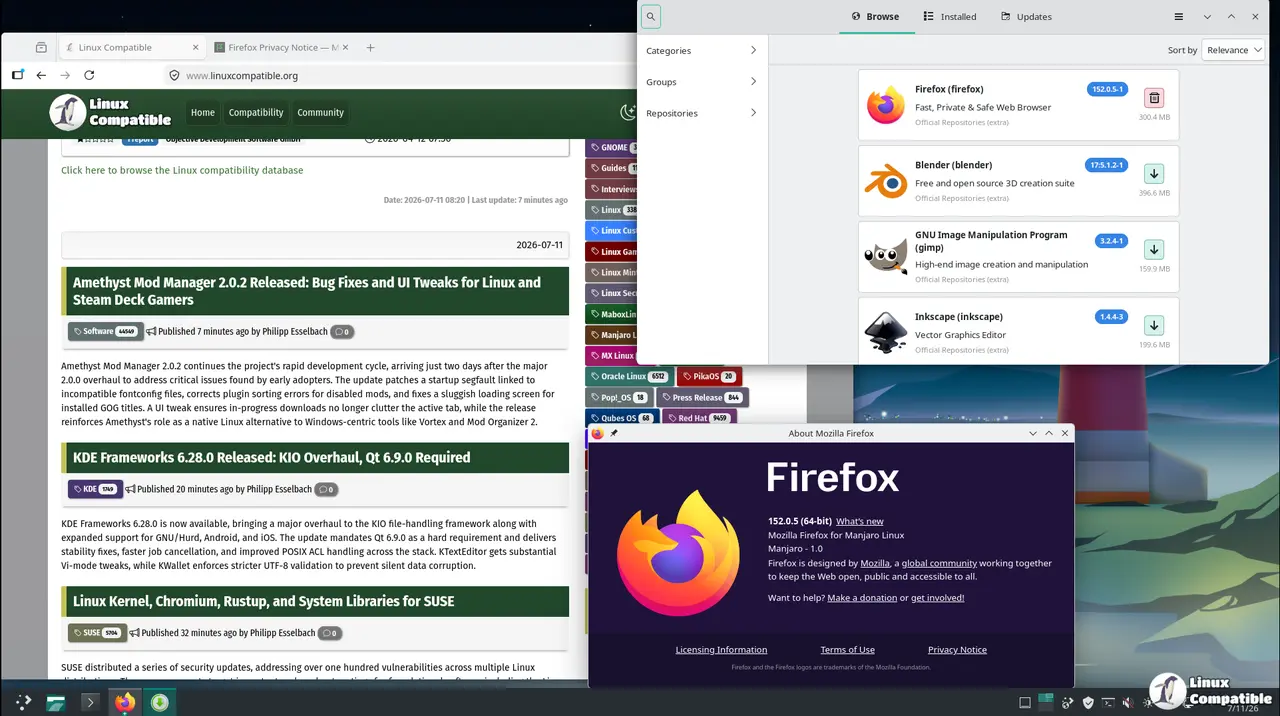
Beyond the desktop and kernel choices, the package structure stays exactly what you would expect from a seasoned rolling release. Full editions include browser bundles, media players, and office tools pre-tuned for each interface. Minimal installs leave the package manager to do the heavy lifting. Each ISO ships with SHA1, SHA256, and SHA512 checksums alongside GPG signatures for verification.
The build is coordinated by the usual crew. Philipp Müller, known around these parts as philmmanjaro, keeps the project shipshape. oberon2007 handles desktop environment packaging, while buildcimjr runs the ISO engineering. Community editions like Cinnamon and i3/Sway remain on 25.0.3 for now, maintained separately through OSDN. They have not migrated to the 26.x tree yet, so if you need a non-standard stack, the timeline is a bit longer.
It is worth considering that swapping the default kernel to 7.1 is a bold move for a distribution that markets itself as stable. Rolling releases have always lived in a gray area between bleeding edge and daily driver. Head here to weigh the risks yourself, but keep in mind that release candidate four usually means the major bugs have already been patched. Further cycles will likely target edge cases rather than introducing new upstream changes. The stable 26.1.0 release is expected in the coming weeks, assuming community testers do not dig up something nasty.
Still a candidate. Proceed accordingly.
If you want to test the build before it goes gold, the ISOs are ready now. You can get the KDE Plasma edition from here, GNOME is hosted here, and Xfce rounds out the trio. Verify the signatures. Run a quick boot test before overwriting your existing setup. The stable launch is close, but this is still a candidate.


