Liquorix Linux Kernel 7.3-3 wraps up its 7.3 track, with 7.3-4 being a mere errata
The Liquorix Linux kernel just drew a line under its 7.3 line, and it did so in a slightly odd way. Maintainer Steven Barrett tagged 7.3-3 on Thursday, November 12, then followed it hours later with 7.3-4. Here's the catch. That second tag isn't really a release. It's an errata, a packaging fix to make sure 7.3-3's patches applied cleanly on top of the Linux 7.3.4 base. If you install this today, 7.3-4 is the package you'll land on. But 7.3-3 is where all the actual substance lives.
Liquorix isn't an operating system of its own. It's a distro kernel replacement, a rebuild of upstream Linux with a configuration tuned for snappy, low-latency interaction. Gamers, audio producers, and anyone who'd rather their desktop feel instant than rack up raw server throughput tend to reach for it. Barrett also maintains the related Zen kernel, and Liquorix inherits a fair chunk of that same interactive-tuning philosophy.
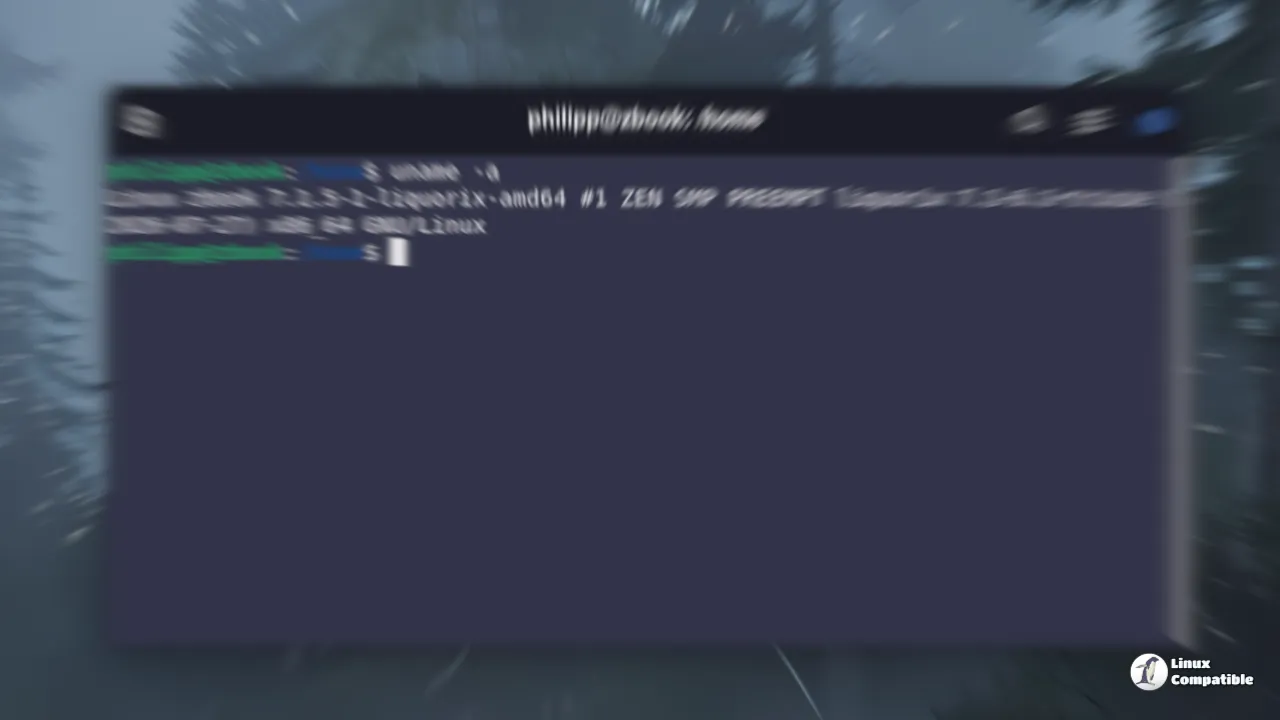
A finish line, not a leap forward
Let's be straight about what 7.3-3 actually does. The four changes are surgical.
It removes a redundant timestamp store in the sched/alt scheduler's work-processing path, fixes short reads from zram's state interface, corrects a missing NR_ISOLATED counter in the MGLRU reclaim path, and stops the kernel from using stack pointers while walking page tables. The last one is the important one. Misusing stack pointers during memory-management walks is a recipe for subtle corruption or crashes, so this is defensive work, plain and simple.
Nothing here is a flashy new feature. That's the whole point. It's the signature of a project reaching its endgame rather than chasing its next experiment.
The months leading up to this were considerably noisier. Since mid-2026, Barrett shipped builds jam-packed with micro-optimizations around cache-line alignment, SMT awareness, and wake placement. That effort, dubbed Project-C, was an aggressive rewrite of Liquorix's custom scheduler. July and August changelogs ballooned with hundreds of sched/alt tweaks. Some got reverted as regressions by September. By late October, builds were coming rapid-fire. One observer described the whole affair as a master's thesis in scheduler optimization.
Then the 7.3 line changed the tempo. 7.3-1, on November 8, was a deliberately clean baseline on the stabilized 7.3.3. 7.3-2, on November 10, merged the security-hardened 7.3.4.
What the 7.3 base buys you
Liquorix rides whatever stable upstream release happens to be current, and the 7.3 cycle was one of the bigger ones. Linus Torvalds shipped Linux 7.3 on October 18, 2026, after a two-week merge window and seven release candidates. Roughly 18,765 non-merge commits from 3,021 developers rolled into it, 807 of them first-timers. It's also expected to become the 2026 LTS kernel candidate.
Several of those changes land squarely in Liquorix's wheelhouse. New VRAM management lets a GPU evict unprotected buffers when it runs short on video memory, so a game that overcommitted its VRAM keeps running instead of quietly downgrading. sched_ext finally finished out, letting individual cgroups run their own BPF-based schedulers. Btrfs picked up to 5x faster fsync in some scenarios, and Ext4 got better parallel direct-I/O writes.
By merging 7.3.3 instead of the initial 7.3.0, Liquorix already had three point releases of upstream fixes riding along. The move to 7.3.4 folded in two Xen virtual-networking advisories, an AMD Zen 5 TSA_FILL CPU mitigation, and a cluster of AppArmor hardening and filesystem correctness fixes. You end up with a hardened networking and virtualization stack layered on top of the responsiveness tuning.
Who should actually install this
It's a sports car, not a freight truck. Barrett documents that trade-off himself. You gain snappier response and smoother frame times. You give up some power efficiency and a bit of raw throughput.
So Liquorix is a good fit for gamers chasing consistent frame times, audio and video producers who need predictable low-latency performance, and desktop power users who value feel over batch throughput. It's a poor fit for servers, which want throughput and energy savings, and for battery-powered laptops where the responsiveness tuning drains the battery faster. Hard real-time users are better served by a proper RT kernel or the Zen kernel's real-time options.
One practical thing worth flagging: Secure Boot isn't supported out of the box, so you'll likely disable it in your BIOS. Builds are AMD64 only. The stock kernel stays available as a GRUB fallback, so a bad boot can usually be recovered by selecting the previous entry.
The fastest route in is a one-liner that adds the repo and installs the kernel:
curl -s 'https://liquorix.net/install-liquorix.sh' | sudo bash
The installer supports Debian, Ubuntu, Arch Linux, and Fedora. Keep in mind that on Fedora the Liquorix kernel becomes and stays the default boot entry over stock updates unless you set UPDATEDEFAULT=no in /etc/sysconfig/kernel.
Head here to the Liquorix website for more information.


