Liquorix 7.3-1 Ships a Low-Latency Kernel on the Fresh Linux 7.3.3 Base
Liquorix, the enthusiast kernel built for snappier interaction, moves onto Linux Kernel 7.3.3 in a deliberately clean build. The question is whether "clean" is enough to make enthusiasts care.
Liquorix, the enthusiast kernel that wants Linux to feel snappier under your fingers, has a new release. Version 7.3-1 landed November 8 on the freshly stabilized Linux 7.3.3 base. It's the first build in the project's 7.3 line, and by Liquorix's usual standards it's remarkably uneventful. That's deliberate.
To be clear, Liquorix isn't a kernel so much as a patchset and a philosophy wrapped around whatever upstream version is current. The pitch is simple: trade a little throughput and power efficiency for less scheduling jitter and smoother frame times. Everyone keeps their assumptions, then revises them.
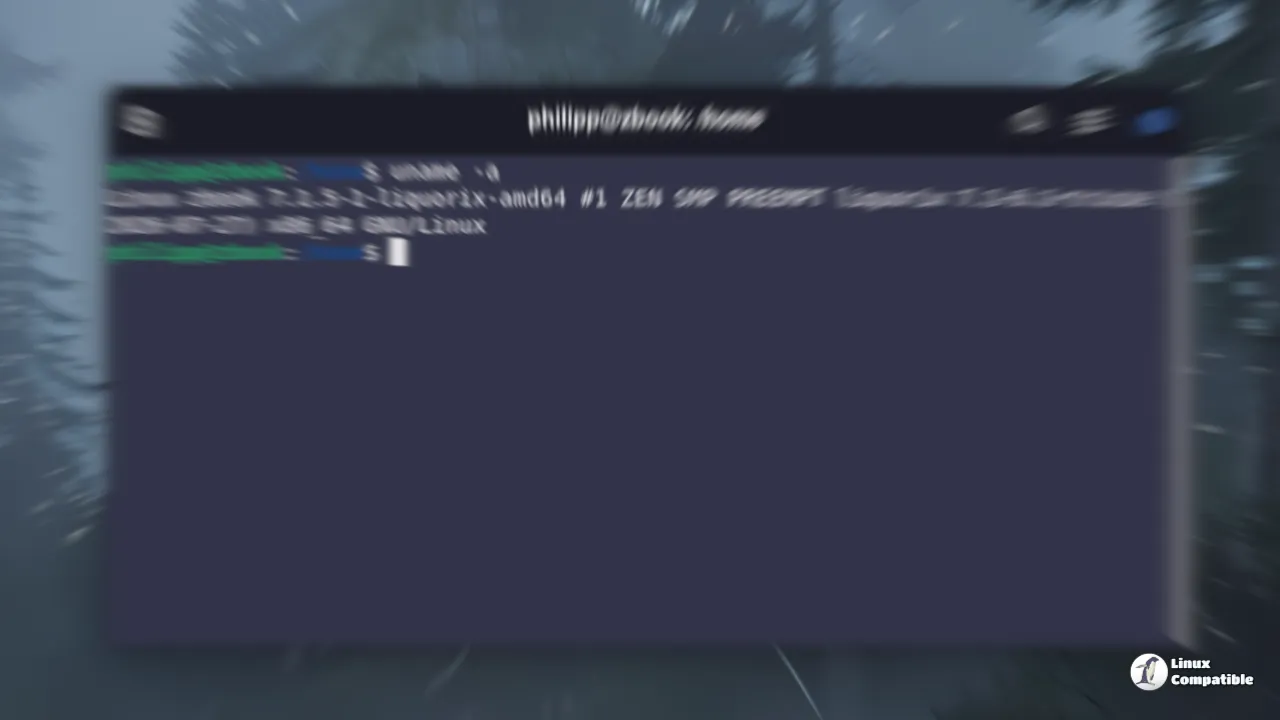
Why 7.3 Matters
Linux 7.3 went stable on October 18 and went down as a record release. The numbers are hard to take at face value: 18,765 non-merge commits from 3,021 developers, 807 of them first-timers. Torvalds shipped it on schedule after a two-week merge window and seven release candidates.
A growing slice of those commits are small error-path fixes surfaced by automated tools and LLMs. The kernel is being maintained differently now, and that shift ripples down to every distribution. And to Liquorix included.
The raw changelog is right there in the package if you want proof. It reads plainly:
linux-liquorix (7.3-1) unstable; urgency=medium

  * switch to kernel v7.3
  * merge v7.3.3
  * update version to 7.3.3-1

 -- Steven Barrett <steven@liquorix.net>  Sun, 08 Nov 2026 12:34:23 -0600
Liquorix merged 7.3.3 rather than 7.3.0, so three point releases of fixes ride along. That's the easy win.
A few 7.3 features matter especially for the Liquorix crowd. VRAM management got better for low-end GPUs via the new dmem cgroup, which can now evict unprotected buffers to make room for a priority app instead of backing off entirely. Gamers running video-memory-starved rigs might actually feel that one.
Btrfs picked up to 5x faster fsync in some scenarios, Ext4 got better parallel writes, and sched_ext finally reached completion so individual cgroups can run their own schedulers.
The Build, and Who It's For
The upstream kernel is only half the deal. Liquorix's real work is configuration. You get a 1,000 Hz tick rate versus 250 Hz on a typical stock kernel, plus preemptible tree RCU, aggressive hard-kernel preemption, Kyber and BFQ for I/O, and TCP BBR3. The Zen interactive tuning rides along too, and you can layer on the PDS/BMQ scheduler if you want it.
The recent spectacle has been "Project-C," an aggressive rewrite of the custom scheduler. Since mid-2026 Barrett has shipped frequent builds jam-packed with micro-optimizations around cache-line alignment, SMT awareness, and wake placement. The 7.x changelog reads like a research log.
The last two weeks alone produced five builds. One briefly folded server-class MGLRU-FG memory research into a gaming kernel. Somewhere someone called the whole affair "a master's thesis in scheduler optimization."
So 7.3-1 is the deliberate capstone. No fresh experimental patches, just a clean and tested baseline. Refreshing, honestly.
Liquorix shines for audio/video producers chasing predictable latency and gamers chasing frame-time consistency. Power users get the feature-rich drop-in with aggressive preemption. Battery-powered laptops do not, since the responsiveness tuning burns power. Servers want throughput, not snappiness, and hard real-time users are better off with PAZ0 or a proper RT kernel. Back up and verify hardware before switching boot entries.
Install across distros runs through a single script:
curl -s 'https://liquorix.net/install-liquorix.sh' | sudo bash
Debian, Ubuntu, Fedora, and Arch are all supported. Builds are AMD64 only. Fedora promotes the Liquorix kernel to the default boot entry and keeps it there over stock updates, and it wants Secure Boot disabled. Grab it from the AUR if you're on Arch.
Head here to the Liquorix website for more information.


