Liquorix Kernel 7.0.15 Released with Scheduler Swaps and Freeze Fix
The enthusiast kernel drops mq-deadline, tunes timeslices, and addresses a hard freeze while staying on the 7.0.13 base.
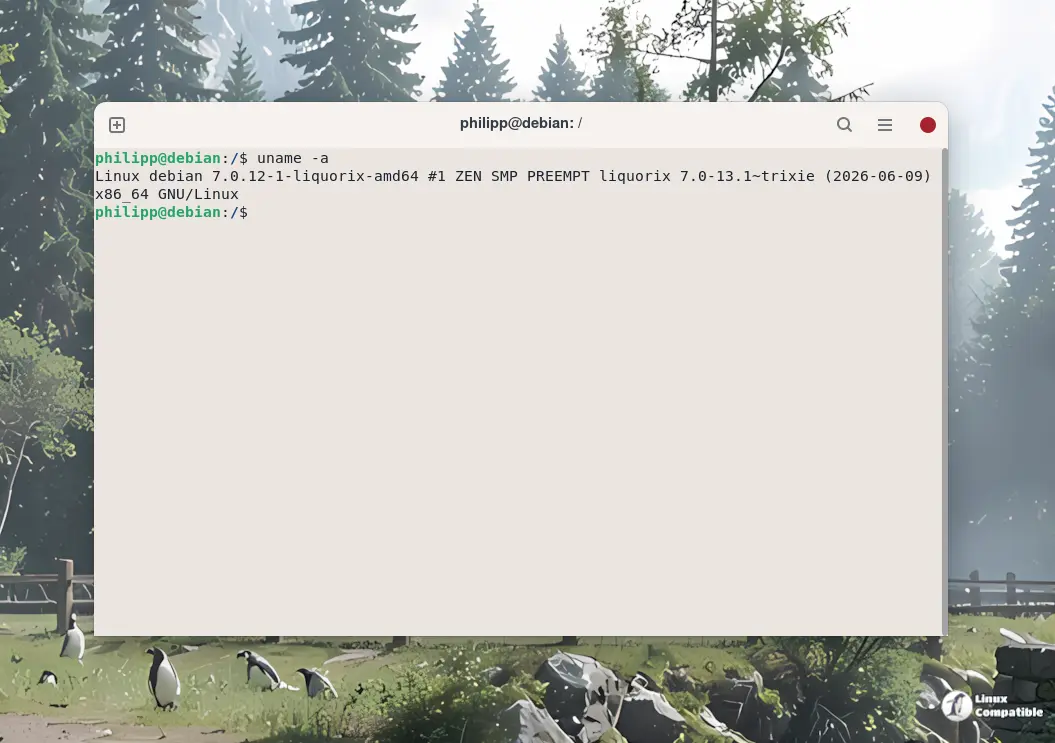
Liquorix Kernel 7.0.15 is live. The release targets gamers and content creators looking for tighter latency, and it brings a handful of configuration shifts that could change how your system behaves under load. This update rides on the Linux Kernel 7.0.13 base. You're getting the 7.0.y lineage with Liquorix's aggressive tuning applied. It's a deliberate choice to stick with the older branch for now, likely prioritizing stability over new features.
The main story here is the fix for "Project-C". Liquorix details a mitigation for a hard freeze caused by unbounded scanning with interrupts disabled. The patch bounds the task walk in prio_balance(). If you've been hitting a specific hang that forces a reboot, this might be the cure. "Project-C" remains a codename without further explanation. That's typical for Liquorix; they fix the issue, you benefit from the patch. Keep in mind that the scheduler settings get a closer look too. Scheduling timeslice drops from 4ms to 2ms. That's a sharp reduction. The PDS scheduler will switch tasks more frequently, which should help interactivity.
Next, the block layer defaults shift. Liquorix is moving away from mq-deadline. Now you get kyber for multiqueue devices and bfq for single queue setups. If you're running modern NVMe storage, that kyber switch is the change you'll notice. Virtual memory tweaks include the watermark boost factor dropping to zero. Background hugepage reclaim flips to yes. Compact unevictable goes to no. These changes aim to reduce latency spikes by tweaking how the kernel manages memory pressure.
Split lock detection and mitigation turn off. That's a performance unlock for AMD users, though it assumes your workload is safe from split-lock penalties. CPU frequency governor thresholds also change. Ondemand sampling down factor bumps to 5. Up threshold to 55. Micro up to 60. The CPU frequency governor is getting less jittery, or maybe more conservative on the ramp-up. It's a tweak for smoother power delivery during burst tasks.
The kernel retains its core focus: uncompromised responsiveness. You get high resolution scheduling at 1000Hz, preemptible tree-based RCU, and hard kernel preemption. Liquorix also ships TCP BBR2 congestion control out of the box, which should squeeze more throughput from your network stack.
Run the install script to get the kernel on your box:
curl -s 'https://liquorix.net/install-liquorix.sh' | sudo bash
The script supports Debian, Ubuntu, and Arch Linux. If you're on Ubuntu, the PPA should have binaries ready within hours of the Debian release. Liquorix keeps the drop-in replacement promise, offering proper distro kernel support with paravirtualization options enabled.
It's a solid update for the dedicated user. The freeze fix is welcome. The timeslice drop and scheduler swap will affect performance, sometimes for the better, sometimes differently depending on your hardware.


