The merge window for Linux 7.4 opened this week, with feature work already landing steadily ahead of a late-December release target. The cycle's standout improvements include a boot-time memory operation that drops from roughly 268 seconds to 50 milliseconds, workqueue flushing that speeds up by orders of magnitude, and a long-awaited cleanup removing the unsafe __get_user() and __put_user() helpers. Rust also took a small but symbolic step forward by replacing and deleting Google's C-language Binder driver rather than merely running alongside it. Timing remains the main risk, since Torvalds spent the initial merge window on his annual vacation and the stable release could slip into mid-January 2027.
Linux Kernel 7.4 Merge Window Opens: What's Actually Landing in the Next Mainline Kernel
The feature window is open. A boot-time operation that used to take minutes now finishes in milliseconds, but the headline feature is a quiet one.
The merge window for Linux 7.4 opened this week, and developers are already shipping changes at a pace that makes most commercial software projects look positively sluggish. Kernel 7.3 had barely cooled before Linus Torvalds fired up the next round of work.
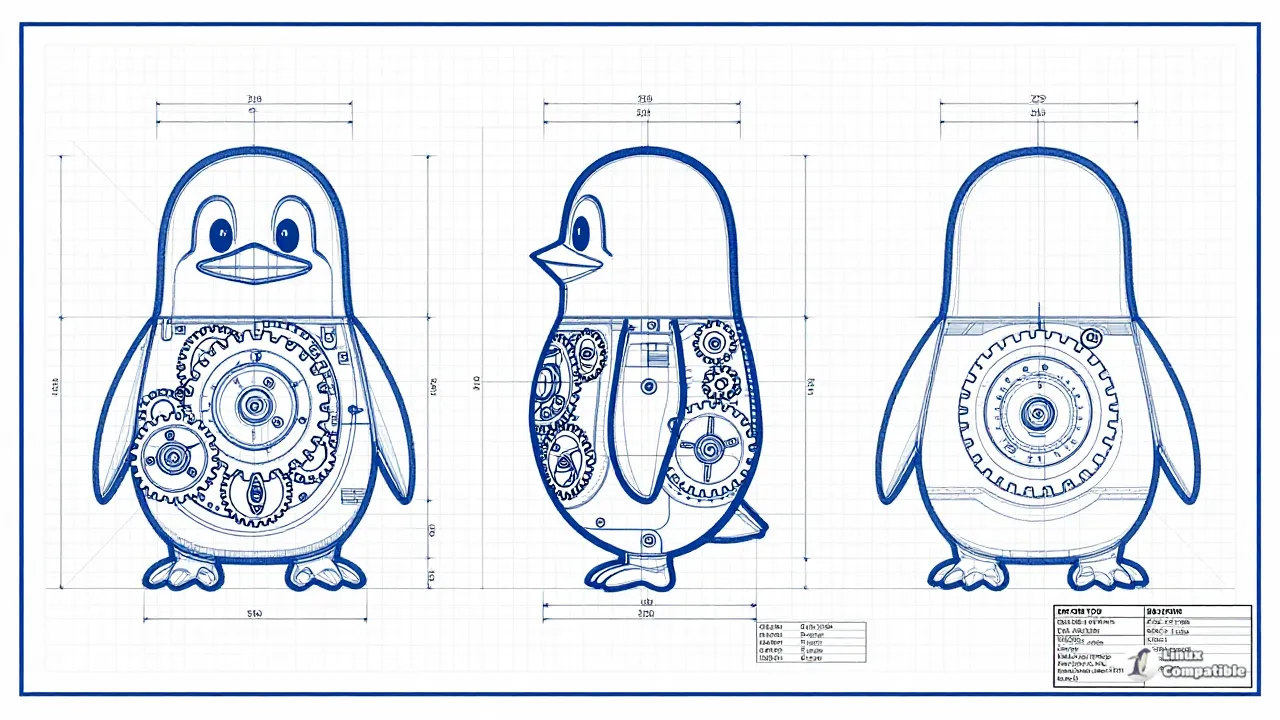
Version numbers lie here, so let's deal with that first. The jump to 7.0 in April 2026 was largely cosmetic. Torvalds bumped the major number to keep version strings manageable, not because someone rewrote the kernel from scratch. Linux deliberately promises interface stability across major versions. That makes 7.4 best understood as the fourth incremental feature release of this era. It's additive rather than breaking. It's still worth a look.
Here's where things stand. Linux 7.3 shipped on October 18, and the 7.4 window opened right behind it. A stable 7.4 doesn't exist yet, and you're roughly six to eight weeks out.
Expect 7.4-rc1 around November 1, which simply signals that feature merging has closed and stabilization has begun. After that comes the bugfix grind: rc2 through rc7 and counting, with each -patches pack trimming another slice of issues. The stable release is penciled in for late December.
There is one real risk to that schedule, though. Torvalds flagged in his opening LKML note last week that he was heading out for his annual family vacation right as the window opened.
"Anyway, nothing very special seems to have happened this last week, so as expected the final 7.3 is out, and thus tomorrow the merge window for 7.4 opens. Except I'm on my annual family vacation, so instead of merging anything first thing in the morning, I'll spend most of the day on a boat and under water."
He said his schedule would be "a bit unusual for a while," which quietly means the window could stretch to three weeks. That alone nudges 7.4-rc1 back by about a week, and anything that goes sideways during the RC phase could slide the final release into mid-January 2027.
The size of these cycles never fails to surprise me. The kernel just before this one, 7.3, ran on a record 18,765 non-merge commits from 3,021 developers, 807 of them first-timers. That's more code churn than most companies produce in an entire fiscal year, and yet the project treats it all as a perfectly ordinary release. Feature-wise, a lot of the work is already staged anyway. Over 6,700 changesets had already landed in the early window.
Performance and cleanup
The most quotable single change in this cycle is a boot-time speedup that turns minutes into milliseconds. Google engineer Tarun Sahu noticed that the early-boot memory allocator in mm/memblock.c was doing a linear search through candidate regions. He swapped in a binary search, which trims Kernel Handover memory-retrieval time from about 268 seconds to about 50 milliseconds. That's a real win for live-update workloads that juggle tons of disjoint memory regions.
Tejun Heo, a longtime kernel dev, reworked queue flushing so it only touches queues used since the last flush instead of poking every possible CPU. On a 192-CPU two-node box, throughput on an idle per-CPU workqueue reportedly jumps from 40k to 4.2M operations per second. That lands directly on XFS, which flushes on every log force.
Scheduler latency also improves. Vincent Guittot of Linaro tuned the EEVDF scheduler for short-slice tasks and measured up to 55% lower scheduling latency. A new "steal governor" arrives too, aimed at virtualized workloads. Smaller wins are sprinkled throughout: a +24% slab throughput bump, faster kernel builds from Lorenzo Stoakes, and memory-management optimizations that yield dramatic gains on one synthetic metric and far more modest results elsewhere.
The removal of the unsafe __get_user() and __put_user() helpers is arguably the most discussed change overall. These legacy functions copy to and from user space without validating the address range, which makes them both slower and, when misused, plain insecure. Torvalds personally merged a 48-part patch series — a rare heavyweight contribution from him. He called the removal "long over-due," leaning on Thomas Gleichner's modern scoped user access helpers. This also completes the final takedown of these interfaces on x86/x86_64.
For what it's worth, the cleanup wasn't done entirely by hand. Torvalds said he leaned on Claude, calling it "a fancy sort of Coccinelle script" for static analysis. It's a small signal of a larger trend: more of his patching is now AI-assisted. Other security work upstreamed this cycle includes an Intel Instruction Timeout patch ("Notify VM Exit") to close denial-of-service vectors in TDX confidential VMs, and a new kernel taint flag for "forced bind" operations.
Rust and the usual hardware sprawl
Rust-for-Linux keeps creeping forward. Miguel Ojeda's pull request is among the larger this cycle, adding roughly 17,000 lines. That covers a major update to the vendored Zerocopy crate, new "mem" and "ratelimit" modules, and diagnostic work on the pin-init crate. The NVIDIA "Nova" Rust GPU driver also continues, keeping the graphics subsystem as the main proving ground.
There's a smaller but symbolic milestone buried elsewhere in this cycle. Google's C-language Binder driver, about 11,470 lines, is being deleted in favor of the Rust-based version. For the first time, Rust isn't merely being added alongside C. It's replacing and removing it.
The hardware enablement section is the usual sprawl. AMDGPU enables HDMI 2.1 by default now that VRR and ALLM support is complete, which is good news for modern Radeon displays. AMD PerfOpt IOMMU ships by default for AI/LLM gains on iGPUs, including some older hardware, and Zen 6 groundwork is already underway alongside NPU support for the Ryzen AI Max 400.
Intel gets preparation work for "Rugged Panther Lake" and the new BFF driver, plus a vRAM health check. Apple Silicon gets base M4 device trees and an A18 Pro MacBook Neo, along with M4 NVMe and audio support from Asahi Linux. As always with Apple mainline work, it's boot-capable but not yet fully functional end-to-end.
A few more tidbits made the cut: Google Tensor G5/Pixel 10 support, a Nintendo Switch 2 controller driver from Valve's Vicki Pfau after sixteen revision rounds, a Raspberry Pi 10-inch touch display, and the Nebula Matrix NIC driver.
Bottom line
Linux 7.4 is shaping up as a performance and cleanup release rather than one built around a single headline feature. The boot-time speedup, the workqueue flushes, the HDMI 2.1 default, these hit real bottlenecks across client, server, and cloud. The __get_user() removal is a long-overdue security cleanup, and the C-to-Rust Binder handover is meaningful if quiet.
The catch is timing. With Torvalds on vacation during the merge window, an end-of-December target could slip to mid-January 2027. As always, the final feature set and dates remain subject to change as more pull requests arrive and the RC testing surfaces, or fails to surface, any regressions.


