LACT 0.9.0 Brings a Major UI Overhaul and Nvidia VF Curve Editing to Linux GPU Control
LACT 0.9.0 arrives with a complete visual redesign, libadwaita integration, and long requested tuning features for Nvidia hardware on Linux. The update finally brings voltage frequency curve editing directly into the client while cleaning up AMD reporting quirks that have frustrated users for months. Anyone running a desktop GPU on Arch, Debian, Fedora, SUSE, or Ubuntu will want to check the new requirements before upgrading.
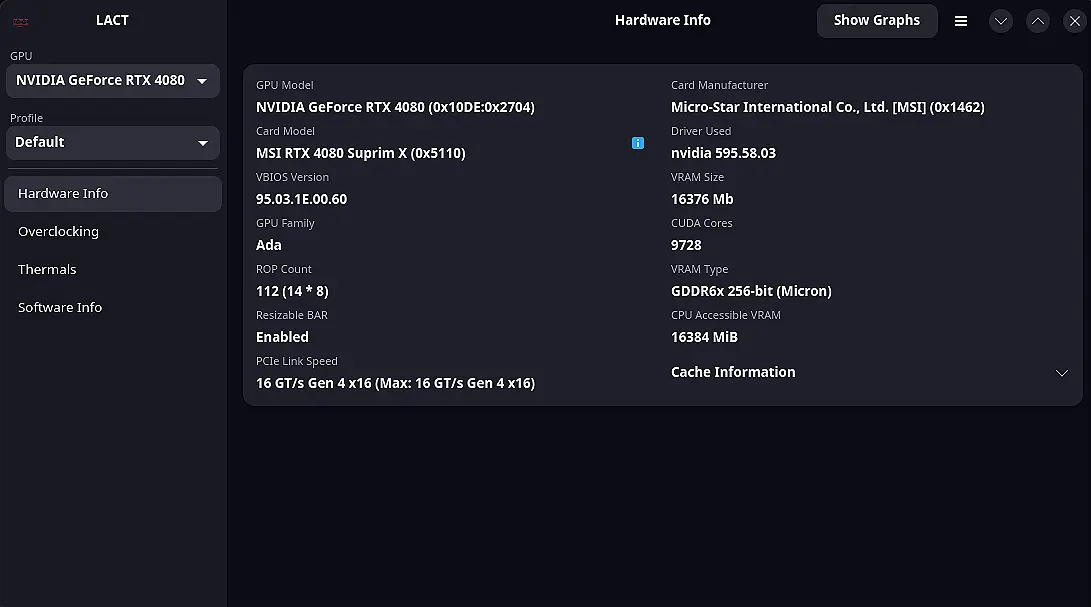
LACT 0.9.0 UI Changes and libadwaita Integration
The switch from plain GTK4 to libadwaita changes how the application handles windows, dialogs, and overall layout density. Developers spent considerable time rebuilding the interface so it actually feels native on modern desktop environments instead of looking like an afterthought. KDE users no longer have to fight mismatched sizing or missing icons because LACT now detects Breeze automatically and applies a matching theme without breaking system integration. The sidebar navigation replaces the old tabbed layout, which keeps important stats visible while reducing clutter in the main panel. Older distributions like Ubuntu 22.04 and Debian 12 get dropped from official packages, which is fair since forcing modern GTK on legacy systems usually ends in tears anyway.
Nvidia Users Finally Get VF Curve Editing and Acoustic Targets
The voltage frequency curve editor stands out as the most significant addition for graphics card enthusiasts who want precise control without relying on third party scripts or Windows virtual machines. The tool taps into undocumented driver functionality to map clock speeds directly against voltage levels, which mirrors what MSI Afterburner does on Windows. There is absolutely no guarantee this will survive future driver updates since Nvidia never published the interface, but cross testing against known Windows utilities shows stable behavior so far. Systems often lock up after forcing custom voltage curves without proper thermal monitoring, which makes the new target temperature feature matter so much for daily drivers. The acoustic target setting lets the card run cooler under light loads while still hitting boost clocks when games demand it.
AMD Reporting Gets Clearer and Flatpak Permissions Stop Failing
Hardware block reporting now displays exactly which IP blocks an AMD GPU contains, making it straightforward to verify encoder generations like VCN without digging through kernel logs or running obscure commands. Voltage adjustments on older Vega cards finally apply correctly after developers fixed a register writing sequence that previously ignored certain clock offsets. Phoenix integrated graphics also receive proper custom clock support instead of falling back to default performance states. Flatpak installations see a major reliability bump because the host service now forces unconfined AppArmor profiles, which resolves permission errors on Ubuntu and other distributions that lock down system access by default. The update requires Rust 1.93 or newer, so users compiling from source will need to refresh their toolchains before building.
Release LACT v0.9.0
This is a pretty big release, with major UI changes and a long-awaited feature for Nvidia users.

Check out the release notes above if you want to dig into every commit, but the core changes should make daily tuning feel much less like a chore. Keep an eye on thermal readings when playing with those new Nvidia curves, and enjoy the cleaner interface while it lasts.


