KDE Plasma 6.6.7 Arrives as First Bugfix Release in a New Real LTS Track
Backed by Kubuntu Focus funding and Techpaladin's engineers, the 3-year support promise finally has real resources behind it.
KDE released Plasma 6.6.7 today, and unlike past LTS attempts, this one actually carries engineering weight behind the promise. The update lands more than three months after 6.6.6, and it's the first bugfix release on what is now a genuine three-year support track.
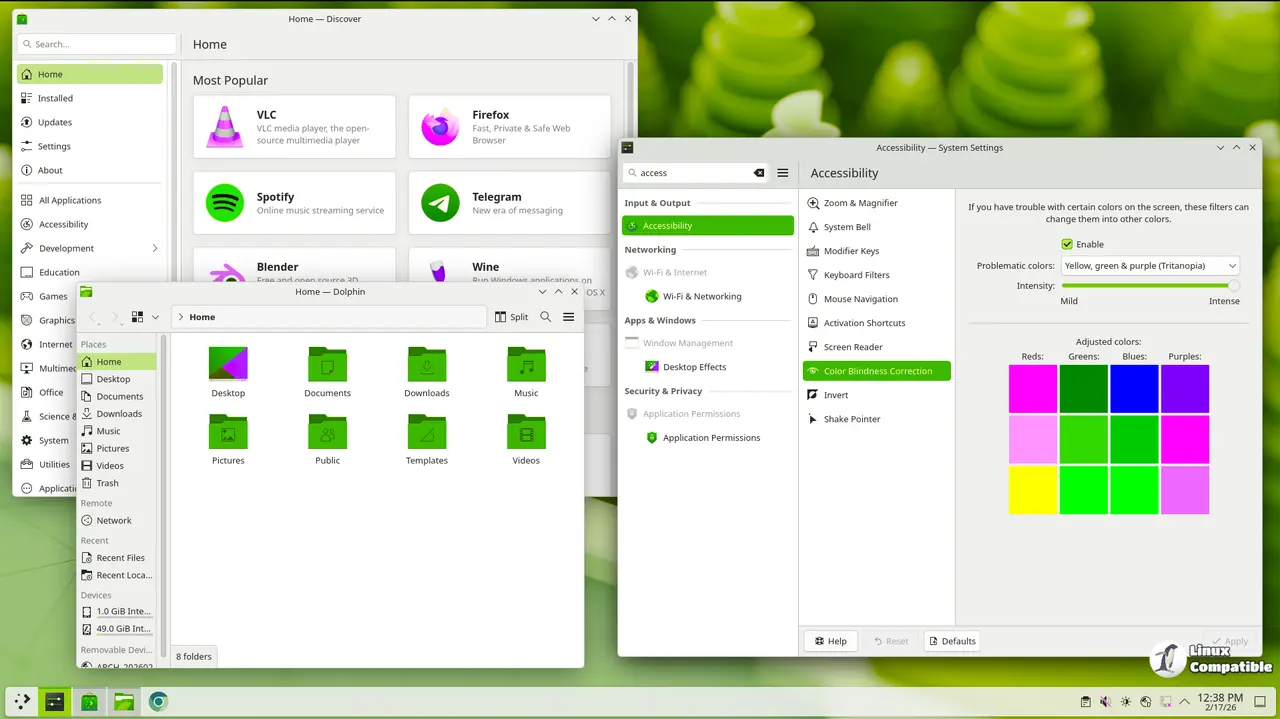
Here's the part that trips people up. 6.6.7 is a maintenance update, not the freshest Plasma you can install. KDE runs feature releases on their own schedule, and the current one is already at 6.8. So you've got an "old" 6.6 branch and a bleeding-edge 6.8 both being worked on at the same time. The LTS arrangement is the only reason the older track keeps moving at all.
The release didn't ship when it was first supposed to. It slipped from October 12 to October 16, and release manager Bhushan Shah spelled out why on the KDE release-team mailing list: pending bugfixes still needed to merge, and the 6.6 branch had ongoing CI problems to shake out. Not the most glamorous piece of shipping software, but it's the piece that actually matters.
Per KDE's own announcement, "Today KDE releases a bugfix update to KDE Plasma 6, versioned 6.6.7." The note frames this as three months of translations and contributor fixes layered on top of a series that first shipped in February 2026. LTS support, KDE says, "will still receive bugfixes and backports for a period of 3 years."
What actually got fixed
Bugfix releases like this one are easy to skim past, but 6.6.7 touches nearly every layer of the desktop stack. KWin, the window manager, picked up the biggest share of work. There's a fix for a use-after-free bug in the DPMS input event filter (#523770), a workaround for GPU resets taking down the OpenGL/EGL layer, and corrections to keyboard repeat behavior (#514747).
Screenshot and screen-recording crashes across several code paths are gone, along with a long-standing lock-screen bug where the screen wouldn't appear under the "Never require password" setting. There's also GPU usage monitoring for the Intel A380 discrete GPU, quietly tucked in for anyone who was waiting.
Down at the app level, Discover now lists Snap versions in the source selector menu instead of treating them as separate applications. Klipper, the clipboard manager, finally preserves PNG images when you restore a history entry.
Klipper handling PNGs correctly. Screen recording that doesn't crash. These are the kinds of fixes that never make a press release but quietly make your desktop stop biting you.
Why 6.6 is now a genuine LTS
This is where the story gets interesting, and it has nothing to do with any single bug fix.
KDE's lead developer, Nate Graham, had a genuine problem with offering a traditional LTS for Plasma 6. His concern was that backporting fixes without proper CI validation just produced a "fake" LTS,a support promise with no real resources behind it.
By August 2026, roughly six months after 6.6 shipped, that position flipped. With funding from Kubuntu Focus and implementation by Techpaladin Software, KDE launched the Bullet-Proof KDE Initiative.
As Graham put it in his blog post What a real LTS looks like: "It wasn't a change to my or anyone else in KDE's opinion of what a proper LTS product looks like. Rather, it was the Kubuntu Focus company stepping up to fund the creation of one."
The deal is worth more than $100,000 over three years. Techpaladin gets paid to fix bugs that real Kubuntu users actually hit, rather than just cherry-picking upstream fixes. The entire stack is covered: Plasma 6.6, KDE Frameworks 6.24, and KDE Gear 25.12, the exact versions Kubuntu 26.04 LTS ships with. That last part is a first for KDE Frameworks, which has never had a stable maintenance branch before.
KDE e.V. also gained CI capacity running Kubuntu 26.04, so backported changes get validated on real hardware instead of being "backported blind." Graham noted the money was generous enough to speed up build times for KDE's general work as well.
The obvious beneficiary is Kubuntu 26.04 LTS "Resolute Raccoon," released back in April. That's a strong position, though calling it "the world's most reliable KDE-powered LTS distribution" is a pitch with a little confidence baked in. Ubuntu Studio, which shares Kubuntu's packages, stands to benefit from the same backports.
The Register framed it crisply: beneath the graphical shell the desktop runs on the same Ubuntu OS that gets five years of support, longer than Kubuntu's own three-year window. The initiative extends real desktop support to match that horizon.
However, at the same time, there's a reasonable skepticism worth holding onto. The money buys CI validation and field-driven fixes that genuinely didn't exist before, but a maintained branch still only ships what upstream decides to merge. And 6.6 is, by definition, older software now.
If you want to try 6.6.7, KDE points at a few options. Live images boot straight from a USB disk if you'd rather test without committing to an install, and Docker images are there for a quick look. Source builds are available for the compile-it-yourself crowd, with instructions on develop.kde.org.
Keep in mind that distribution packages aren't ready everywhere yet. KDE's announcement explicitly warns that "packages of this release might not be available on all distributions at the time of this announcement." KDE neon, the project's rolling testbed, usually moves fastest.
Head here to the KDE release announcement for the full changelog.


