GOverlay 1.8.5 released with OptiScaler rewrite and automation
The open-source Linux overlay manager simplifies DLL management and adds a bleeding-edge channel for upscalers.
GOverlay 1.8.5 has landed, and the headline feature is a complete rewrite of its OptiScaler management logic. Benjamim Gois just shipped the update to the project that wraps MangoHud, vkBasalt, and OptiScaler into a single GUI for Linux gamers. If you're running DLSS, FSR, or frame generation on your Steam Deck or desktop rig, this is the release you'll want to grab.
The rewrite targets two things: reliability and speed. DLL injection on Linux has never been a straight path. It's messy. The old update path relied on GitHub APIs that would throttle you mid-install. Now the update and uninstall logic is isolated. Backups live in gameconfig/<game>/backups/ to prevent corruption. FSR version selection and OptiPatcher channel persistence are fixed.
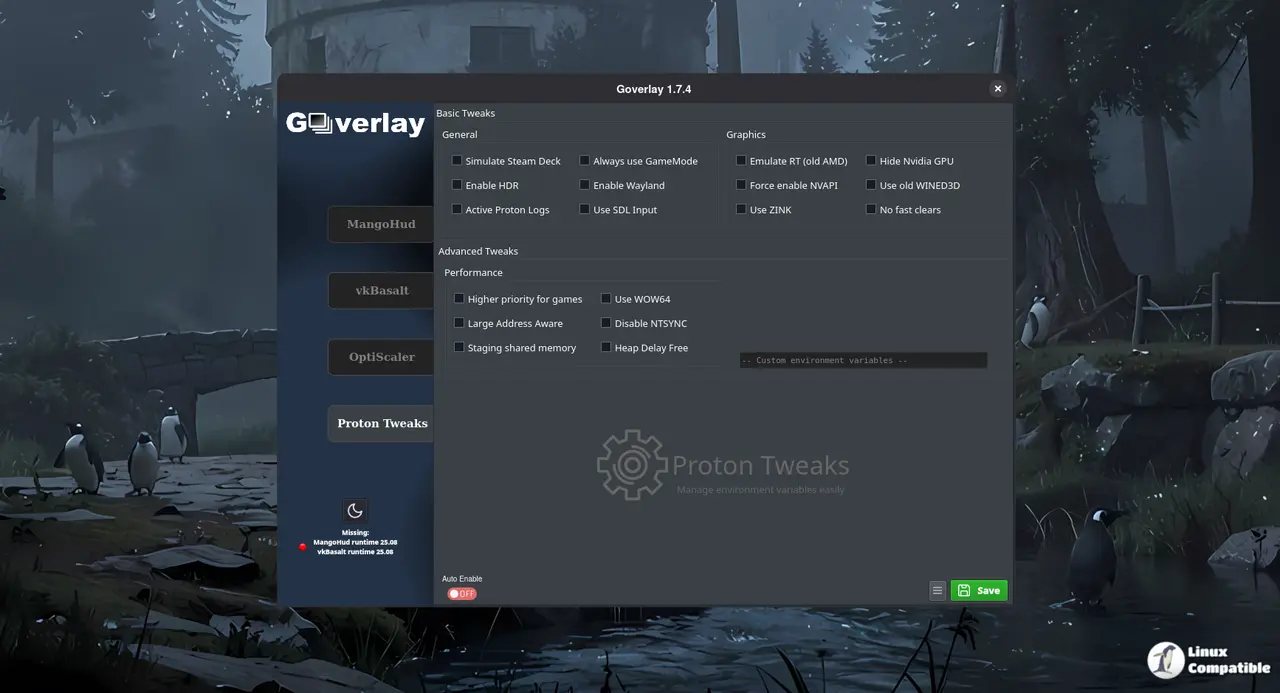
OptiScaler gets a rewrite
Gois also added a bleeding-edge channel that pulls the latest git code directly. Automated builds for OptiScaler, OptiPatcher, and fakenvapi now run through GitHub Actions. You can switch between stable and bleeding-edge builds without touching a terminal.
If you remember when manually dropping libfsr3.dll into a Proton prefix felt like defusing a bomb, this rewrite is a relief. The project has been iterating fast. OptiScaler integration arrived in March 2025 with v1.3. Six months later, 1.8.5 brings automation and cleanup that saves hours of troubleshooting.
Streaming tweaks and UI polish
The update isn't just under the hood. OBS_VKCAPTURE lands in the environment variables tab. Streamers using OBS with Vulkan capture can toggle it per game. Cover art downloads now use multi-CDN fallbacks and a web search fallback if your library is missing assets.
The UI got a facelift. Thin semitransparent scrollbars across all tabs. A floating action button on game cards for quick options. A frameless release notes popup keeps things tidy. There's also a dynamic GPU 360p fallback for very low framerates, which helps when your benchmarking demo stutters.
Keep in mind that GOverlay is built entirely on Free Pascal and Lazarus. ~98% of the codebase is Pascal. It compiles down to a static binary with no runtime dependencies beyond Qt6. The bgmod wrapper handles execution logic, setting up Wine DLL overrides and copying upscaler binaries on launch. It's not a bash script. That means better error handling and reliability.
It's arguably one of the best free tools for Linux gaming configuration. However, the Flatpak sandbox does block access to host binaries like GameMode and Protontricks. You'll need to run those manually or use a non-sandboxed version if you rely on them.
GOverlay ships on Flathub, AppImage, and distro repos. Arch Linux has it in the official repo. Debian, Ubuntu, and Fedora users are best off using Flatpak or AppImage since distribution packages often lag behind.
Head here to the Flathub listing. Or grab an AppImage, deb/rpm package, or source code from the GitHub releases page.


