The GNOME Project has released GNOME 51, codenamed "A Coruña," today. The first major desktop update since March, featuring offline Maps and three new Circle apps. Its headline additions include smoother frame scheduling and monitor-brightness retention in the graphics stack, plus a refreshed Settings app with Auto Rotate and automatic touchpad disabling. Maps, hailed as its best release in years, adds downloadable offline regions, live departures, and real-time delays, while Files, the Papers document viewer (with drawn visual signatures), and Disks also picked up notable fixes. GTK 4.24 ships alongside it, with Fedora 45 Beta and Ubuntu 26.10 as early adopters.
GNOME 51 "A Coruña" ships with offline maps, new Circle apps, and performance tweaks
The six-monthly desktop update lands September 16 with what GNOME calls its most exciting Maps release in years.
The GNOME Project released GNOME 51 today. Codenamed "A Coruña," the update brings offline Maps to the mainstream desktop suite, a refreshed Settings app, and three new Circle apps joining the family. It was announced September 16 by long-time maintainer Matthias Clasen on GNOME Discourse, on behalf of the release team.
The timing follows the project's usual six-month cadence. GNOME 50 shipped March 18. GNOME 52 is set for March 2027.
GNOME names its releases after the host city of GUADEC, its annual conference, and this one honors GUADEC 2026 in A Coruña, Galicia, which ran July 16–21. Following the pattern, Terengganu, where GNOME Asia 2026 will take place in Malaysia, is already the working codename for GNOME 52.
The biggest changes
Per the official release notes, GNOME 51 is built around three goals: more accessible, more practical, more user-friendly. That's a broad brief, but the headline act is clearly Maps. GNOME calls it the app's "most exciting release in years," and the core of the pitch is offline maps.
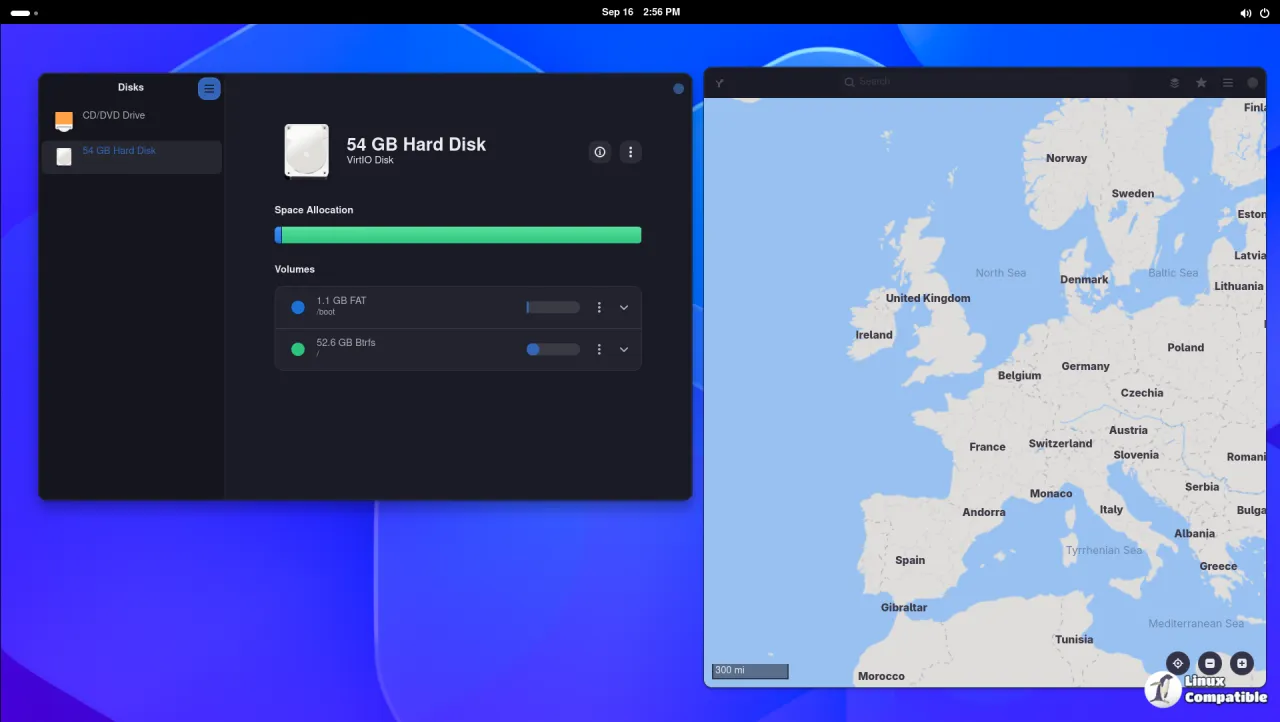
You download a region, then use it with no network connection. GNOME says it's aimed at travel and areas with poor signal. Downloaded areas live in a simple list. On top of that come live departures at stops, real-time delays in journey instructions, platform hints, and walking times between your destination and the nearest transit stop.
Maps gets the loudest treatment here. The rest of GNOME 51 is less flashy, which is arguably the point.
The graphics stack gets another round of tuning. Mutter's reworked scheduling holds animations steady under load, screen recording was sped up by cutting redundant buffer copies, and GNOME now remembers a monitor's brightness across reboots and HDR toggling. Legacy NVIDIA driver interfaces were removed entirely, leaving GNOME on modern graphics interfaces only.
It's a modest set of changes. The brightness retention and frame-scheduling fixes are things you notice only when they're absent.
Settings and the quiet wins
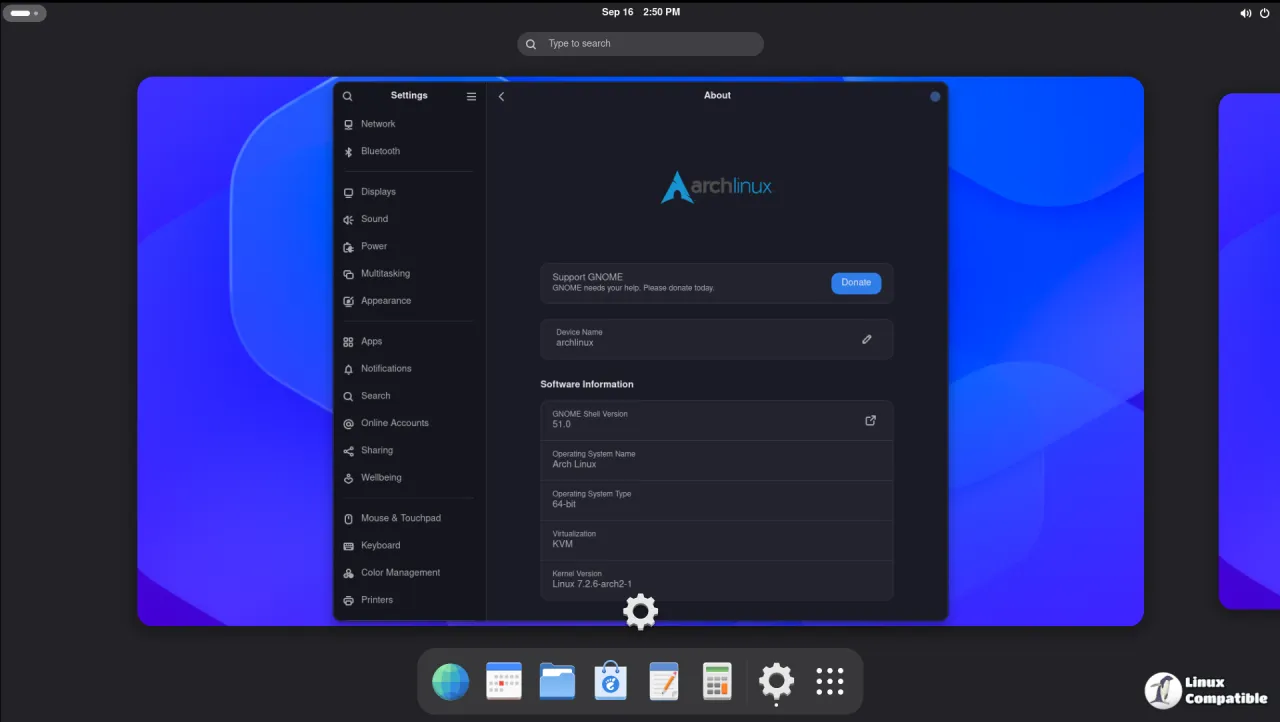
Settings picked up an Auto Rotate option for accelerometer-equipped devices, plus an orientation lock and cleaner display snapping. You can now disable the touchpad automatically when a mouse is plugged in. The Network panel added DNS domain search, dropped the legacy WEP standard, and Remote Login now supports SSH socket servers. Fingerprint enrollment got a proper new interface, and the About page opens release notes with a single click.
Remote Desktop gained smartcard passthrough and Kerberos login, which will actually matter if your workplace already runs Kerberos, and mean less otherwise.
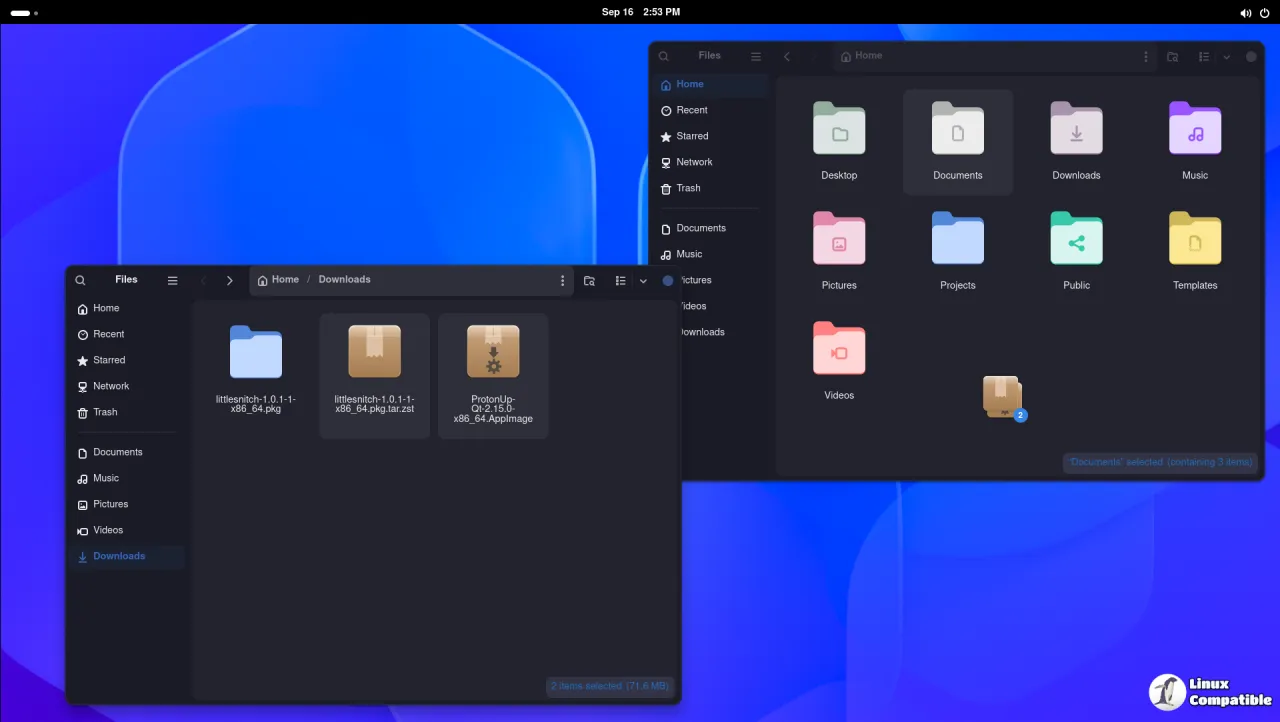
Files (Nautilus) now shows a drag counter badge, auto-selects copied files, and stops clearing your selection when you click empty space. Slow operations no longer freeze the app.
The document viewer, Papers, adds visual signatures. You draw with a mouse or touchscreen, or import an image with the background auto-removed, no special hardware or certificates needed. Malika Asman built it during an Outreachy internship. Worth flagging that these visual signatures don't guarantee document authenticity the way real digital signatures do. The previewer, Sushi, was fully rewritten in GTK 4 and libadwaita, and Disks finally got its GTK4/libadwaita port.
Three new apps joined the Circle: Bobby, a SQLite browser; Tally, a counter app with categories and colors; and Bazaar, a new app store for Flatpak remotes, with a curated section distributions can customize.
Accessibility got a genuine bump too. Reduced Motion is now respected in more widgets and the shell itself, screenshot area selection is fully keyboard-driven, and a new setting lets you drop the focus-ring timeout, handy for assistive tech.
Where you can get it
GTK 4.24 shipped September 12, paired with GNOME 51 as its toolkit counterpart. Fedora 45 Beta already includes GNOME 51 and targets October 20 (October 27 as fallback), with the main build carrying Go 1.27, Python 3.15, and GCC 16.2. Ubuntu 26.10 is also a first-wave adopter.
GNOME remains Free Software, with all code under open-source licenses. GNOME OS Nightly live images are available for VMs or bare metal, and the GNOME 51 Flatpak SDK is on Flathub for developers.
Head here to read Clasen's full announcement. Fedora 45 Beta is one of the fastest ways to actually run GNOME 51 today.


