Fedora 45 Enters Final Freeze, Countdown to October 20 Begins
Fedora's October release has entered its strictest pre-release pause, and a small blocker list suggests it's on track for the Oct. 20 target.
Fedora 45 is closing in. The project entered its Final Freeze this morning, the strictest pause before a release ships, and the clock is now running toward a 2026-10-20 target. Two backup weeks are lined up if things go sideways.
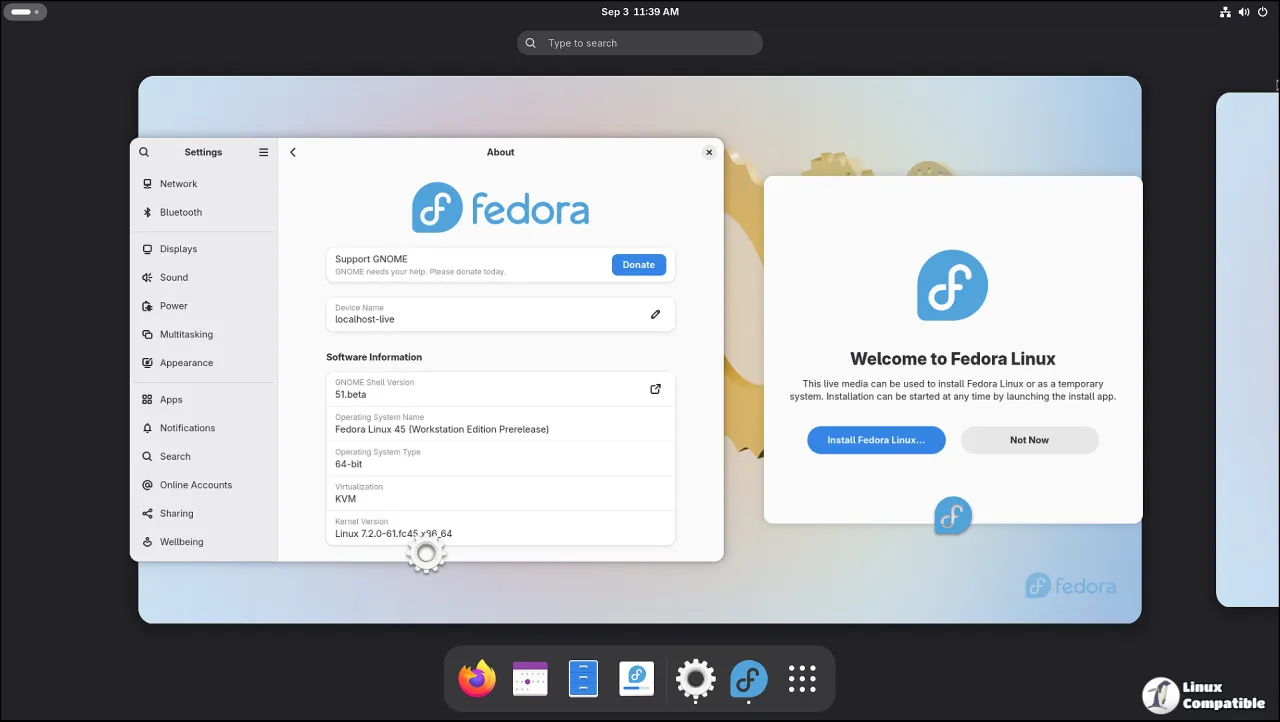
The announcement landed on the project's test-announce mailing list. Samyak Jain from Release Engineering laid out the cut-offs. "Today, 2026-10-06, is an important day on the Fedora Linux 45 schedule, with significant cut-offs," Jain wrote. "Today we have the Final Freeze, which starts at 14:00 UTC."
Here's the deal. Only packages fixing an accepted blocker bug or an accepted freeze-exception bug will get folded into the final composes. Everything else stays parked in updates-testing until the release is approved. Those approved updates then ship as zero-day updates on launch day.
In other words, the release package set is basically decided. The last real chance for critical fixes is slipping away, and QA is doing a final pass.
Keep in mind this isn't the first time we've watched Fedora 45 under scrutiny. The beta shipped on schedule in September. The takeaways were, well, boring in the best way.
A small blocker list goes a long way
The numbers matter here. The live Final blocker tracker, last synced this morning, shows a fairly manageable picture.
Two blockers are still proposed, waiting on a QA vote. Two are accepted, meaning they have to be fixed before release. On top of that, five proposed freeze exceptions and eight accepted ones are floating around.
The two accepted blockers are the ones to actually watch. One is an aarch64 Server DVD image that's too big to fit (bug 2544671). The other is an oo7 hiccup that blocks secure-WiFi auth during GNOME initial setup (bug 2540692). Both are already assigned.
The rest are freeze exceptions, and several are already in testing. That's the signal Fedora 45 is tracking well. Nothing exotic. Just the kind of release that lands on schedule because nobody tripped over its own feet.
What's actually new under the hood
Fedora 45 isn't just a bug-fix pass. There's real stuff in here.
The headline change is kmscon replacing the in-kernel framebuffer console, commonly known as fbcon. Yes, that's a roughly 14-year-old subsystem finally getting retired. Text virtual terminals now run through kmsconvt, a userspace terminal on KMS. The payoff is better Unicode, HiDPI scaling you can zoom with Ctrl+, and scrolling that actually works again. If kmscon gives out, it drops back to plain getty automatically.
The Register liked it enough to say kmscon drags the Linux console into the 21st century. ItsFoss pointed out the fallback safety net. I'll concede both are right.
Then there's the stuff that will annoy sysadmins. RPM package signing is now enforced by default, so rpm -i rejects unsigned packages with an exit code of 1. Repo configs get relocated from /etc to /usr, landing in /usr/share/dnf5/repos.d/. And ptrace gets restricted by default via Yama, with strace pulling in a weak dependency to reset it if you need it.
Other changes worth a mention: Stratis storage support in the Anaconda installer, a new WebUI installer replacing GTK Anaconda for Atomic Desktops, and oo7 becoming the default Secrets Service provider for GNOME. Note that the KDE edition is not in the oo7 list, despite some press coverage suggesting otherwise.
The version numbers will catch the enthusiasts. GNOME 51 is the default Workstation desktop, KDE Plasma 6.7 ships for the Plasma edition, and the kernel is Linux 7.2. systemd jumps to 262, OpenSSL to 4.0.2, and Python to 3.15.0.
It's a feature-heavy release, no question. But it's worth separating the fireworks from the actual improvements.
Kernel 7.2.7 and Plasma 6.7.5 were both already reachable through Fedora 44 updates, so neither is a reason to upgrade on its own. GNOME 51 is the newest thing, and even that only shipped upstream after the beta compose. A dnf upgrade brings it in regardless.
The genuine reasons to care are the structural ones. RPM signing enforcement is a real security win, though it may break local scripts that install unsigned packages. The /etc to /usr relocation is tidy but could surprise anyone with hardcoded repo paths. And the kmscon change is the kind of thing you only notice once it's gone.
One practical wrinkle: Fedora 43 hits end of life in early December 2026, roughly six weeks after 45 ships. If you're running 43, that deadline is now in sight.
Fedora 45 is on track for October 20. The contingency dates are October 27 and November 3. Head here to watch the live blocker tracker for real-time updates.


