Bazzite Linux 44.20261026 ships a lean kernel and graphics-stack refresh
Bazzite has released a new stable image, and the official changelog would have you believe it's a major one. It isn't.
Bazzite Linux 44.20261026 landed at roughly 20:54 UTC on October 26. The Fedora 44–based gaming distro from project Universal Blue jumped from 44.20261023. That's a three-day gap. Incremental by design.
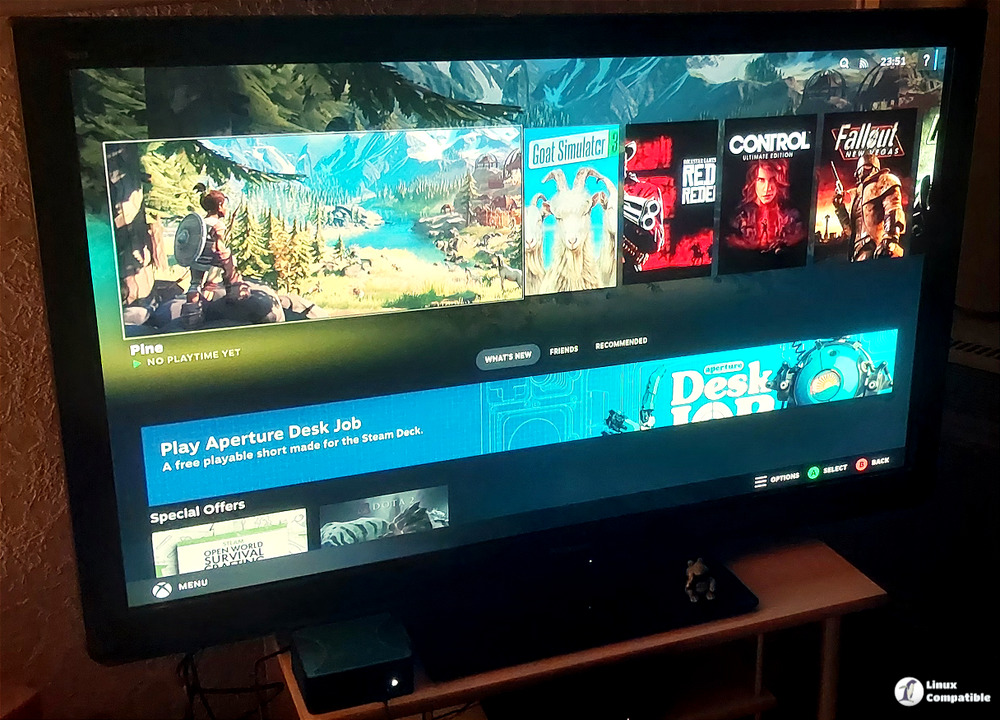
Strip the auto-generated noise and you find two commits did all the real work. The first, b00fd74, is a kernel update to 7.2.11-ogc4, maintained by Kyle Gospodnetich. The second, e1f5c73, just bumps a dependency digest on the Docker brew image and was pushed automatically by the ublupull bot's PR #6146.
Because Bazzite lists exactly one package per version in its changelog, the notes stretch into something that reads like a feature milestone. Keep in mind that list isn't a lie. It's just crowded.
A kernel refresh, not a renaissance
The headline change is the Open Gaming Collective kernel, leaping from 7.2.9-ogc3.1 to 7.2.11-ogc4.1. That's the shared kernel Bazzite helped co-found, the whole point of which is that "a win for one project becomes a win for everyone." The same patch set flows into ChimeraOS, Nobara, PikaOS, Playtron and a handful of others, instead of every distro maintaining its own fragmented fork.
On top of that you've got Gamescope 3.17.0 and Mesa 26.2.4 for AMD and Intel graphics. Nvidia gets both flavors at once: a newer open-driver stack at 615.78.08 alongside a stability-focused LTS build at 580.178.04-2.
Plasma lands on 6.7.5 for KDE users, GNOME moves to 50.4, and Waydroid, for shunting Android apps onto your Linux desktop, climbs to 1.6.3. There's also a brand-new kernel module, kmod-nct6687d, plus a fresh OpenSSH build.
You're paying nothing for any of this, and the version numbers tell the real story. These are among the freshest gaming-optimized components you can pull into a stable distro right now.
Closing the gap on SteamOS
The more interesting arc here is what Bazzite 44 is quietly trying to become: a near-identical twin of Valve's own SteamOS.
The project's roadmap names six areas being brought into sync. You can already see pieces of it in this stack. SteamOS-Manager and PowerStation put TDP and thermal control straight into the Steam Quick Access Menu. OpenGamepadUI supplies a controller-accessible overlay for options Steam won't expose on its own. There's a Gamescope NVIDIA streaming fix for remote play, in-Steam changelogs, and a full rework of the handheld game-mode update flow.
The "Deck" image aimed at handhelds and couch PCs didn't launch cleanly in August, by the way. The switch to InputPlumber and SteamOS-Manager threw regressions: certain devices lost fan control, the original Lenovo Legion Go dropped gyro support, and some ASUS and AYN devices lost RGB lighting because of an incorrectly emulated controller. The team said patches were already rolling out and argued that "all handhelds are designed to have sufficient cooling without manual control." Some users weren't entirely convinced.
Worth the switch?
That friction is worth holding alongside the durability argument. Bazzite's image-based, immutable model keeps the previous version on your machine for 90 days, so a bad update means a single bazzite-rollback-helper rebase command rather than a bricked system. The trade-off is real. The same immutability that makes it hard to brick makes it slightly more painful for people who like digging into system-level tweaks.
If you're running the current stable image, the update is a single command:
bazzite-rollback-helper rebase stable
Want to pin this exact build instead? Swap stable for 44.20261026.
Head here to download an ISO image for a fresh installation.


