Bazzite Linux Ships 44.20260825 With Rapid Kernel Pushes and a Critical Security Patch
The immutable Fedora-based gaming distro just tightened its grip on Linux handhelds. Bazzite 44.20260825 landed on August 26, pushing the kernel from 7.2.0-ogc4 straight through ogc5 and ogc6 to ogc6.1 in less than a week. The release also patches a critical jssysctl vulnerability in SteamOS-Manager, updates the Gamescope session wrapper, and lands several targeted fixes for alternative handheld hardware.
Most Linux distributions freeze their kernel for weeks or months. Bazzite treats stability more like a moving checkpoint. The Open Gaming Collective kernel tree is getting aggressively tuned for AMD GPUs, which still power the Steam Deck, ROG Ally, and Legion Go. Three intermediate builds in six days usually means someone reported a stutter, a sleep-resume hang, or a power draw anomaly that the maintainers were racing to close. kernel-tools jumped from 7.1.8 to 7.1.10 to keep the toolchain in sync.
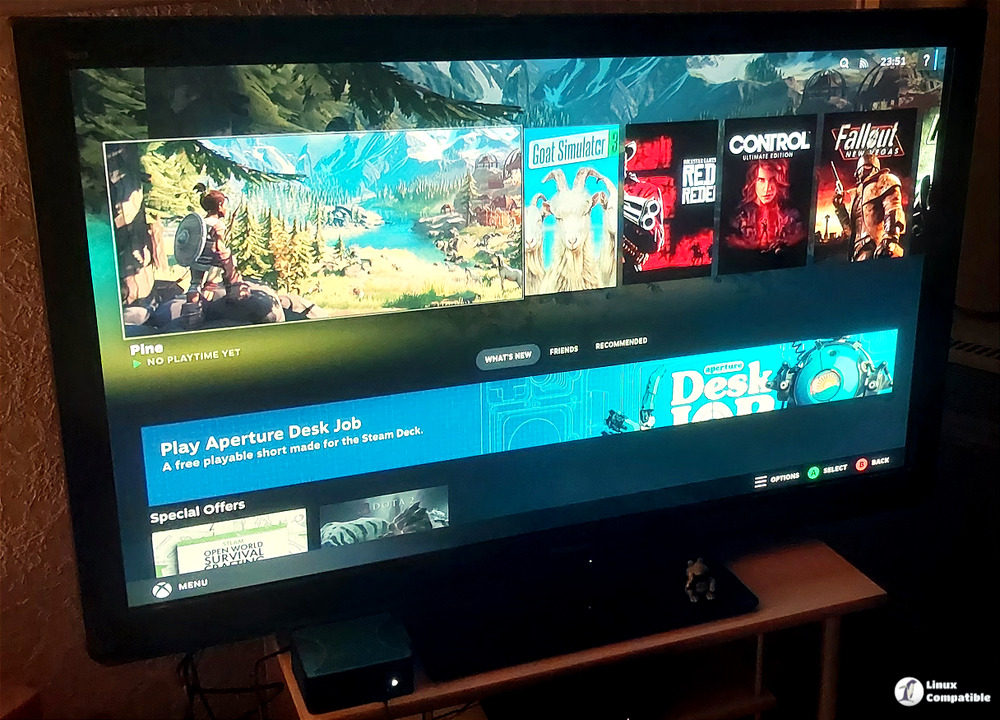
Gamescope itself stayed put, but the session wrapper gained a day-later daily build. That shift points to smoother framerate capping or VRR negotiation in Game Mode. The project notes the SteamOS-Manager update moved from commit 5438d60 to 25bff4c, explicitly "fixing a critical vulnerability in jssysctl, which is a key component for system-level configuration in Game Mode." If you tune fan curves, power limits, or display settings through the UI, your system layer just got harder to break. OpenSSH rolled to 10.2p1-14 for standard hardening alongside it.
It's a rather dense stable tag. The immutable root filesystem makes rapid iteration safe. You roll back with one command if something goes sideways, so the team can push upstream OGC patches the moment they land. The build pipeline is also getting cleaned up. Contributors moved the old uupd command to bazzite-updater with proper jq parsing, fixed a missing privilege bug in just update, and consolidated housekeeping scripts. The image shrinks, the update flow gets faster, and future releases will likely hit the channel more reliably.
Handheld quirks and under-the-hood maintenance
The PR list tells the real story. Someone actually fixed the OneXFly F1’s portrait panel boot rotation using specific plymouth and video= kernel arguments. The contributor validated the fix frame-by-frame against the actual boot sequence on a physical Ryzen 7 7840U. InputPlumber bumped to 0.78.1, and OpenGamepadUI slid into 0.46.0-11. Both are quiet fixes, but they matter for anyone juggling DualSense, Xbox, or Switch Pro controllers without fiddling with config files.
KDE’s on-screen keyboard got un-broken. Portal actions now let you control whether Game Mode or Desktop starts first. Deck announcements finally stop leaking onto Nvidia builds. The project also restored supergfxctl for legacy Nvidia images, since older cards don't support the sleep states the newer management tool requires. Virtual CD/DVD passthrough via vhba akmod got added for KVM/QEMU users running Windows games through GPU passthrough.
Under-the-hood maintenance rarely makes press releases, but it's exactly what keeps an immutable image from getting bloated. The NVIDIA-specific cleanup drops unneeded modprobe configs from LTS builds and stops applying the nvidia-deck preset to every Nvidia user. The build pipeline runs cleaner, which means less friction when upstream Fedora rolls out new packages.
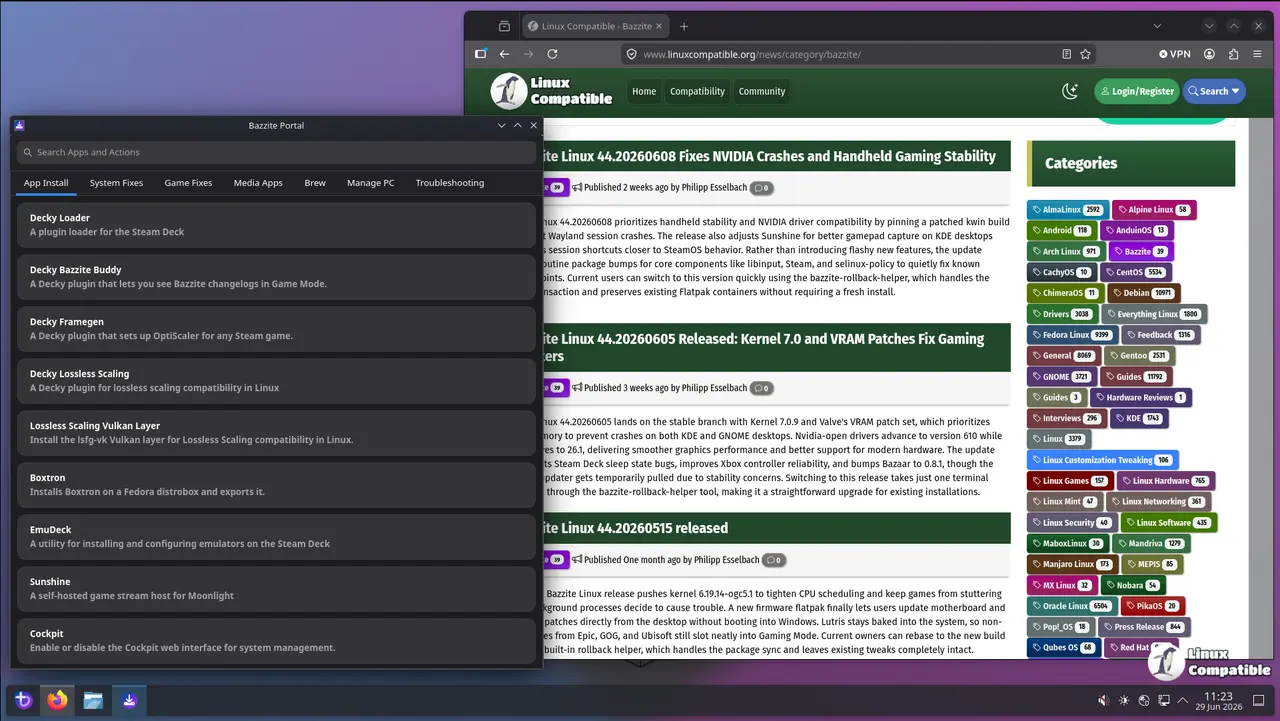
Updating takes about thirty seconds if you already track the stable channel. Run bazzite-rollback-helper rebase stable to grab the latest, or pin directly to 44.20260825 if you want to test. Rollback works the same way if you hit a regression. Nvidia variants, KDE desktop builds, and GNOME handheld images all pull from the same tagging scheme, so the command stays consistent across setups.
How to update
Current users can rebaseline with bazzite-rollback-helper rebase stable or pin to the specific version with bazzite-rollback-helper rebase 44.20260820.
bazzite-rollback-helper rebase stable
bazzite-rollback-helper rebase 44.20260825
New users can grab ISOs from bazzite.gg with a hardware-specific download picker. Nvidia users should use the bazzite-nvidia:stable branch instead.


