Amethyst Mod Manager 2.5.4 Adds Native BG3 Scripting and ARM Builds for Linux Modding
The October 10 release brings native Baldur's Gate 3 scripting support and an ARM64 AppImage, pushing the open-source Linux mod manager further down its native path.
Modding on Linux has long meant running Windows tools through a translation layer. Mod Organizer 2 and Vortex are the de facto standards, but they live under Proton or Wine, which adds friction and the occasional surprise when a mod simply refuses to load. Amethyst, the Linux-native manager from ChrisDKN, was built to dodge all of that. Version 2.5.4, which landed October 10, leans hard into two of the project's central goals: native execution and reach on more hardware.
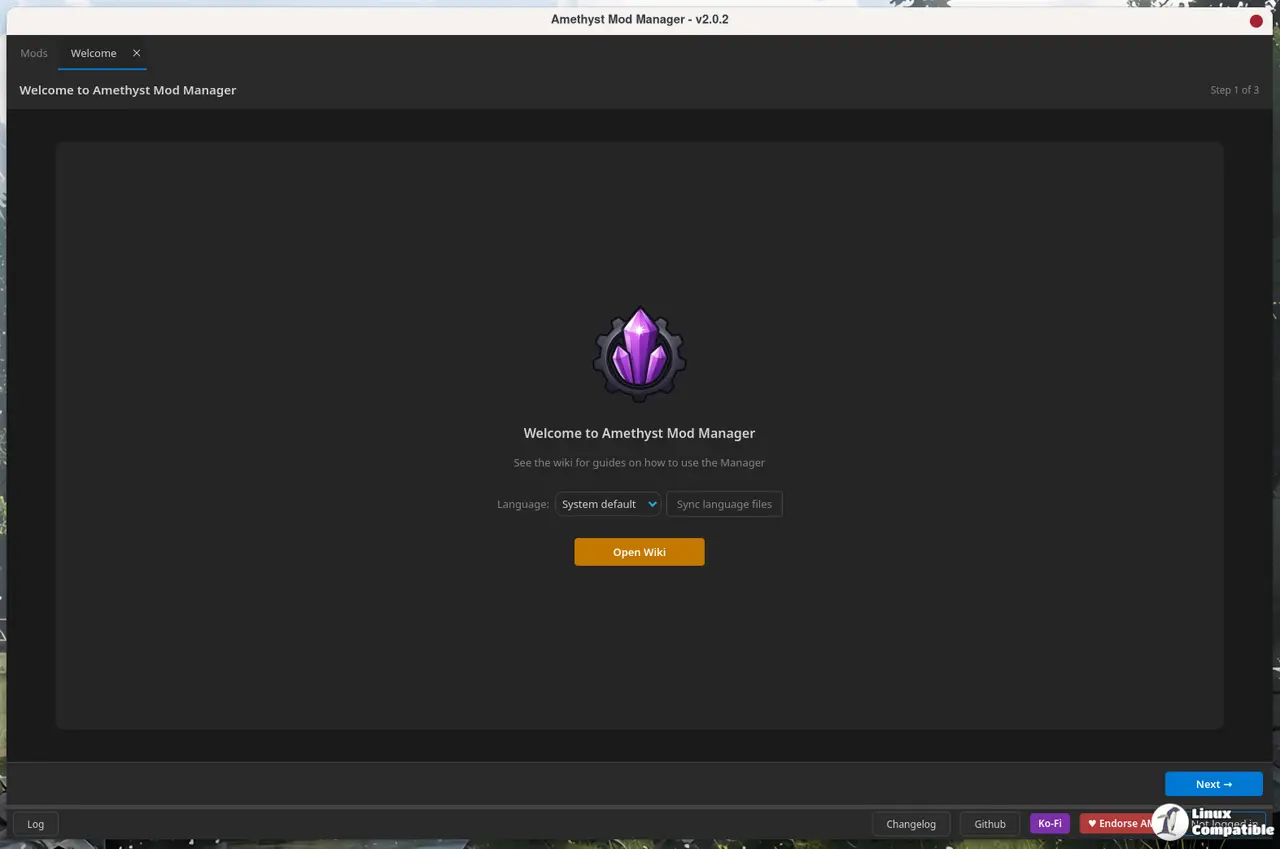
The two headline additions say it all. There's now support for bg3le, a Linux-native script extender for the native port of Baldur's Gate 3. And there's a new ARM64 AppImage build, so handheld owners can install the thing without compiling anything themselves.
Keep in mind that the bg3le piece is more than a checkbox. For a long time the native Linux BG3 could not use BG3SE, the Windows-based script extender that most scripting mods lean on, which effectively locked a whole class of mods out of the native experience. Now Amethyst detects bg3le, counts it toward Nexus requirements, warns you if a launch would skip it, and even offers an in-app wizard to install or update it. As a nice detail, the feature came from lenonk, who actually wrote bg3le, rather than being reverse-engineered by someone else.
What's actually new
Two of these additions serve Amethyst's core mission directly. The ARM build removes a real barrier, since gaming handhelds, the Steam Deck included, increasingly use ARM chips, and devices like the Retroid Pocket 6 run ArmadaOS. Having an official aarch64 AppImage means you can just install it instead of playing dependency tag-out with a toolchain. The GitHub CI notes the build was validated on a Retroid Pocket 6.
The rest of the release is about polishing, and a mature tool earns its keep through workflows rather than just features. That shows up in the ability to quickly edit FOMOD choices without reinstalling, copy profiles for backups, and reorder Wabbajack and collection download queues. There's also a switch to Linux-native SMAPI for Wabbajack-based Stardew Valley lists, a nice touch for the fully-native crowd.
Here's the odd choice: Discord RPC is gone. Rich presence is low-stakes for most modders, but nailing it down shouldn't be hard, so it reads as a small loss. Then again, trimming half-finished features is exactly how a single-developer project stops spreading itself thin. (The project has quietly gathered around 1.2k GitHub stars and 59 forks without a marketing team, which is its own kind of impressive.)
The fixes that matter most are the ones you'll never post about. The archive-extraction improvement parses headers instead of trusting file names, which matters enormously for large collection installs. A fix showing that very small, few-KB mods were failing to install for free Nexus users is the kind of thing only someone who actually hit it would notice. Same goes for the Kingdom Come: Deliverance handler fixes and the game-detection correction for Skyrim 1.5.97.
It reads like a project running hot, and that tracks. The repo sits at roughly 2,848 commits, and recent releases have come in quick succession. v2.5.3 added Voices of the Void, Balatro, and The Witcher 3 Remastered. v2.0.0 was a full Qt UI rewrite, and v2.3.0 brought a virtual file system deploy method that leaves your game folder untouched until launch. It's maintained largely by one person, ChrisDKN, though the pull-request history shows a healthy group of contributors including jonathan-dd, Posuceius, Benniphx, DanGM96, and justinmiller87, with translations on Crowdin and a Ko-Fi for those who want to fund it directly.
Where to get it
Amethyst spreads through three main channels, and all of them pick up updates automatically via an in-app notification. The AppImage is the most plug-and-play option, and you can grab the installer script directly.
curl -sSL https://raw.githubusercontent.com/ChrisDKN/Amethyst-Mod-Manager/main/src/appimage/Amethyst-MM-installer.sh | bash
Or download it straight from the releases page and use the gear-lever Flatpak-style installer. Flatpak users can pick stable or beta, swapping the branch if you want to test pre-releases ahead of everyone else. If you install from a bundle instead of the remote, though, skip it, since you'll miss the 32-bit compatibility layers that Windows tools need under Proton. If you're on Arch, there's an AUR package called amethyst-mod-manager, and source builds use the Meson build system, so you'll need git, meson, ninja, Python 3.12+, and a Rust toolchain to get going.
One heads-up: the app may ask for a password to set up your OS keyring, since it stores your Nexus API key there rather than in plain text. Pick any password you like.
Amethyst is easily one of the most Linux-optimized mod managers around, and v2.5.4 pushes it further down the native path. It's not without rough edges. The single-developer model means features land when they land, and the Discord RPC removal leaves a few people wanting their little play-status badge back. For anyone running mods on Linux, the Steam Deck, or a handheld, this is still a release worth updating to.
Head here to the GitHub repo if you want to dig into the full changelog.


