Bazaar 0.9.3 Drops: Maintenance Polish Lands One Week After Major Feature Flood
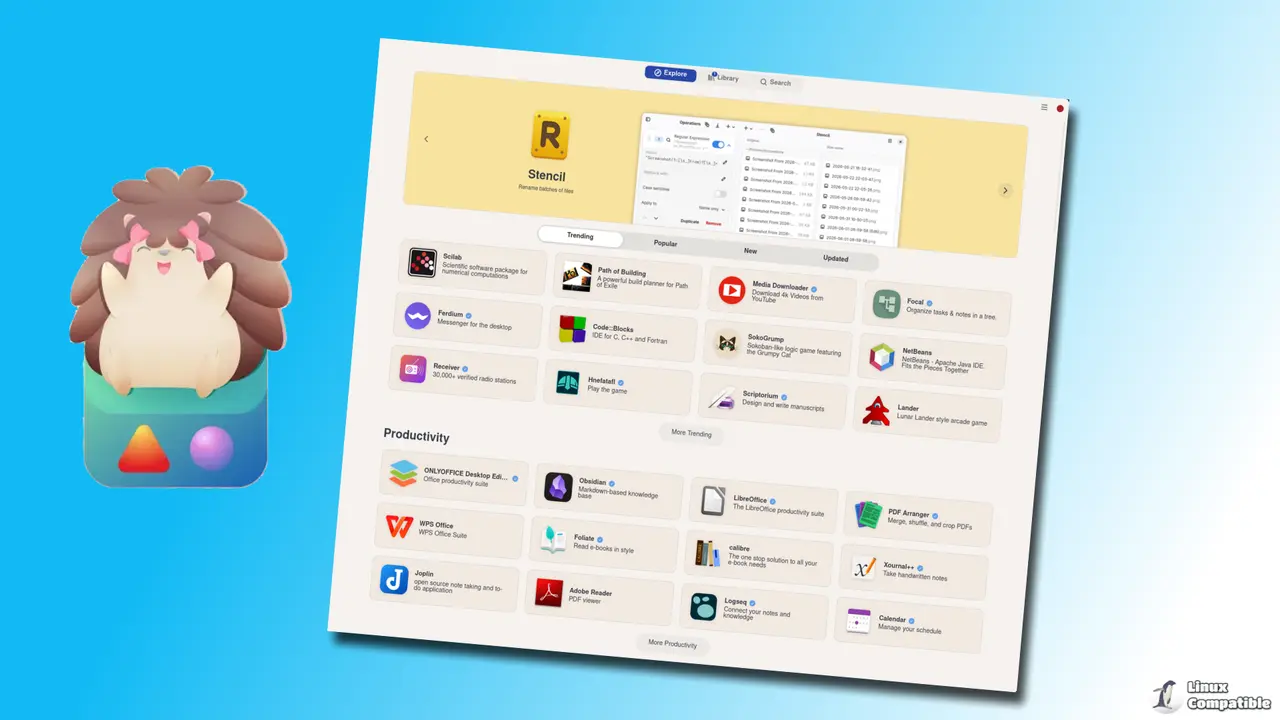
Bazaar, the Flatpak-first app store for GNOME, has released version 0.9.3. It's a maintenance update arriving just seven days after the feature-packed 0.9.2 release. The new version focuses on ironing out bugs in the background daemon, adding Flathub's curated topic sections, and a sweep of accessibility improvements led by contributor Alexander Vanhee.
The one-week gap between releases is short. Very short. Version 0.9.2 dropped on August 5 and introduced the Bazaar Daemon, an auto-update system, and a metainfo preview tool. The changelog for that release showed 39 commits pushed after tagging. That's not exactly the mark of a stable build; it signals a fast-moving codebase where features ship fast and get fixed faster.
So what does 0.9.3 do? Mostly, it fixes the things that likely bit users in the ass after 0.9.2 shipped. The background service, which was a major architectural shift in the previous release, got multiple bug fixes. There's also an autostart fix that lets the background service run outside the Flatpak sandbox, which helps users who prefer non-sandboxed setups.
The Daemon Takes Center Stage
Instead of keeping the full GUI app resident in memory just to handle desktop search, Bazaar now runs a low-memory background process. It handles search indexing, schedules auto-updates, and spawns the GUI on demand. This architecture is solid for a lightweight app store, but it needs real-world testing. The 0.9.3 release seems to be that testing payback.
The release also resolves stale auto-update notifications via the update worker. A segfault when running --no-window directly on an app has been squashed. On the UX front, transaction tile progress labels are now numeric, and the project has tightened up telemetry to only track stable Flatpak versions.
Accessibility and Curated Discovery
Vanhee is the primary contributor driving these changes. The release fixes a screen reader issue where buttons were being "double read" aloud. Dialogs are now more accessible, and the release dialog has been improved. For Linux accessibility, this is the kind of boring, necessary work that actually makes a difference.
Flathub's seasonal curated topic sections are now displaying on the home page. If you prefer browsing by curated themes rather than digging through the default grid of icons, this adds some structure to the discovery process. Slovenian and Swedish translations were added in this round, with updates for Czech, Ukrainian, and Portuguese (Portugal).
Bazaar has about 1,600 stars on GitHub and sees roughly 36,000 downloads per month on Flathub. It exists as an alternative to GNOME Software and KDE Discover, targeting Flatpak users who want a focused experience. The project is licensed under GPLv3, maintained by kolunmi with heavy contributions from Vanhee. YaLTeR, haaninjo, and filmsi made their first contributions in this release.
The rapid release cadence suggests the project is maturing quickly. The focus on accessibility aligns with GNOME's broader push toward WCAG compliance. For Linux users, Bazaar offers a clean Flatpak experience, and this release seems to be solidifying the foundation laid by 0.9.2.
You can install Bazaar 0.9.3 directly from Flathub, or grab the source from GitHub if you prefer that workflow. Debian and Arch users are covered as well, with support for both aarch64 and x86_64 architectures.


