BakAndImgCD 53.0 released as newest version of an ultra-lightweight Linux backup-and-rescue tool
At 84.9 MB, this 4MLinux fork does two things and gets out of your way.
BakAndImgCD 53.0 shipped October 23, 2026, landing on the "4MLinux Releases" blog and mirrored to SourceForge a few hours later. It's the latest update to a niche rescue distribution that backs up data and images disks from a bootable Linux. And it changes almost nothing about that recipe, which is arguably the whole point.
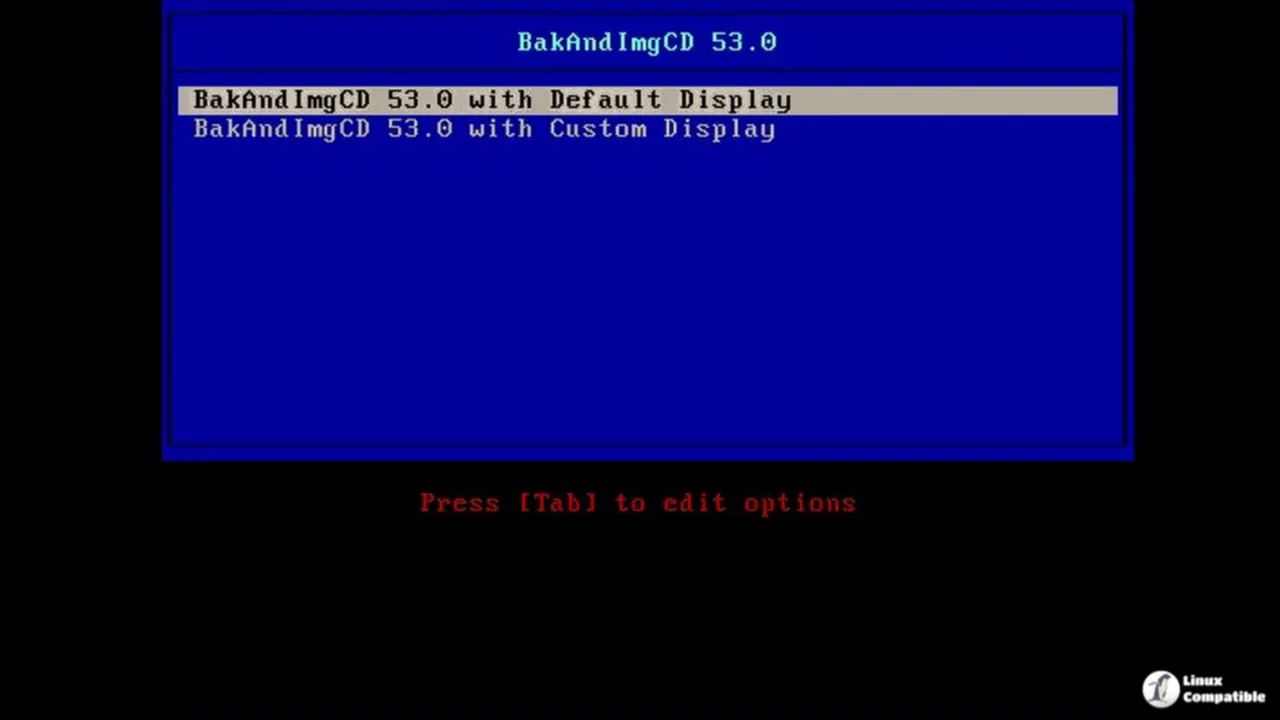
The version number just tracks the upstream 4MLinux release cycle, so you can roughly place it in the timeline. The 53.0 core of 4MLinux is still in beta as of right now, with a stable build slated for November 2026. BakAndImgCD took that beta-era toolchain and gave it one narrow purpose.
At 84.9 MB, this ISO is a rounding error next to a modern desktop distro, which typically runs 4 to 8 GB. This one boots into a terminal-centric environment with Midnight Commander as the file manager and a toolkit built around two jobs: save files, and image disks.
The official announcement is remarkably terse. It states only that "this release is based on the 4MLinux Backup Scripts 53.0," with no changelog and no feature list. That's fine. The backup scripts' release notes aren't published separately; the fork inherits them wholesale.
Under the hood
The scripts orchestrate a familiar pile of open-source tools, each picked for one specific job. FSArchiver does filesystem-level archiving and can restore to a larger or smaller partition, which matters when you're moving to a bigger drive. GNU ddrescue is the thing you reach for when a drive is actually dying, since it maps bad sectors, prioritizes healthy areas, and resumes after interruption to spare a struggling disk further damage. Partclone copies only the blocks a partition actually uses, keeping images smaller than a raw dd.
rsync rounds things out with efficient network syncs, while TestDisk, PhotoRec, and nwipe handle partition recovery, file salvage, and secure erasure. Archives can optionally be compressed using lzo, lz4, gzip, bzip2, xz, or zstd, then pushed to a remote server over Ethernet, WiFi, or a USB tether. Keep in mind that 84.9 MB means you're getting a rescue stick, not a workstation, but you can pull a backup off a broken box without needing any storage on it.
A slow-burning release cycle (with a naming snag)
BakAndImgCD has tracked the backup-scripts version numbers since at least 2015, shipping roughly once or twice a year. Notable milestones along the way: FSArchiver and zstd compression arrived in 25.0 back in 2018, and 32-bit support got the axe in 31.0, making it a 64-bit-only OS. The latest few versions, 50.0 through 53.0, sit between 80.9 MB and 84.9 MB, so the growth is barely perceptible.
BakAndImgCD sits in the same crowd as Clonezilla, SystemRescue, and Mondo Rescue. Clonezilla typically runs well over 1 GB, rides on Debian-based variants, and leans on an ncurses menu. BakAndImgCD trades all that for a smaller footprint and independence from the major distro lineages. It's arguably a better fit for very old or very limited hardware, while Clonezilla still wins for mass cloning and multicasting.
Head here to download the release from SourceForge.


