One developer, Brandon Thomas, built ArtCraft's seven Adobe-alternative apps in pure Rust over a few days using Claude Opus 5.5, launching them on GitHub in early October 2026. The flagship Photoshop clone, PhotoCraft, has drawn roughly 43,000 stars, making it one of the fastest-starred pure-Rust desktop apps in recent memory. The apps are free and open-source with no subscription, funded by an optional credit-based AI studio, though only two of the seven are ready to use. Legal experts flag trade-dress and patent risks in the "clean-room" reimplementations, and the project stands as a striking demo of AI-accelerated development.
One developer built ArtCraft's free Adobe-alternative suite. It now has 43,000 GitHub stars.
ArtCraft's open-source, Rust-based replacements for Photoshop, Premiere and friends are gaining attention fast enough to make Adobe nervous.
One person built an entire Adobe-suite competitor in a matter of days. Brandon Thomas, a 15-year software veteran based in Atlanta, says he wrote seven creative applications in pure Rust, from scratch, using Claude Opus 5.5 as the main workhorse. There is no team behind the Crafting Apps. Just him and a very capable AI agent.
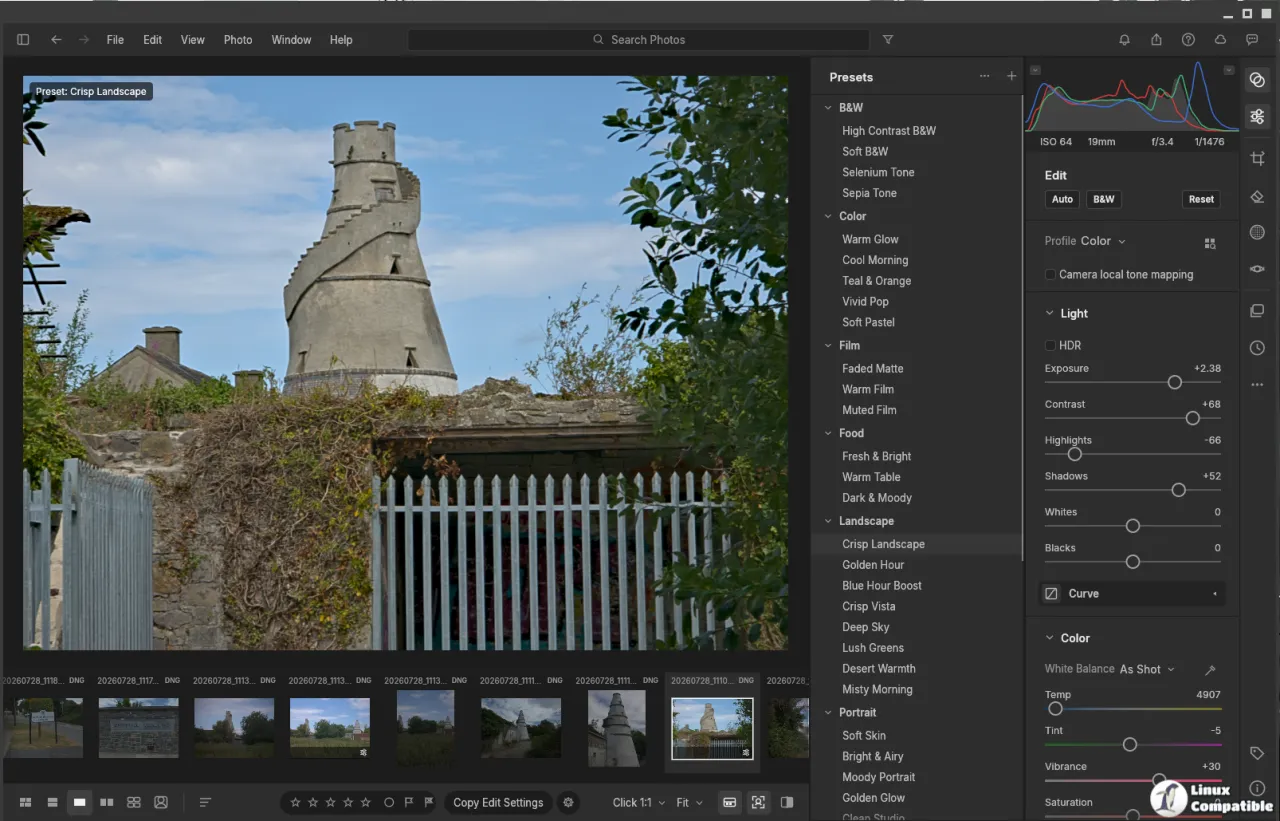
The numbers are what actually stick with you. PhotoCraft, the Photoshop alternative, has roughly 43,000 GitHub stars. That alone makes it one of the fastest-starred pure-Rust desktop apps to ship in recent memory.
PhotoCraft was created September 30, 2026. A GitHub-API read on October 9 put it at 27,465 stars. By October 11 it had climbed to about 43,000. Thomas said it passed 20,000 just hours after launch.
Adobe recently settled a $150 million federal lawsuit over subscription dark patterns, including the cancellation fees that Thomas says drove him to build all this. That timing is hard to miss.
The seven apps, and their loudest claims
The lineup maps onto the Adobe categories designers know by muscle memory. Each app is dual-licensed MIT or Apache-2.0, ships native installers for Linux, Windows, and macOS, plus a WebAssembly build you can run in a browser tab, and every menu item maps to a command a script or an AI agent can drive over an MCP server.
PhotoCraft is the flagship, and by some distance the most convincing. At v0.7.0 it opens and saves layered PSD and PSB files, claiming 134 of 135 real-world test files round-trip byte for byte. It renders on a native GPU canvas through Metal, Vulkan, DirectX 12 and WebGPU, so there is no Electron wrapper and no web view in sight. You get 16 adjustment layers, 70+ live filters, smart objects and full layer styles. Color work runs 8/16/32-bit across RGB, CMYK, Lab and Grayscale with ICC management and soft proofing.
VectorCraft sits at v0.9.0. ArtCraft says it renders 20,000 shapes in about 27 milliseconds at retina resolution, with the interface holding 120 fps.
FilmCraft is the Premiere Pro alternative, and its boldest move is the tagline "No FFmpeg inside." It ships its own bit-exact decoders for H.264, HEVC, ProRes, VP9, AAC and Opus, while an integer timebase keeps 23.976 and 29.97 drop-frame exact. Building it needs Rust 1.95+.
LightCraft is the Lightroom alternative, with native-Rust raw decoders for DNG, CR2, ARW, NEF, RAF, RW2, PEF and ORF. ArtCraft claims a 24-megapixel raw updates in about 4 milliseconds per slider move.
PdfCraft clears a 983-file test corpus with zero crashes. EffectCraft, the After Effects-style tool, packs 259 effects and exports H.264 and ProRes with alpha, again without FFmpeg. DesignCraft does print-ready PDFs with a Knuth-Plass paragraph composer and CMYK and spot-color output.
There are more, WordCraft, Gridcraft, Deckcraft, CADCraft, and SoundCraft, exist as repositories but aren't part of the public lineup.
Free apps, paid AI
The tension at the heart of ArtCraft is the story. The desktop apps are free and open-source, with no subscription, no account, no telemetry and no cloud round-trip. That is a direct shot at the Creative Cloud model. The manifesto reads plainly: "Stop renting from websites. No aggregator between you and the models. Your work stays yours."
The money comes from the ArtCraft AI studio, the commercial arm. You compose a scene in real 3D and let models like Nano Banana 2, Seedance and GPT-Image-1.5 render it, paying with credits.
Pricing breaks down like this. Basic is $10 a month, or $8 billed yearly, for 1,000 credits. Pro sits at $35 a month ($28 yearly) and is marked "Most Popular," with 3,750 credits. Max is $60 ($48 yearly) for 6,600 credits. Enterprise is custom.
Every plan touts "You Own ArtCraft Forever." Oddly enough, the site says you can run the apps with no subscription at all if you bring your own compute and your own third-party model accounts. That's an unusual open-door policy for an AI SaaS.
Then there's the maturity question. Only PhotoCraft and PdfCraft are "early alpha." The rest are still "in development," and the rapid AI-assisted build reportedly came with "noticeable glitches, unpredictable tool behavior, and performance hiccups." Thomas has offered bug bounties and is inviting contributors in, which reads less like "ship it" and more like "help us hold it together." Early, at best.
On the legal side, things get shakier. ArtCraft names Adobe's products directly and builds "clean-room reimplementations" from public specs and observed behavior. That doctrine is defensible, and a recent precedent cuts in its favor: Dan Blanchard's chardet v7.0, an MIT-licensed, Claude-rewritten rewrite of an LGPL library, landed with under 1.3% code similarity. It still drew a copyright fight from the original author, which tells you something: litigation often follows even genuinely clean work.
Copyright on the code is probably fine if the clean-room claim holds. The softer edges are trade dress and patents. Recreating Photoshop's look-and-feel could invite a confusion-based trade-dress claim, and Adobe holds thousands of software patents covering functional workflows, not just code. The apps do carry a disclaimer that they aren't affiliated with or endorsed by Adobe, a classic nominative-use defense. Adobe is also actively litigating its own trademark cases, so don't expect it to nap.
ArtCraft is less a software release than a proof of concept for agentic development. One engineer specified, an AI agent produced a professional-grade codebase in weeks, and tens of thousands of creators rallied behind an anti-subscription pitch. Whether that momentum survives its early-alpha glitches, its legal exposure and its credit-based economics remains to be seen.
Head here if you want to try out the applications yourself.


