Friends of Apache NetBeans has released installers for Apache NetBeans 32 IDE that bundle Azul Zulu's OpenJDK 27.0.1.1, ensuring users get a patched runtime that immediately addresses the critical CVE-2026-114938 "Java4Shell" remote code execution vulnerability. The community-built packages simplify installation across Linux, Windows, and macOS by eliminating the need for manual JDK configuration, while a switch to Azul Zulu preserves x86_64 macOS support abandoned by Adoptium. Every release undergoes rigorous verification by seven PMC members, including code signing and Apple notarization, before Geertjan Wielenga publishes the packages on the official FoAN website and GitHub.
Apache NetBeans IDE 32 Installers Bundle Patched OpenJDK 27, Addressing Critical "Java4Shell" Flaw
Friends of Apache NetBeans ships zero-friction packages with Azul Zulu to patch CVE-2026-114938 without forcing users to hunt for runtimes.
Friends of Apache NetBeans has released installers for Apache NetBeans IDE 32, bundling a patched OpenJDK 27 runtime so you don't have to configure anything yourself. The timing is particularly relevant. The vulnerability being patched, CVE-2026-114938, known as "Java4Shell," was disclosed on November 17, 2026, just one day after the NetBeans 32 binary zip landed on the Apache download mirrors.
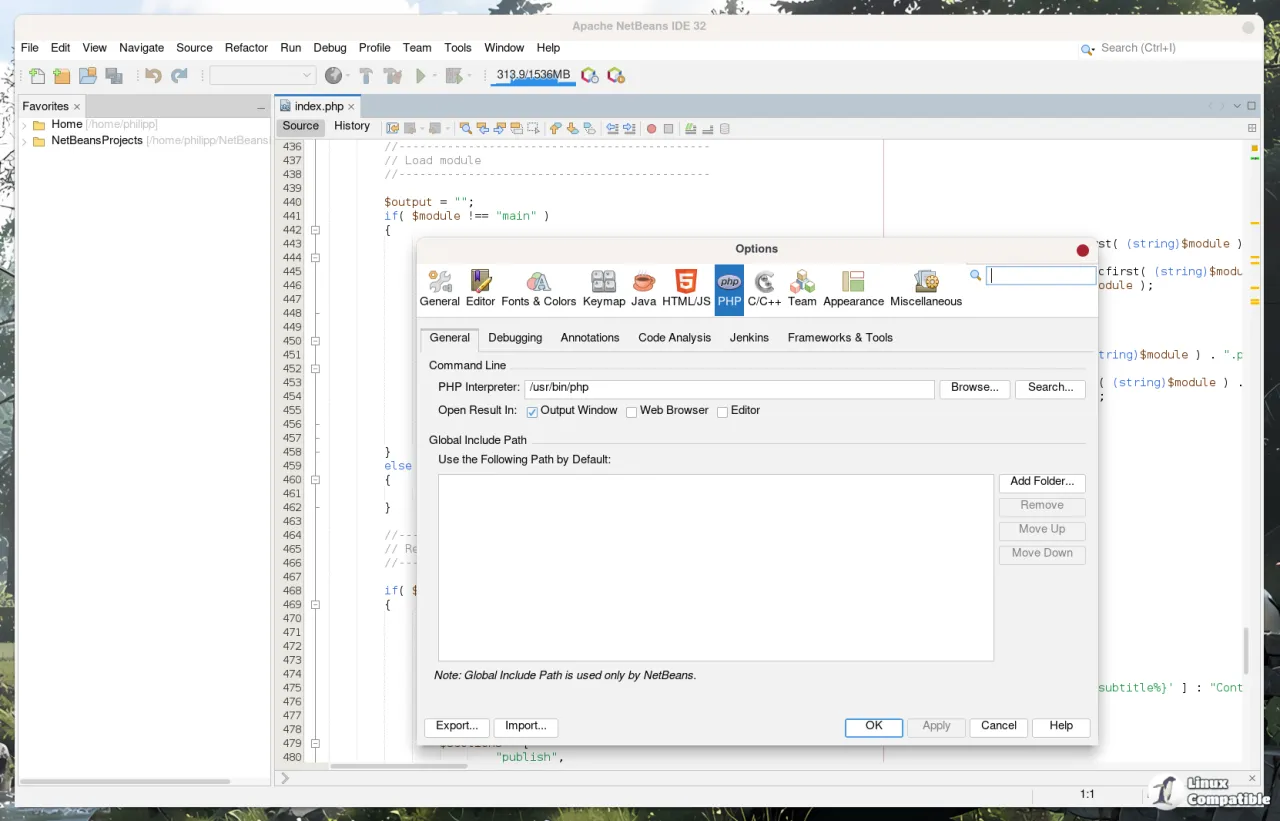
The installers bundle Azul Zulu's build of OpenJDK 27.0.1.1. That specific build includes the fix for the critical remote code execution flaw that rattled the Java world this week. The project's release notes make this explicit: "No installer in this release bundles a JDK older than 27.0.1.1."
NetBeans 32 itself shipped on November 16, 2026, under a quarterly release cycle. It's the fourth release of 2026. The official distribution is a ~497 MB binary zip. If you prefer a platform-independent archive, Head here to download it directly. However, for those who want a single executable that handles the JDK installation and runtime setup, the community installers are the way to go.
Why does the community need installers? The Apache Software Foundation releases the binary zip, which assumes you have a JDK or know how to configure one. The Friends of Apache NetBeans (FoAN) is a Dutch not-for-profit foundation established to fill that gap. It can bundle third-party runtimes under different license terms without running into the legal friction that sometimes blocks official distributions.
Switching to Azul Zulu
The nb32 installers mark a shift in the bundled JDK vendor. Previous builds relied on Eclipse Temurin from Adoptium. Starting with NetBeans 32, the installers use Azul Zulu. The reason is practical: Adoptium stopped publishing macOS x86_64 builds for OpenJDK 27. Since FoAN wants to support Intel Macs alongside Apple Silicon, Azul Zulu was the only vendor still providing a consistent x86_64 build.
The installers include native packages for Windows (.exe), macOS (.pkg for both arm64 and x86_64), and Linux (.rpm and .deb). Every package goes through a verification process. Geertjan Wielenga, a long-time Apache NetBeans PMC member, released the installers on November 28, 2026. Seven other contributors verified the builds across platforms, covering code signing and notarization.
The project has a long history. It survived being acquired by Sun, lost under Oracle, and found again under Apache. It's still here, and the community infrastructure is maturing. The build process is now automated via GitHub Actions, and every commit is auditable. If you're keeping score, the installers are hosted on the FoAN website and mirrored on GitHub.
GlassFish 8 and Gradle 9.8
Beyond the runtime, NetBeans 32 brings updates to the tooling. The IDE now recognizes GlassFish versions 8.0.1 through 8.0.4. If you're building Jakarta EE applications, that's the immediate update you'll care about. JSF support also gets refinements, including better expression language bean resolution and warnings for duplicate attributes in Faces tags.
Build tools see a bump too. Gradle tooling is upgraded to version 9.8. Maven gets fixes for the effective POM model tab on JDK 27 and rate-limited remote index downloads that pause rather than hammer servers. Embedded Tomcat moves from 11.0.25 to 11.0.26.
DevOps tooling improves with Git via JGit 7.7.1. SSH commit signing is now enabled by default. Docker support lets you pull container images from existing tag entries and define environment variables in the Run dialog. The code indexing library jumps to Lucene 10.5.1.
OpenJDK 27 itself is a non-LTS release that reached GA on September 15, 2026. It's supported until roughly March 2027. The runtime includes several significant JEPs, including making G1 the default garbage collector across all environments, post-quantum hybrid key exchange for TLS 1.3, and compact object headers that reduce 64-bit object headers from 96 bits to 64 bits. Structured Concurrency gets its seventh preview, and the Vector API hits its twelfth incubator stage.
It's a rather substantial update for an IDE that has been around since 2000, though the reliance on community installers for the "easy path" is something to keep in mind. You're trusting a specific build chain from a community foundation rather than a direct Apache binary. The verification process helps, but the binary you run is distinct from the source code in the official Apache repository.
Head here to grab the installers. Head here for the official binary zip if you'd rather configure your own runtime. The code is all open under Apache License 2.0.


