ChrisDKN pushes Amethyst Mod Manager v2.5.5 with a focus on honest error messages
The latest update to the fastest-growing native Linux mod manager stops the tool from reporting installs as "successful" when they've actually failed.
Amethyst Mod Manager v2.5.5 shipped today, and the part worth your attention isn't the three new games. It's a batch of fixes that finally stop the manager from telling you an install "succeeded" when it actually fell apart halfway through.
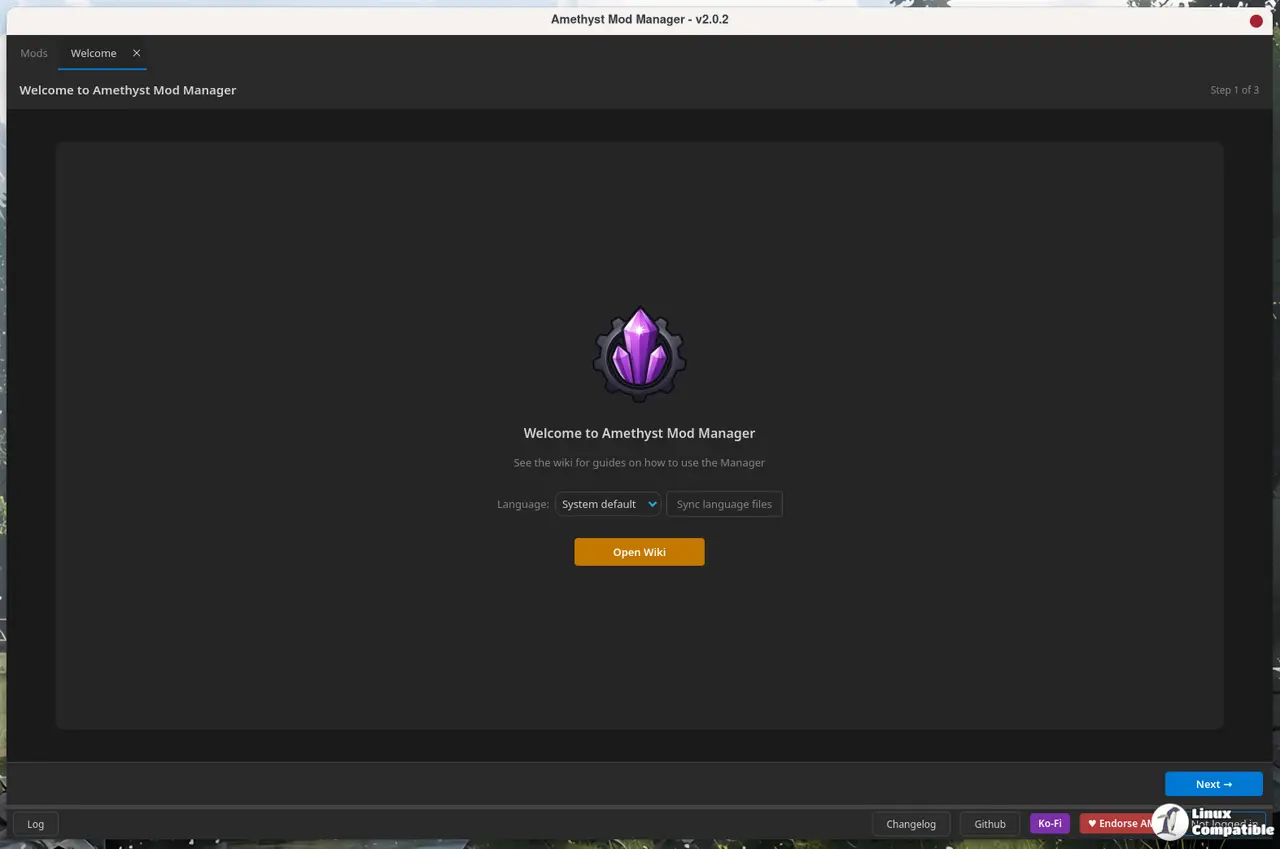
The update from developer ChrisDKN dropped around 15:30 UTC. In a single release it adds The Sims 3, Star Wars: Zero Company, and Grim Dawn to its supported titles, starts forwarding .nxm links to other apps, and quietly plugs four different ways an install could get away with a green checkmark. Those are PRs #522 through #525, and read together they make it clear this was a deliberate honesty pass rather than a grab-bag.
That last cluster is the one that matters. If a deployment's file transfer fails, or game-specific post-install processing bombs, Amethyst used to flip the switch to green anyway. Now it reports the failure. Not the flashiest fix, but arguably the most useful one. Anyone who has ever burned three hours on a Wabbajack list only to be told everything was fine will understand why.
Shipped today: honest fixes and new games
The Sims 3, Star Wars: Zero Company, and Grim Dawn extend Amethyst's footprint into life sims, a heavily-modded upcoming Star Wars title, and isometric action-RPG territory. For what it's worth, the changelog misspells the Star Wars game as "Zero Comapny," so you know it was typed up under deadline.
Beyond new titles, there's a pile of workflow tweaks. You can forward .nxm download links to other apps, swap the default priority sort order, and install Windows components from the Proton menu with one click. The modlist panel can now open as a tab, you can symlink mods between profiles, import r2x manifests for Thunderstore games, and disable keybinds entirely if the defaults start grating.
The quieter changes are arguably the more useful ones. AppImage updates now arrive via zsync for incremental downloads instead of re-running the whole installer script. Bethesda profile saves use sLocalSavePath to keep them out of your main saves folder, Creation Club disabling in Fallout 4 and Skyrim SE is now optional, and the onboarding menu lets you pick a theme while listing your installed games.
Keep in mind that Amethyst has been moving at a pace most projects never reach. It went public in February 2026, and since then a stable has dropped roughly every week or two. Latest was v2.5.4 just past Tuesday, which cut Discord RPC, then v2.5.3 the week before. This cycle alone was preceded by a beta on October 17, so more incremental updates are coming.
A native Linux mod manager with one lingering question
Its tagline is deliberately modest: "A mod manager for Linux." On the surface that undersells it. Amethyst stitches together the staging workflow of Mod Organizer 2 (mods kept in their own folders, ordered by priority) with Vortex-style conveniences like an in-app store browser, one-click collection installs, and dependency handling—all without needing a Windows compatibility layer for the manager itself.
The alternatives to Amethyst are themselves Windows programs. Vortex and Mod Organizer 2 only run on Linux through Proton or Wine, a polite way of saying they run behind a compatibility layer and you hope the DLL layer holds. A lot of folks just symlink mod files by hand and call it a day. Amethyst aims to remove exactly that gamble.
The tech under the hood is Python with a PySide6/Qt interface, reworked from scratch in v2.0.0. A native Rust extension called amethyst_filegraph runs as an internal file cache behind fast conflict detection, and libloot ships built in for load-order sorting. It's all licensed GPL-3.0.
You can grab it as an AppImage, a custom Flatpak (an aarch64 build landed in v2.5.4, which matters for handhelds), or through the AUR. One caveat though: it isn't on Flathub yet, so getting it through your distro's normal update path means adding a custom remote. Installing from a bundle also skips some 32-bit compat extensions you'll need for Windows tools under Proton; the app pulls those in on first launch, or you can add them by hand.
The solo-developer model is Amethyst's greatest strength and its sharpest risk at once. Everything funnels through one person, which is why features ship fast and why all the triage sits in one head. In the v2.5.0 notes, Chris said he was drowning in feature requests and paused them, asking people to focus on bug reports so existing features could stabilize.
So it's arguably competing with a two-decade-old ecosystem of paid and free tools, yet it remains just one guy in his spare time shipping a release every ten days. He's funded through optional Ko-Fi donations and keeps just a handful of repos, which tells you where his energy goes. He's also part of the scene he serves, plugging his own Skyrim SE Nexus mod in the v2.5.4 notes instead of just writing about it.
Wabbajack and enormous collection installs can still trip up at scale, on things like long path names and unexpected texture mip sizes, and there's the open question of what happens if the maintainer ever burns out. Those are real concerns. But so is a native, free, open-source option that now at least tells you the truth when something has gone wrong.
If you're running a big modlist on Linux, it's worth a look. Head here for the full changelog.


