4MLinux 52.0 STABLE Drops Kernel 6.18 and Modern Apps Into a Tiny Live Rescue Disk
The ultra-lightweight Linux distro keeps proving you don't need gigabytes of RAM to run a fully patched system.
4MLinux 52.0 STABLE just landed, and if you've ever wrestled with a broken Windows PC at 2 a.m., this is the bootable lifeline you've been waiting for. Polish developer Karol Babinski has pushed the new stable release, and it's a complete overhaul across the stack. Kernel 6.18.38. Python 3.14.3. PHP 8.5.4. You get the picture.
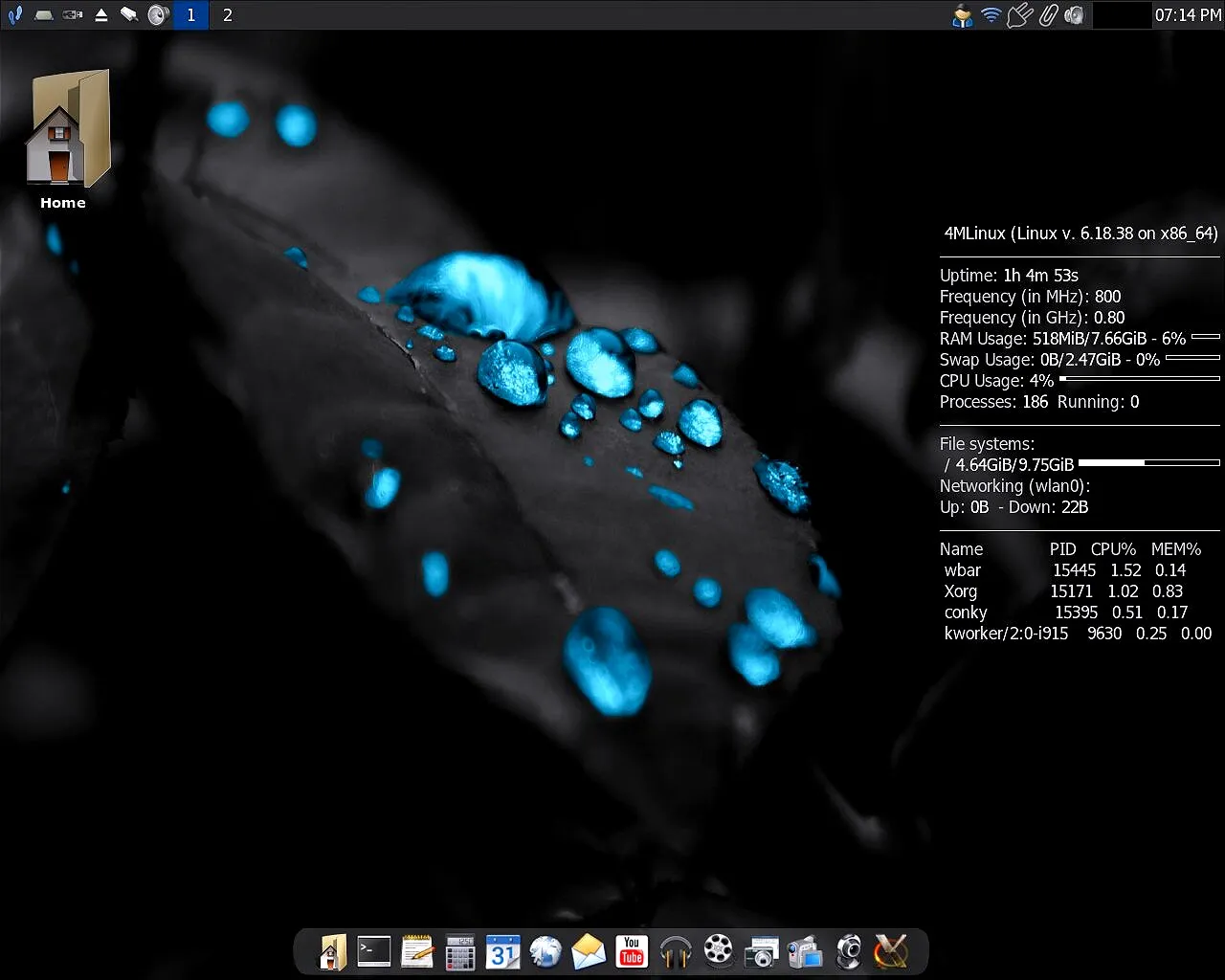
The project has been quietly doing its thing since 2016, built around what Babinski calls the "four M" philosophy: Maintenance, Multimedia, Miniserver, and Mystery. Translation? It's a rescue disk, a media workstation, a lightweight server, and a retro gaming cabinet, all wrapped in roughly 200 megabytes of RAM.
Running it live from a USB is absurdly light. You only need 200 MB of RAM to boot. Install it to a drive, and that climbs to 300 MB. Yet you're getting LibreOffice 26.2.5, Firefox 153.0, Google Chrome 151.0, and Thunderbird 153.0 bundled in. For those who prefer the command line, Python, PHP, Perl 5.42.1, Ruby 3.4.8, and GCC 15.2.1 are sitting right next to BusyBox 1.37.0.
New Additions and Improvements
The big wins in 52.0 aren't just version bumps. Babinski added Ultra HDR image support through ImageMagick and libultrahdr. Legacy graphics cards got better driver compatibility, which makes sense for a distro you'll use to revive hardware from the early 2010s. Wi-Fi setup is also streamlined with a new simplified utility, since wrestling with wireless on a rescue disk is nobody's idea of fun.
The modular architecture remains the real magic here. You're looking at over 250 addon modules. Need a specific forensic tool or an NES emulator? It's a separate .tar.xz file you can pull on demand. No bloat, just exactly what you need for whatever crisis you're solving.
If your maintenance duties lean toward keeping old hardware alive as a file server, 4MLinux runs thttpd or a BusyBox HTTP/FTP server out of the box. It handles NFS, NTP, SSH, and TFTP without breaking a sweat or burning through gigabytes of memory.
The Bigger Picture
It's a rather specialized tool for general consumers, but for sysadmins, privacy-conscious travelers, or retro computing enthusiasts, it's arguably one of the most polished live environments on the market. The release cadence is also steady, with multiple stable drops per year and older versions cycling through an "OLD STABLE" phase before hitting EOL. The 50 series just rolled off the cliff in July 2026, so sticking with 52.0 means you're on supported ground.
You can grab the ISO directly from SourceForge. Driver and development packages live in the SourceForge devel and drivers directories, and the full addon list for 52.0 sits here. Keep in mind that this is a community project funded by PayPal donations, so if you use it to save a day at work, consider dropping a few dollars in.


