Zed Editor Ships 1.24.2 With Git Tags, Agent Terminal Drag-and-Drop, and a Leaner Linux Build
Zed 1.24.2 is now available as a stable release, bringing Git tag creation, drag-and-drop terminal tabs into the Agent Panel, and a Linux build that's roughly 23 percent smaller.
Zed Industries published version 1.24.2 today as its latest stable drop, and it came through the zed-zippy release bot as commit fb69067. It isn't the most jaw-dropping update in a while. But the change list is long. The company counts 90+ individual changes across AI, Git, debugging, language support, remote development, and platform polish.
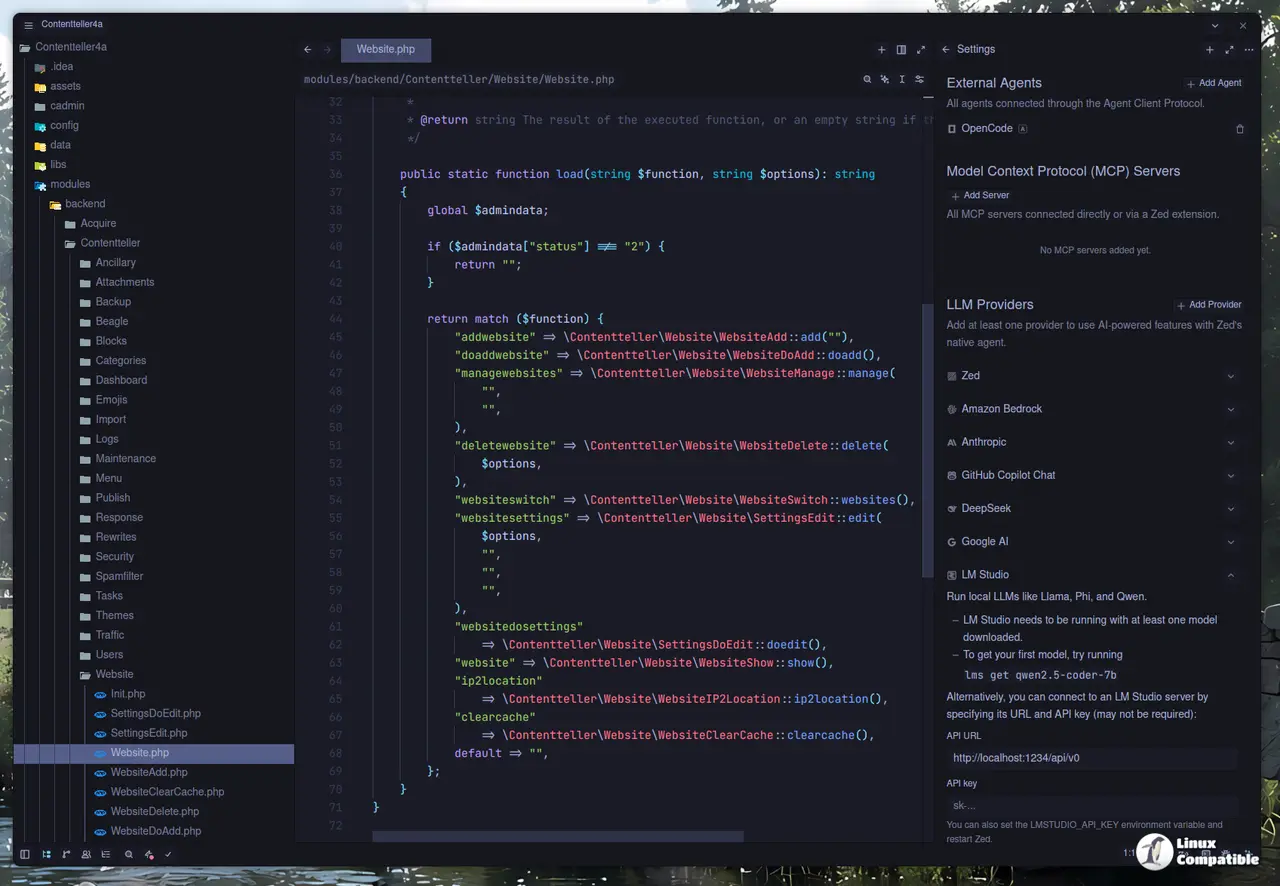
Here's a bit of background. Zed traces straight back to GitHub's now-defunct Atom. After the company killed Atom in 2022, three of its key contributors, Sobo, Brunsfeld, and Scandurra, set out to build the editor they always wanted. They announced Zed in 2023 and open-sourced it the following year. Since hitting 1.0 back in April 2026, the release pace hasn't slowed at all. The Colorado-based startup now ships on a weekly cadence that makes each new version a small but real event in the developer-tools cycle.
Rather than rebuild Atom-style on top of Electron like VS Code and its many AI clones, the team wrote their own GPU-accelerated UI framework called GPUI, organizing the whole app around feeding data to shaders. That bet is what makes Zed fast, and it's exactly why a 23 percent shrink to the Linux binary actually means something.
The headline features
The three the company calls out are about as plain as it gets. You can now create Git tags locally with a new git: create tag at head command, drag Terminal tabs straight into an Agent thread, and let the File Finder pre-fill its search box with text you've already selected in the editor or terminal.
The drag-and-drop half is the one I'd watch. Instead of copying shell output into a chat, you just haul a terminal session into an agent thread. Small win, but it saves real friction over a workday. The File Finder pre-fill is the sort of feature you won't notice until it's gone.
Keep in mind that Git tags are created locally, not pushed. You still do the push yourself.
Zed keeps deepening its Git integration beyond tags. This build also adds side-by-side directory diffs via zed --diff, file counts in Git Panel section headers, a collapsible commit-message editor, and a tidier Git Graph that moves refs out of the description column. It picks up gitiles support and lets you point click-through navigation at self-hosted Gerrit repos straight from the blame diff.
If you need a lighter download, the Linux story is the best news here. The x86_64 binary shrank by about 23 percent. Head here to grab it.
Agents and the wider picture
The AI half of this release is plumbing rather than flash. You can now point custom Amazon Bedrock models at Zed with tool use, image input, and extended thinking, and there's a memory and CPU usage fix aimed at keeping long agent threads from dragging. That fits Zed's model-agnostic stance to a T. It backs a wide pile of external tools through the Agent Client Protocol, including Claude Agent, Codex, OpenCode, and Cursor, while running its own Zeta2 model for in-editor predictions.
Beyond features, this build patches a broad set of crashes and regressions. Two crash fixes cover editing a buffer during a pending inlay-hint request and syntax parsing that reached inside a multibyte character. On Linux, emoji and non-Latin fonts stopped showing up as empty boxes, which is a relief for emoji-heavy users. .env files are no longer mistaken for shell scripts, and ChatGPT subscription models no longer vanish if the catalog takes more than five seconds to load.
Then a look at the bigger picture. The company pulled in a $32 million Series B led by Sequoia Capital in August 2025, pushing total funding past $42 million. That money was earmarked for collaborative tooling, including a CRDT-based sync engine called DeltaDB and a companion multiplayer product named Delta, now in public beta.
The release also lands amid some community friction. A fork called Gram split off in March 2026, led by Kristoffer Grönlund, who explicitly objected to Zed's AI features and terms of use. For what it's worth, it's a reminder that deep AI integration is a deliberate call some users actively reject.
Is it worth it?
It's a rather steady update for something that bills itself as "code at the speed of thought." Not exactly groundbreaking, perhaps. But it's reliable. The headline wins are real: that Linux shrink is a nice touch, and dragging terminal tabs into agents is a workflow you'll actually lean on. However, at the same time, much of this is polish over an already capable editor. A lot of this won't tug at people who are comfortable where they are.
Zed 1.24.2 is available now on Linux, macOS, and Windows under its triple AGPL, GPL, and Apache 2.0 license.
Head here to download the release or read the full changelog.


