XanMod has released kernel versions 7.0.2 and 6.18.25 LTS to deliver faster scheduling, improved memory management, and modern network optimizations for Debian-based systems. The builds ship with LLVM ThinLTO, Google's multigenerational LRU framework, BBRv3 congestion control, and dedicated drivers for AMD V-Cache hardware. Before upgrading, users should verify that their third-party modules like NVIDIA graphics or virtualization software support the new kernel, as DKMS compilation failures are common. Installing requires adding the official GPG key, pointing APT to the custom repository, pulling in build dependencies, and rebooting to activate the performance tweaks.
XanMod Kernel 7.0.2 and 6.18.25 LTS Bring Heavy Workload Tweaks to Debian Systems
The latest XanMod kernel releases drop support for heavy desktop workloads, gaming rigs, and low latency networking without turning your system into a resource hog. Users who want better IOPS throughput, modern TCP congestion control, and real time scheduling options will find these builds worth testing before they hit mainstream distributions.
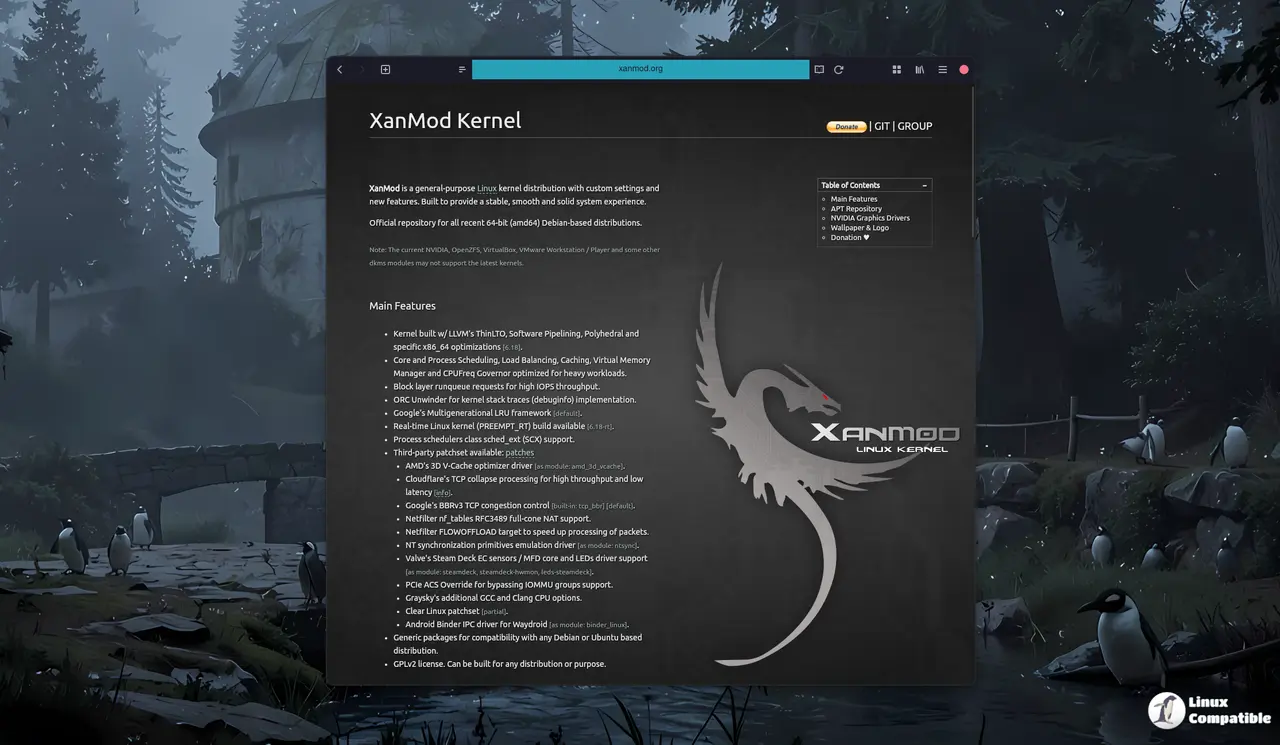
What makes the XanMod kernel different
The build process ships with LLVM ThinLTO enabled by default, which shrinks the final kernel binary while keeping compile times reasonable. Google's multigenerational LRU framework runs as the standard memory manager, meaning systems that juggle dozens of background tasks will stop thrashing RAM when switching between applications. Network stacks get Cloudflare's TCP collapse processing and BBRv3 congestion control out of the box, so streaming or downloading large files over congested connections stays stable. Process scheduling gets a major overhaul with SCX scheduler class support and optimized CPU frequency governors that react faster to sudden workload spikes. AMD users with 3D V-Cache chips get a dedicated module that tunes cache allocation for gaming and rendering tasks without requiring manual sysctl tweaks.
Compatibility warnings you should read first
Custom kernels always break third party drivers until maintainers catch up. The XanMod team explicitly notes that NVIDIA proprietary modules, OpenZFS, VirtualBox, and VMware Workstation or Player will likely fail to compile on these versions right now. I have seen systems lock up after a kernel update when DKMS modules fail to rebuild, which is why checking driver compatibility before rebooting saves hours of troubleshooting. The build also includes ntsync emulation for Windows compatibility layers and Waydroid support through the Android Binder IPC driver, so containerized mobile apps and Wine Proton setups will behave more consistently. Steam Deck hardware sensors and LEDs load as separate modules, meaning handheld enthusiasts can pull those features without patching the main tree themselves.
How to install without breaking your system
Adding a custom kernel repository requires careful key management and source configuration to avoid broken package states. Users should start by downloading the official GPG archive key and converting it into a signed keyring file so APT trusts the new packages. The next step involves writing a dedicated sources list entry that matches the current Debian or Ubuntu codename, which keeps the custom kernel isolated from standard distribution updates. Running an update refreshes the package cache before installing the x64v3 variant, which targets modern processors with AVX2 and AVX512 support for maximum performance. Systems that need to compile external modules should pull in dkms, libelf dev, clang, lld, and llvm packages beforehand to prevent build failures during driver installation. A full reboot after the package manager finishes ensures the new scheduler and memory management routines take effect across all running services.
First, bring the PGP key into APT’s trust store so it can verify every package that rolls out. Running the command below fetches the key and writes it to the appropriate directory; doing this before adding the repository protects you from man‑in‑the‑middle attacks on the kernel packages.
wget -qO - https://dl.xanmod.org/archive.key | sudo gpg --dearmor -vo /etc/apt/keyrings/xanmod-archive-keyring.gpg
Next, drop a repository file into sources. The line below is already tuned for the distribution you’re on; it automatically expands to the correct codename thanks to lsb_release. Once that file is in place, APT knows exactly where to pull the kernel packages from.
echo "deb [signed-by=/etc/apt/keyrings/xanmod-archive-keyring.gpg] http://deb.xanmod.org $(lsb_release -sc) main" | sudo tee /etc/apt/sources.list.d/xanmod-release.list
Finally, update the package list and install the kernel. The --no-install-recommends flag keeps the installation lean by only pulling essential dependencies; you’ll still need a few development packages if you plan on compiling any external modules later.
sudo apt update && sudo apt install linux-xanmod-x64v3
Those who prefer avoiding repository changes can download the standalone deb files from SourceForge instead. Installing those packages directly with dpkg achieves the same result, though manual updates will require checking for newer versions regularly.
Keep an eye on the DKMS update schedule if you rely on proprietary graphics drivers or virtualization tools. The performance gains are real, but patience pays off when custom kernels roll out.


