Wine 11.22 ships with AVX support for x86 apps on ARM64
The new development build also adds address-space randomization and a Unicode CLDR 49 locale bump.
Wine 11.22 is out, and if you run Windows software on ARM64 Linux this is the one to watch. The development release landed on November 13 with roughly 320 changes since 11.21, 34 tracked bug fixes, and a headline feature that's been years in the making: AVX support in the x86 emulation path for ARM64.
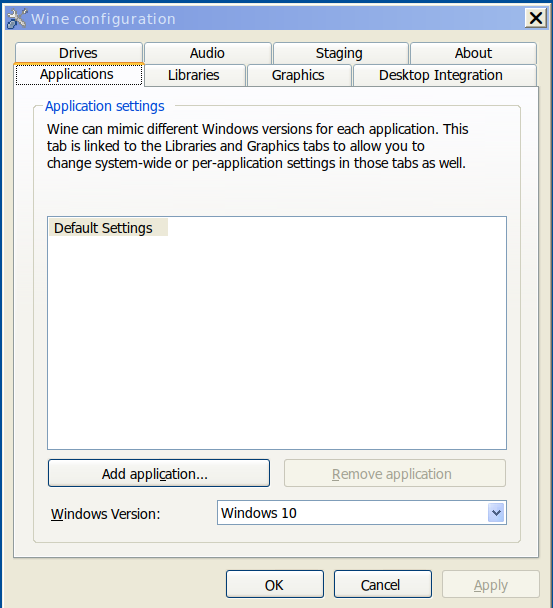
It's a dev track build, so keep in mind it isn't the finished article. Wine uses even version numbers for stable releases and odd ones for development cuts like this one. 11.22 is development, and it's inching toward the eventual 12.0 stable milestone.
The official announcement is terse: "The Wine development release 11.22 is now available." That's about it for ceremony.
The ARM64 AVX work is the real story
Wine doesn't emulate CPU instructions. It reimplements the Windows API so a program talks to Wine exactly as it would talk to real Windows, and Wine then translates those calls into native system calls. No guest OS. No binary translation. Just API emulation, with one notable exception: on Apple Silicon Macs it leans on Microsoft's Rosetta 2.
That exception matters here, since x86 and ARM64 speak different instruction languages. AVX is a SIMD instruction set that accelerates heavy numeric work — think graphics, physics, machine learning. Here's the thing: a lot of current Windows software simply refuses to launch, or crashes outright, if it can't find AVX.
For anyone running an x86 Windows app on ARM64 Linux, that missing AVX handling was a wall. Wine 11.22 knocks a hole in it.
This work extends prior effort rather than appearing from nowhere. Wine 10.0 brought a 64-bit x86 emulation interface for ARM64 and pointed at FEX-emu as the reference implementation. That's the ARM64EC angle, Microsoft's "Emulation Compatible" approach that lets legacy x86 code run on ARM without full emulation. The newer changes here also expand XState handling across the exception dispatcher, APC dispatchers, and thread context work.
Now for the measured bit. Coverage outlets are careful to say this "gets further," not that everything just works. There's no list of newly supported apps, no ARM64 hardware matrix, no benchmarks, and nothing comparable for macOS or Windows-on-ARM. "Now it gets further" isn't "now it works."
Security, locales, fonts, and XML
Beyond the ARM work, there's a spread of changes worth a look.
Wine now does address-space randomization, closely modeled on Windows' own ASLR. It's the anti-exploit trick that randomizes where DLLs, executables, and memory allocations live between runs, so attackers can't hardcode target addresses. Per Carnegie Mellon's SEI, ASLR has no performance impact, which makes it essentially free insurance. Wine randomizes DLL base addresses, exe base addresses, and virtual memory allocations, including in 32-bit builds. A side effect: some tools like psapi assumed fixed load addresses and needed follow-up fixes, hence the bug report about the exe header page now showing as not shared.
The locale data gets a bump to Unicode CLDR 49. That's the stuff governing date and time formatting, number and currency conventions, calendar rules, and pluralization. Concrete fix for a Swiss user: locales were still showing the narrow "Fr." symbol instead of "CHF" since CLDR 49. That's bug #60678.
Fonts aren't forgotten either. This release makes a granular pass over Tahoma and Tahoma Bold glyph metrics — restoring widths, making Latin and Cyrillic letters actually bold, fixing advance widths for a handful of specific characters. It addresses the long-running bug #26037, titled plainly enough: "Tahoma Bold is not bold."
MSXML's DTD validation gets a from-scratch rewrite that drops libxml2 for the job. New checks cover IDREF and IDREFS cross-references, duplicated ID values, and XPath handling in XSLPattern mode, including a fix for queries starting with "not" (bug #60750).
Games and tools that got fixed
Of the 34 bug fixes, several target games people actually play. Guild Wars 2 crashing on launch is one. Dragon Age: Origins crashes during intro and loading with the Vulkan renderer, tied to unsupported L8 textures. Alan Wake and Alan Wake's American Nightmare won't start due to an unsupported D24X8 depth format. F.E.A.R. 3 exits on startup after a resource-language change.
Productivity apps show up too. Logos Bible Software is throwing crashes and menu flicker. Notepad++ was showing the wrong menu bar, and WinSCP crashed when you clicked "About." Samsung Magician 9's service also fell over.
There's also a batch of library bumps — mpg123, libpng, LibTIFF, lcms2, Capstone, SQLite, plus new zlib 1.4 support — and a grab bag of system-level work: file-information classes moving to wineserver, time zone data updated to 2026f, and a new capabilityaccessmanagerclient DLL.
Who actually built this
Wine stays a community effort, and this cut reflects that. Nikolay Sivov led with 38 commits, focused on DTD and XML validation plus d2d1 fixes. Alexandre Julliard, the project lead, landed 32. Vitaly Lipatov also had 32, largely on the Tahoma font work and gdiplus fixes. Hans Leidekker had 26, Elizabeth Figura 22, Jacek Caban 22, and Paul Gofman 13. Translations got updated for Polish, Lithuanian, Korean, and Russian.
Grab it
Wine 11.22 is a development release, so test it against your own workloads before trusting it with anything important. Each cut like this does push the wider ecosystem forward, through Proton, CrossOver, and Bottles.
If you want to build from source, grab the tarball, run ./configure && make && sudo make install, or lean on your distro's packages instead.
Head here to the release notes.


