Tails 7.16 went live on today as a maintenance release that pulls in Tor Browser 16.0, the first stable Tor Browser built on Firefox ESR 153. The update also brings the Tor client to 0.4.9.15 while restoring OpenPGP support in Thunderbird, which had broken in an earlier build. The brisk five-release pace of 2026 reflects the 2024 merger into the Tor Project, which gives Tails faster updates and tighter integration with Tor Browser itself.
Tails 7.16 ships Tor Browser 16.0 and fixes broken email encryption
Tails 7.16 arrived today as a maintenance release, but it bundles the most significant Tor Browser update in years and restores an email-encryption feature privacy users lean on.
Tails 7.16 went live today, and there isn't much fanfare to report. The Debian-based distribution delivered two updates and a single fix. It pulled in Tor Browser 16.0 and Tor client 0.4.9.15. Then it fixed OpenPGP support in Thunderbird, which had quietly broken in an earlier build.
The browser update, though, is worth more than the release number implies.
Short for The Amnesic Incognito Live System, Tails is the Linux distro that boots off a USB stick or DVD, runs entirely in RAM, and wipes itself clean on shutdown. Every connection gets forced through Tor by default, so there's no practical way to browse the plain internet from inside it. Journalists, activists, and anyone who'd rather not leave a footprint on a borrowed laptop treat it as the go-to OS for portable operational security.
That context is what makes the internals matter.
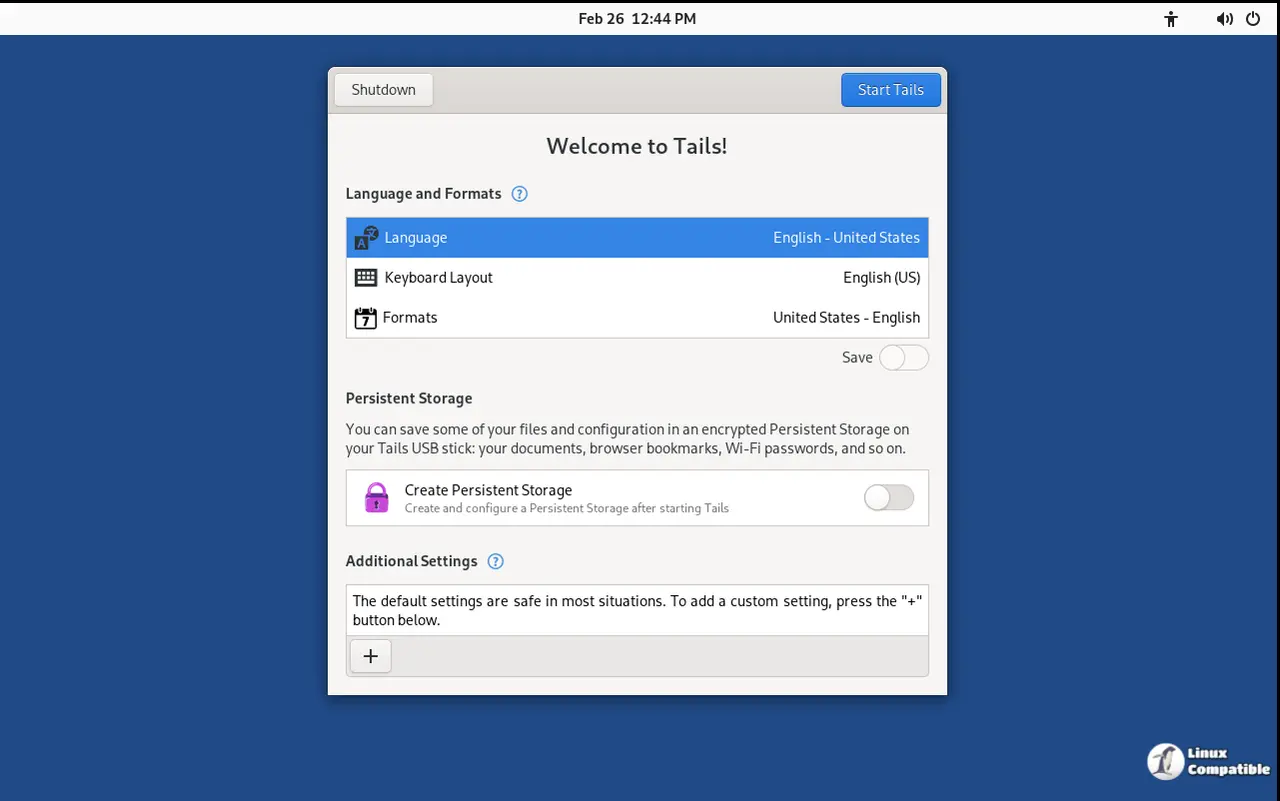
Tor Browser 16.0 is the real story
Tails 7.16 inherits Tor Browser 16.0, which the Tor Project shipped the day before. This is the first stable Tor Browser built on Firefox ESR 153, folding in about a year of upstream Firefox changes. The Tor team ran its annual ESR transition audit before shipping, working through more than 270 Bugzilla issues that could have weakened the browser's privacy or security in subtle ways.
What you'd actually notice comes down to two things. The old single "General" settings page is gone, its contents spread across dedicated pages for Appearance, Downloads, Tabs and browsing, Accessibility, and Languages. The Tor-specific Connection and Security Level panels were rebuilt from scratch, and a few privacy-fragile settings were hidden or given explicit warnings.
The second change is an opt-in option called generic window titles. Browsers normally let the OS and other apps read the title of whatever page you're visiting, meaning your browsing history isn't really private from local software. The new setting replaces all of those titles with a plain "Tor Browser" label. Keep in mind that it stays off by default, and there's a reason. The Tor team said it lacked the time to fully test side effects on screen readers and less-common desktop managers.
There's also native 64-bit ARM support for Linux here, covering things like Raspberry Pi and Apple Silicon machines running Linux. It drops 32-bit x86 desktop support along the way. The Tor team noted only about 200 daily update checks now come from that older platform, down from a peak of roughly 4,000 back in 2019.
The quietest item rounds out the updates. The Tor client moves to 0.4.9.15, giving Tails' core anonymity transport the latest stability and security fixes. Same version lives inside Tor Browser 16.0 too, so the system-level client and the browser's embedded one are now in lockstep.
The Thunderbird fix is the real sleeper here. Tails tracks the repair as GitLab work item #21841, restoring encrypted and signed email after a regression had quietly knocked it out. A single bullet in an update-driven release. But for users who depend on Tails to send mail that's both confidential and verifiable, it bites.
Why the pace matters
Tails has now released five times in 2026. Tails 7.0 landed in September 2025 as its first build on Debian 13 and GNOME 48. Since then the cadence has been brisk: 7.14 in late September, 7.15 mid-October, an emergency 7.15.1 patch just days after, and now 7.16.
That speed is a direct product of a structural change. Tails ran independently for about 15 years before merging into the Tor Project on September 26, 2024. The hardest part had never been the technology, according to team lead intrigeri.
"Fundraising, finances, and HR," intrigeri recalled. Building that machinery in-house would have stretched a small team thin. Folding into the bigger Tor Project bought sustainability instead.
Executive Director Isabela Fernandes described the union as enabling faster, more efficient collaboration and a stronger response to surveillance. The tight coupling between Tails and Tor Browser versions is proof enough that the two now share a pipeline. Put them together and you're locking down the machine and its traffic in one coordinated move.
It's also a reminder of why these hardening measures exist at all. Anonymity tools remain a priority target, and the 2017 Hernandez case is a cautionary tale: the FBI used a Facebook-developed exploit riding a zero-day in Tails' default video player to identify a sex offender who'd evaded authorities for years. The flaw was never reported to, nor caught by, Tails at the time. A strong anonymity OS can still fall to a browser-level exploit.
If you're already on Tails 7.0 or later, automatic upgrades to 7.16 are available and preserve your Persistent Storage. Manual upgrades work as well and keep that storage too. A fresh install onto a USB stick does erase Persistent Storage, so back up first. Images ship as a USB image for sticks or an ISO for DVDs and virtual machines.
Tails is free open-source software, and every build is verified through the Reproducible Builds project, so you can confirm the download matches what the developers actually produced.
Head here to the download page.


