Tails 7.15 shipped today, with the Tor Project tagging it as a routine "announce" maintenance release rather than a feature-packed update. The three headline changes are Tor Browser 15.0.25, Tor client 0.4.9.14, and refreshed firmware packages that improve support for newer Wi-Fi and graphics hardware. Because browsers are the most-attacked attack surface, the backported Firefox security fixes make this a worthwhile upgrade for privacy-focused users. Those on Tails 7.0 or later can upgrade automatically while keeping Persistent Storage, while fresh installs over it and wipe that data.
Tails 7.15 ships with fresh Tor Browser and security updates
The Tor Project dropped the latest version of its amnesic privacy OS today. It's a maintenance release, but for the people who rely on Tails for safety, maintenance is the entire point.
On October 13, the Tor Project released Tails 7.15. It's officially tagged an "announce" release, the org's polite term for a routine maintenance bump rather than something with a headline feature. Three things changed: Tor Browser moved to 15.0.25, the Tor client is now 0.4.9.14, and several firmware packages got refreshed. Together they keep the anonymity engine humming. For a tool whose whole job is staying invisible, that's the right kind of news.
Tails is the Amnesic Incognito Live System, a Debian-based distro that runs off a USB stick or DVD and writes nothing to the machine it boots on. Every connection gets forced through Tor. The project describes its users plainly enough to need no marketing spin: "Activists use Tails to hide their identities, avoid censorship, and communicate securely. Journalists and their sources use Tails to publish sensitive information and access the Internet from unsafe places. Domestic violence survivors use Tails to escape surveillance at home." That's not a demo audience. It's a real risk calculus.
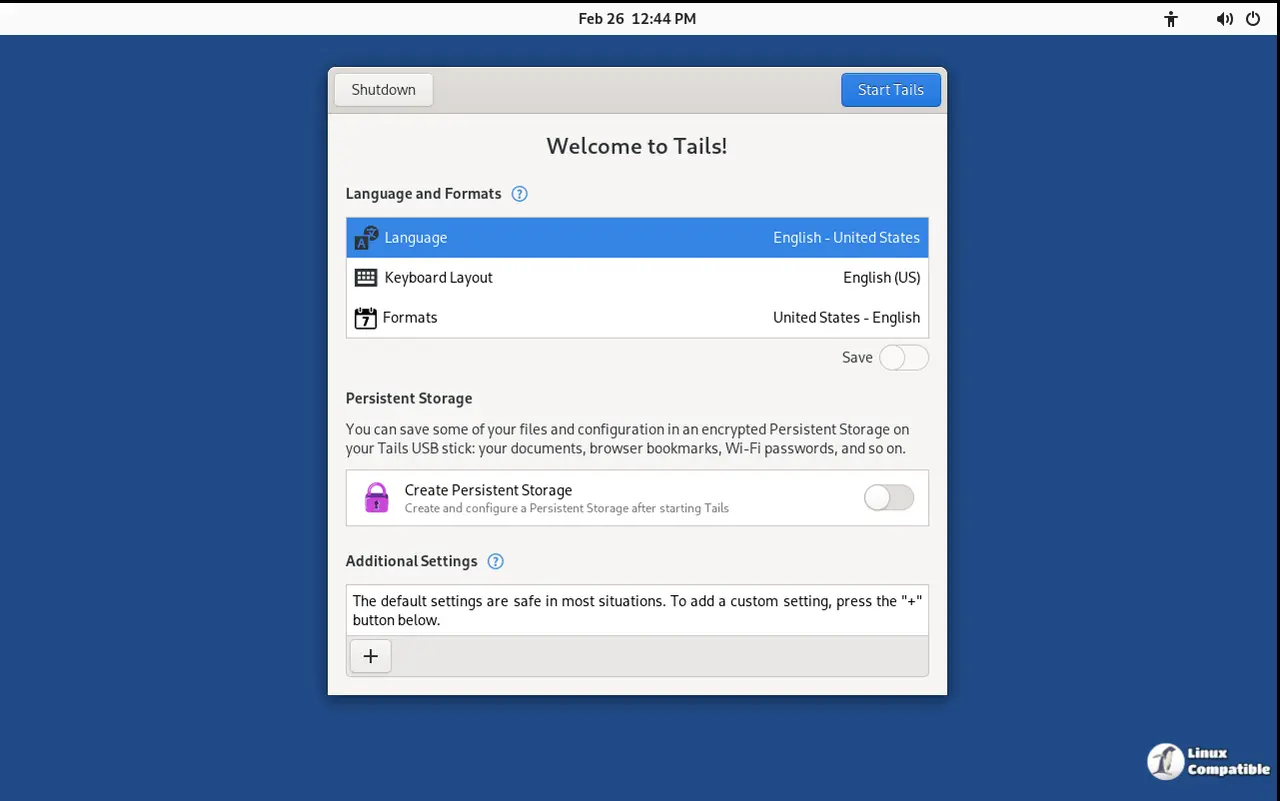
The details that count
The Tor Browser is arguably the single most important piece of software in Tails, mostly because it's also the easiest thing to watch. It's how users reach the internet anonymously, so it's naturally the most interesting target for anyone who wants to watch them. The 15.0.25 update rides the broader 15.0 series, built on Mozilla's Firefox ESR 140 and still bundling the usual privacy hardening like NoScript and uBlock Origin. On top of that, it pulls backported security fixes from Firefox, bumps OpenSSL to 3.5.9, and lifts NoScript to 13.6.36.1984. Because browsers are the most-attacked surface on any system, those backports are the real reason to upgrade promptly.
The Tor client is the other half of the trick. It builds and maintains the multi-hop encrypted circuits that give Tails its anonymity, and this version keeps that mechanism current with upstream fixes. Keep in mind that 0.4.9.14 also ships inside the new Tor Browser, so you're getting both at once. Don't bother tracking them separately.
Then there are the firmware updates. Tails deliberately bundles non-free firmware blobs because a lot of newer Wi-Fi cards and graphics chips won't work without them. Refreshing these is what lets a USB stick run cleanly on recently built machines, which matters most for someone booting on borrowed or newly acquired hardware, a common enough scenario for at-risk users.
Tails doesn't chase features. It chases the reliability of anonymity, and a release like 7.15 is exactly the right shape for that job. It patches the browser, keeps the transport current, and broadens hardware support without any of the risky new behavior that tends to arrive with flashier updates. Context helps here. The FBI used a Facebook-developed zero-day in Tails' default video player back in 2017 to track down a fugitive, and the NSA's XKeyscore reportedly flagged users who simply searched for the word "Tails." An unpatched browser or a dead Wi-Fi connection on a fresh boot isn't just a nuisance for the people who need this software. It can be a genuine safety risk.
The current 7.x line began in September 2025 and stays under security support, with a cadence that's sped up in places to line up with Firefox and Tor Browser releases. The older 6.x line already hit end of life in September 2025, which reinforces Tails' hard policy of supporting only the latest major line. Staying current is, itself, a security practice.
Where to get it
The announcement lays out three paths, and they line up with how much data you want to keep. Users on Tails 7.0 or later can upgrade automatically while keeping their Persistent Storage, that encrypted, user-chosen data that survives reboots on the stick. If automatic upgrade isn't possible or Tails fails to start afterward, there's a manual path. A fresh install wipes Persistent Storage, so that route only makes sense for a brand-new stick.
Two image types are out there: a USB image for flash drives and an ISO image for DVDs or virtual machines. Tails recommends the USB image when running from a stick. It also warns that running inside a VM is potentially less secure than real hardware, which is fair given how much a VM quietly hands over to whatever else lives on the host machine.
It's not the kind of release you'll write a letter home about. But for an OS whose entire value proposition is leaving no trace, a clean maintenance bump is about as good as it gets.
Head here to grab 7.15 and keep the fingerprint off your machine.


