Valve has shipped SteamVR Beta 2.18.1, which rebrands the default VR environment as "Aurora" and makes it the new factory-default shell. The update adds content-aware color tinting, gamepad-driven system UI navigation, and a bunch of binding and streaming fixes for Input and Steam Link. Linux gamers get the most tangible benefits, with fixes for async reprojection on AMD GPUs, GPU selection, and systems without systemd. All signs point toward Valve staging the software for its upcoming standalone Steam Frame headset, though no date or price has been announced.
SteamVR Beta 2.18.1 makes "Aurora" the default VR environment and piles on Linux fixes
Valve quietly rebrands the SteamVR dashboard as "Aurora" while fixing async reprojection, GPU selection, and Quest streaming.
Valve shipped SteamVR Beta 2.18.1 today, and the headline change is a name. The default VR environment you see when you press the system button inside any headset is now called "Aurora."
It replaces the long-running dashboard that had grown out of what Steam's store page still markets as "SteamVR Home." You can flip the setting back, but Aurora is the factory default now. The update also folds in content-aware color tinting, gamepad navigation, and yet another round of Linux fixes.
The post went live at 4:05 PM Pacific, landing on Steam's news feed under app ID 250820. As of this writing it's carrying a modest 51 up-votes, zero down-votes, and eight comments, which tells you the hardcore VR crowd hasn't weighed in yet.
The "Aurora" rebrand
To understand why a rename draws attention, it helps to recall what the SteamVR dashboard used to be. For years it was arguably the most neglected surface in Valve's software lineup, a Windows-era menu that kept surviving while the Steam Deck UI, Big Picture Mode, and the newer Steam Machine interface all converged on a single modern design language.
That shift began in July 2026, when Valve pushed a major rebuild into the beta channel. Build 2.17.4 introduced a Steam Deck-style Quick Access Menu, putting notifications, friends, performance overlays, and power controls one press away.
This update simply puts a proper name on that rebuilt shell. Aurora is now the default, content-aware tinting lets the theater lighting follow whatever's on screen, and the system UI can be navigated with a regular gamepad, not just headset controllers.
Lesser-used controls have been moved into an "Additional Options" menu to reduce clutter. Game dimming while the dashboard is up can now be disabled, which matters if you'd rather the room around you stay bright.
There's also a fix for a keyboard that failed to appear in certain scenarios, the release notes specifically calling out Skyrim VR.
Everything else in the changelog
The remaining changes split across three buckets: Input, Steam Link, and Linux. The input section is mostly binding housekeeping, correcting values that weren't recognized, a binding UI that wouldn't show correct defaults, and bindings that vanished when you switched Steam accounts after editing them locally.
Steam Link gets the more tangible work. Tethered Quest support over USB is now available, though it requires the Steam Link Beta to be running. Valve also improved automatic bitrate selection and patched cases of video corruption, checkerboarding, and stuck streams.
One of those Steam Link features lets the HMD override host framerate, when you've configured that manually at the OS level. Like the USB tethering, it needs the Steam Link Beta.
This is the section where the update actually earns its keep for a chunk of users. Async reprojection now works on AMD GPUs, GPU selection is fixed on systems with both discrete and integrated cards, and there's a fix for running without systemd.
Commentators have pointed out that Valve left SteamVR in a rough state on Linux for far too long. Each fix nudges the runtime toward something genuinely usable, which matters more than it might at first glance.
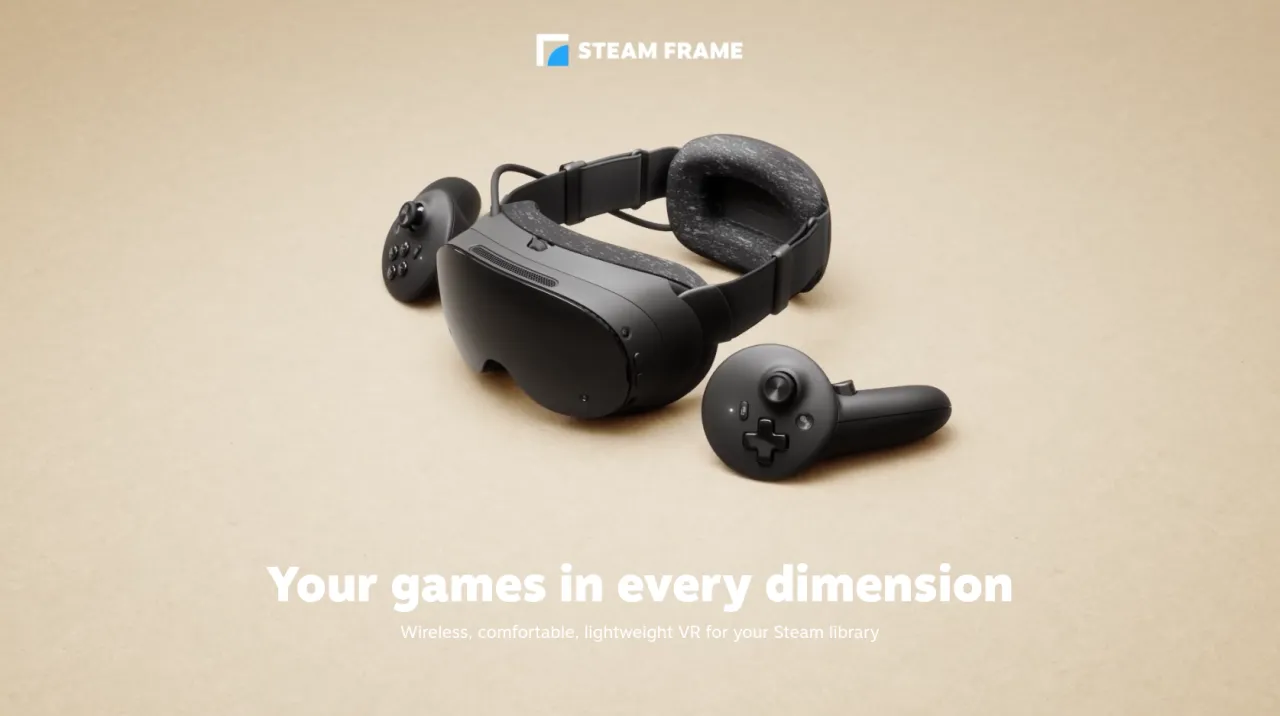
Keep in mind that the Steam Frame is the thing everyone is actually waiting for, and these changes read like prep work for it.
Reading into the Steam Frame
The quality-of-life touches here, battery readouts, brightness controls, gamepad navigation, standalone-headset streaming, are exactly the kind of plumbing that matters on a self-contained headset. A tethered Index never needs any of it.
Multiple outlets have therefore read Valve's beta cadence as staging for the Steam Frame, a standalone VR headset that appears close to launch. As of around September 21, more than 150 games were reported Steam Frame-verified, with a "Great on Frame" badge tier and a secondary "Playable" tier.
SteamOS 0.3.0 for the Frame had already shipped, alongside faster-charging and graphical tweaks to the early firmware. Some certified titles run as native PC builds, while others route through lepton, Valve's Android layer, which hints that the Frame blends PC VR with an Android ecosystem.
Independent writers like VR.org argued the July dashboard rebuild "tells you who it was built for," since battery info and brightness controls matter on exactly one kind of device. It's easy to read into these changes. There isn't much else to read into yet.
Valve hasn't announced a date or price for the Frame. Betas graduate to stable on a schedule, and interface overhauls like this rarely land months before the hardware they serve, so the beta channel is effectively a public preview of the software awaiting the device.
If you want to try it yourself, opt in by opening Steam, heading to your Library, and right-clicking SteamVR. Choose Properties, then the Beta tab, and select SteamVR Beta from the dropdown. Steam downloads the latest build automatically, and switching over doesn't touch the stable branch.
Report problems in the official SteamVR Bug Report forum and include a system report where you can. Replies to the news post itself aren't tracked for bug purposes, so use the linked forum. There's also a dedicated Steam Link for Meta Quest FAQ page for streaming questions. Head here for Valve's full step-by-step guide.
It's a quietly shipping update, and no single feature here will thrill everyone. But the mix of a properly named modernized environment, gamepad navigation, and more Linux fixes keeps SteamVR moving toward consistency across Valve's screens. For Linux gamers, people streaming to a Quest, or anyone who just wants the newer Aurora shell, it's worth installing. For everyone else, it's a low-risk beta that signals we're probably in the final software-staging phase before whatever comes next steps onto the store with a price and a date.
Head here to the official patch notes.


