PixiEditor 2.1.2.5 lands as a patch, and it knows it
The free, open-source universal 2D editor PixiEditor just shipped version 2.1.2.5, and it wasn't here to wow you with a shiny new feature. The release shipped today, and the visible changelog reads like a to-do list of annoyances finally getting fixed. That's honestly the point.
PixiEditor bills itself as a single tool to replace Photoshop, Illustrator, Aseprite, and maybe pieces of After Effects. It's an ambitious claim, and the 2.x line is the first real attempt to back it up. This update is less about ambition and more about the unglamorous work of making something with 15 features feel like it doesn't fall apart when you actually use it.
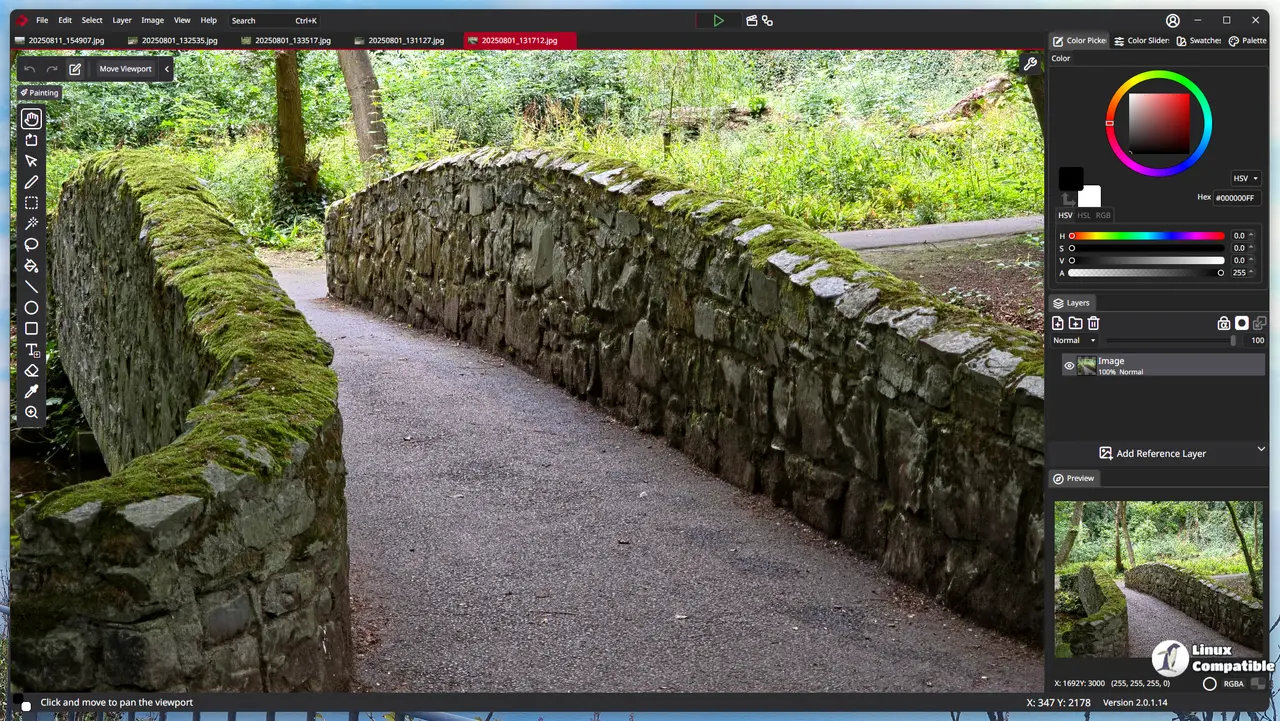
From pixel art to "do everything"
The project's history is worth a quick sweep if you're not already familiar. Krzysztof Krysiński, a Polish .NET developer known online as flabbet, started Pixi back in 2017 as a side project. He renamed it PixiEditor at its first public release in October 2018, and it's grown into roughly 8,100 GitHub stars and over 7,100 commits since. He was a Google Code-In finalist in 2018 and runner-up in 2019, early telltale signs the thing was going somewhere.
For years it was known as a lightweight pixel-art editor. That identity collapsed with PixiEditor 2.0 on July 30, 2025, which introduced a node-graph render pipeline where every layer, effect, and structural element becomes a connected node. Pixel sprites, vector text, and procedural effects can now share one canvas in a single .pixi file. The same release added a timeline system and a funding model: the team spun up a Polish LLC, Pixi Labs Sp. z o.o., and started selling optional add-ons while keeping the core editor free under LGPL-3.0.
Then came 2.1 in April 2026. That's where the real teeth live, a node-based brush engine that responds to layer data, pen pressure, and time, plus Smart Layers that nest one .pixi inside another, a Blackboard for reusable constants, and an early Extension Browser. It was a big feature drop.
What 2.1.2.5 actually does
This patch rides on top of that. It carries ten visible changes, plus five more tucked behind the "See More" expansion that almost nobody clicks. In short, it's quality-of-life and stability work organized around three themes: brush and line-tool refinement, layer-management fixes, and a few export edge cases.
The visible list tells the story. There's improved contrast on the brush overlay, tweaks to the shift-for-straight-line behavior (which resolves issues #1725 and #1737), and a fix for nested SVG export duplication. The layer manager used to aggressively auto-scroll to whatever layer you selected, an annoyance that would drag your view away mid-work, is now corrected. Find-and-replace with zero tolerance was broken; it's fixed. Scrolling over a number input now actually requires you to focus it first, which sounds trivial until you've tried it and found the number changing on its own.
The hidden five are mostly plumbing. Scrolling now heads toward the active frame, auto-sizing grid lines were added at one-twelfth of the document size, scene-sampling edge cases got patched, and a paste-image executor that failed to enable its overlay finally does.
It's not exactly the stuff that gets featured in a trailer. But honestly? This is the phase that decides whether a creative tool earns a permanent spot in your workflow.
Who runs the thing, and how
PixiEditor is developed by flabbet with help from community contributors like @Yuki9814 and @Ghoti, while communications are partly handled by Anna Kocaj. The code lives under the PixiEditor GitHub organization. Pixi Labs Sp. z o.o., registered in Międzyświeć, handles the commercial side.
The funding story is one of the more interesting parts. The team reports 584 "founders," which they credit with bankrolling the entire 2.1 development cycle, including that brush engine. Optional paid products, the Founder's Pack, now called the Pixi Pack, plus an extension marketplace, keep the lights on, with additional support through Open Collective. The core editor stays free and open source.
They've said plainly in public that "PixiEditor is fully funded by the community." Starting with 2.2, major versions will be shaped partly by community proposals voted on the official forum. It's a genuine governance experiment, and watching whether it produces something coherent or just committee-driven will be worth following.
The download side
The release ships seven binaries across all three major desktop platforms. Head here to the GitHub release page.


