PHP 8.6.0 Beta 3 Landed, Closure Optimizations and Oniguruma EOL Lead the Charge
The third beta locks in the 8.6 feature set. You've got automatic closure caching, a clamp() function, and the death of mbregex on your plate.
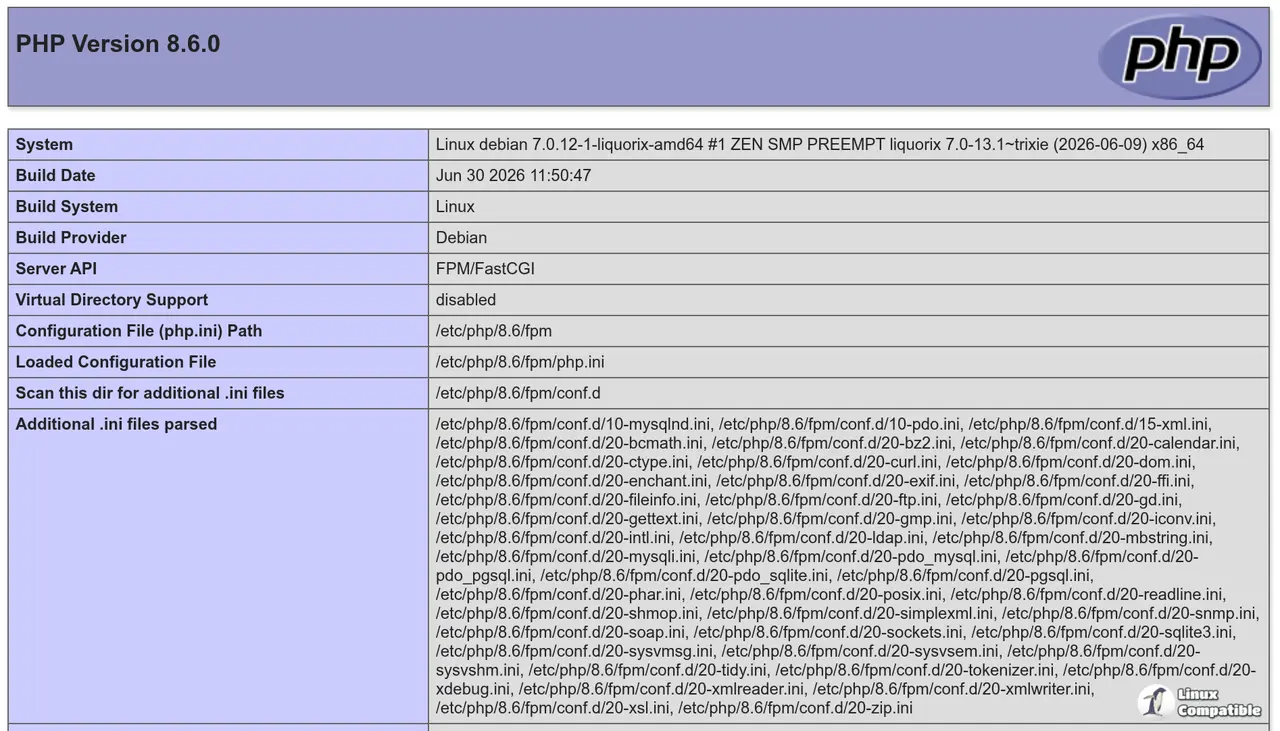
PHP 8.6.0 Beta 3 is tagged. Joe Ferguson cut the release this morning, landing the php-8.6.0beta3 tag. This is the third beta in the cycle, which means the feature set is essentially frozen. From here, it's stabilization, bug fixes, and integration testing of the RFCs that made the cut.
If you're running production right now, you're likely on PHP 8.5.10, which shipped on August 27, 2026. Beta 3 is where you go to test your apps against what's coming.
The headline feature is automatic closure speed.
The biggest win in 8.6 is a pair of optimizations for closures and arrow functions. Ilija Tovilo's RFC on closure optimizations passed with a 24-0-1 vote, and the results are measurable.
Static Closure Inference now automatically marks non-static closures as static when PHP determines they don't use $this. This breaks reference cycles that would otherwise force the garbage collector to step in. In a Symfony Demo test suite, the optimization caught roughly 78% of closures that were already explicitly marked static. You might notice earlier collection of objects and a lower chance of memory leaks in long-running processes.
Stateless Closure Caching is the other half of the coin. Closures that are static, have no captured variables, and use no static vars are now cached at the same lexical location. A synthetic benchmark showed roughly 80% improvement. In a real-world Laravel template test, it avoided 2,384 out of 3,637 closure instantiations, netting about a 3% performance gain.
Keep in mind that the edge cases aren't fully ironed out. After the vote, the team found issues with internal functions performing instance calls through named callables, like array_map. As of Beta 3, only the "Stateless closure caching" part is merged. Static inference still needs proper annotation as static to work correctly in all cases.
BC breakers to watch: ReflectionFunction::getClosureThis() returns NULL for inferred-static closures, and two stateless closures from the same location become identical via ===.
Other language changes.
The rest of the accepted RFCs round out 8.6 with some quality-of-life improvements.
#[\Override] is now available for class constants. If you've been using the attribute on methods and properties, you can finally use it here too to catch override mistakes at compile time.
There's also a new global clamp() function. If you've written max(min($val, $max), $min) more than once, you'll appreciate this. It constrains numeric values within bounds without the boilerplate.
Debugable Enums make internal enums inspectable via reflection and var_dump. The SortDirection enum replaces integer constants in sorting operations for better type safety. DocComments for Function Parameters lets you attach parameter documentation via reflection without cluttering your source with PHPDoc blocks.
A new Duration class offers better ergonomics and type safety than the legacy DateInterval. Stream functions are getting proper exceptions and error codes instead of returning false or emitting warnings inconsistently. And if you've ever wanted to see actual argument values in error messages, display_error_function_args is accepted.
Two deprecations landed as well. #[Override] for constants is the new standard. Returning values from __construct() and __destruct() is deprecated. These methods shouldn't produce return values, and PHP is enforcing that convention.
Library and infrastructure shifts.
The polling API RFC adds stream_select()-style polling capability to the stream abstraction layer, which is a win for non-blocking I/O patterns. Partial Function Application v2 introduces currying support with fn(...) syntax for binding arguments while leaving others open.
Secure session configuration defaults tighten cookie settings, likely aligning with the CHIPS/partitioned cookies support introduced in 8.5.
On the infrastructure side, minimum supported versions have been bumped. Builds from source now require autoconf 2.71 for reliable C11 detection. MySQL 5.7.3 and MariaDB 10.2.4 are the new floor for persistent connections via PDO and mysqlnd, needed for COM_RESET_CONNECTION support.
However, at the same time, the Oniguruma RFC marks the end of life for the bundled Oniguruma regex library. The mbstring extension's multibyte regex support is being replaced or removed. This is a significant maintenance milestone. If you rely on mbregex for complex multibyte patterns, test early. The replacement implementation may behave differently.
What's coming next
The under-discussion RFCs for 8.7 suggest a wild ride ahead. We're looking at primary constructors in the style of C# and TypeScript. Case-sensitive PHP is on the table. Native markup expressions with JSX-like syntax are being floated. Function autoloading would let you load undefined functions on demand. Readonly variables via the readonly keyword are also under discussion.
Some of these are high-risk, high-reward changes. Primary constructors would fundamentally alter how classes are defined. Case sensitivity could break a lot of existing codebases that rely on PHP's loose naming conventions.
It's arguably competing with some of the most aggressive feature sets the language has seen. The direction is clear: PHP 8.7 is going to be about developer ergonomics, even if it means shaking things up.
How to test
You can grab the source directly from the GitHub tag.
git clone https://github.com/php/php-src.git --branch php-8.6.0beta3
cd php-src
./buildconf && ./configure && make -j$(nproc)
Head here to https://www.php.net/downloads.php for the official tarball when it drops. If you're running your own test grid, this is the build to wire up now.


