PHP 8.6.0 Alpha 2 Lands With Native Polling API, Tighter Session Defaults, and a Late 2026 Target
The PHP project has pushed out its second alpha for version 8.6 for testing, packing in a low-level I/O polling system, a global clamp() function, and stricter session defaults. It’s another sprint in a fast-moving release cycle that aims for stability by the end of 2026.
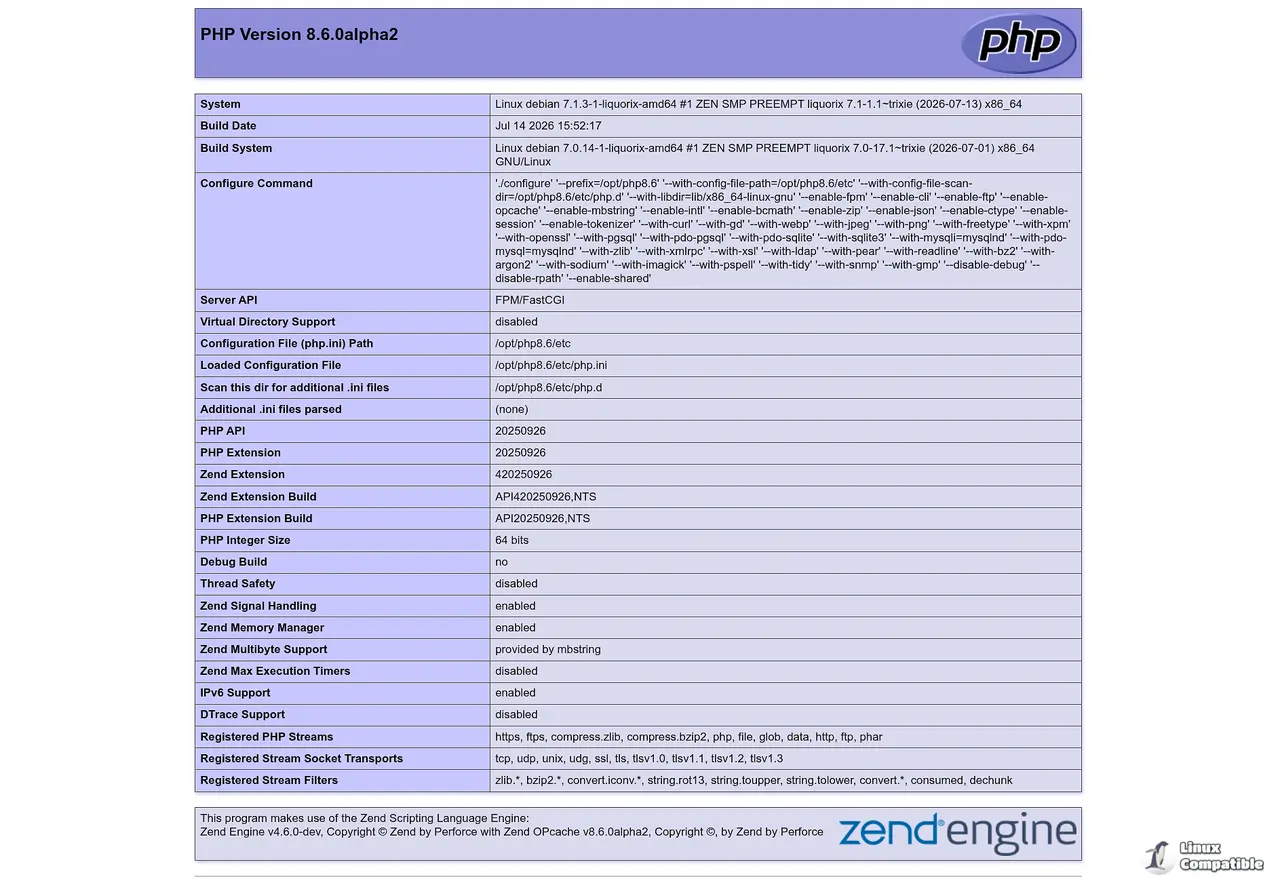
PHP 8.6.0alpha2 just landed today, exactly two weeks after alpha 1. If you’re tracking the development tree, the PHP-8.6 branch is clearly running on a tight cadence. The commit message is refreshingly dry: "Update versions for PHP 8.6.0alpha2." But the diff itself tells a different story. The team isn’t just chasing minor tweaks. This alpha brings structural changes to how PHP handles streams, sessions, and even array sorting directions.
New APIs and Language Additions
Head to the official RFCs if you want the raw diffs, but here’s what actually moves the needle for your stack. The Io\Poll\ namespace lands first. It gives developers a native way to handle I/O multiplexing without leaning on stream_select() or external wrappers. You’ll find Context, Watcher, Backend, and Event types ready to go. On top of that, the Stream Errors API standardizes how PHP reports stream failures. Gone is the guesswork of parsing error logs. stream_last_errors() and stream_clear_errors() give you programmatic control.
If you’ve been waiting for clamp(), it’s finally here. The global function snaps a value into a specified range without the usual boilerplate. Enum developers get __debugInfo() support, which means custom debug output in var_dump() and print_r() without hacking the class later. Constants can now sport the #[\Override] attribute, letting static analyzers verify inheritance chains properly. WeakMap reference assignment also loosens its grip, allowing keys to be set before they exist in the container. It feels more like a regular array at this point.
Performance Optimizations and VM Tweaks
The JIT team has been busy. printf() calls that only use %s and %d now compile directly to string interpolation, skipping the usual parsing overhead. array_map() with first-class callables skips intermediate Closure creation entirely, routing straight to a foreach loop. The thread-safe build sees real gains through TSRM optimizations and localized-execution TLS handling. If you run heavy multi-threaded workloads, those ZTS improvements will matter. The tailcall VM also gets a speed bump, though the real win is how cleanly the compiler handles known constructor arguments.
Backward Compatibility and Security Shifts
It’s a rather aggressive release for backward compatibility, though the changes mostly tighten the floor. Session defaults now enforce stricter security out of the box. session.use_strict_mode flips to 1, session.cookie_httponly defaults to 1, and session.cookie_samesite shifts to "Lax". You won’t need to hunt for configuration files if your app already follows modern standards, but legacy setups will definitely need updates. The trim() function now eats form feed characters (\f) by default. Code that relies on those exact whitespace boundaries will need a str_pad() workaround or a custom trim call.
Error handling gets standardized across the board. Functions that previously threw warnings or Error for invalid arguments now consistently throw ValueError or TypeError. pathinfo(), scandir(), number_format(), and several others follow this pattern. If your code catches warnings from these functions, you’ll need to adjust your try-catch blocks. The Mbregex extension is officially deprecated since Oniguruma has stalled. You’ll want to migrate to preg_*() before the final drop.
Keep in mind that the PHP team doesn’t release feature-complete betas this early in the cycle. The goal here is bleeding-edge testing. However, at the same time, the session defaults shift will hit production environments hard if you’re running older frameworks or shared hosting configs that rely on permissive cookies.
What’s Next and Migration Paths
The PHP team is pushing hard. Alpha 3 drops in late July, beta 1 follows in August, and the first release candidate targets September. A stable release is slated for late 2026. If you’re testing upgrades, focus on three areas first. Update your session configuration if you rely on permissive defaults. Audit your error handling for those new ValueError and TypeError shifts. And plan the mb_ereg_*() migration. The rest of the changes, like grapheme_strrev(), Uri\Rfc3986\UriBuilder, and SortDirection enums, are nice-to-haves that won’t break your stack.
You can grab the source tarballs from GitHub. The full upgrade guide and changelog live on the PHP Wiki. Keep an eye on the PHP-8.6 branch if you want to track how quickly the RC lands. The 14-day alpha cycle suggests no one is sitting around waiting for approvals. Test early. Patch faster.


