Oracle has released Oracle Linux 10 Update 1, which is based on RHEL 10.1 sources and provides a solid foundation for demanding workloads. The Unbreakable Enterprise Kernel (UEK) 8 powers this release, providing highly reliable performance with cutting-edge innovations in memory management, file systems, and networking. Oracle Linux 10 Update 1 offers enhanced security features, including zero-downtime patching via Ksplice, improved OpenSSH support, and post-quantum cryptography (PQC) for quantum computing threats. The release also includes better developer tooling, new network interfaces for .NET users, and upgrades in languages like Python, Perl, and Node.js.
Oracle Linux 10 Update 1 released
Oracle Linux 10 Update 1 has landed, bringing new capabilities across both x86-based (Intel/AMD aarch64) and Arm systems. Based on the sources of RHEL 10.1, this release provides a solid foundation for demanding workloads.
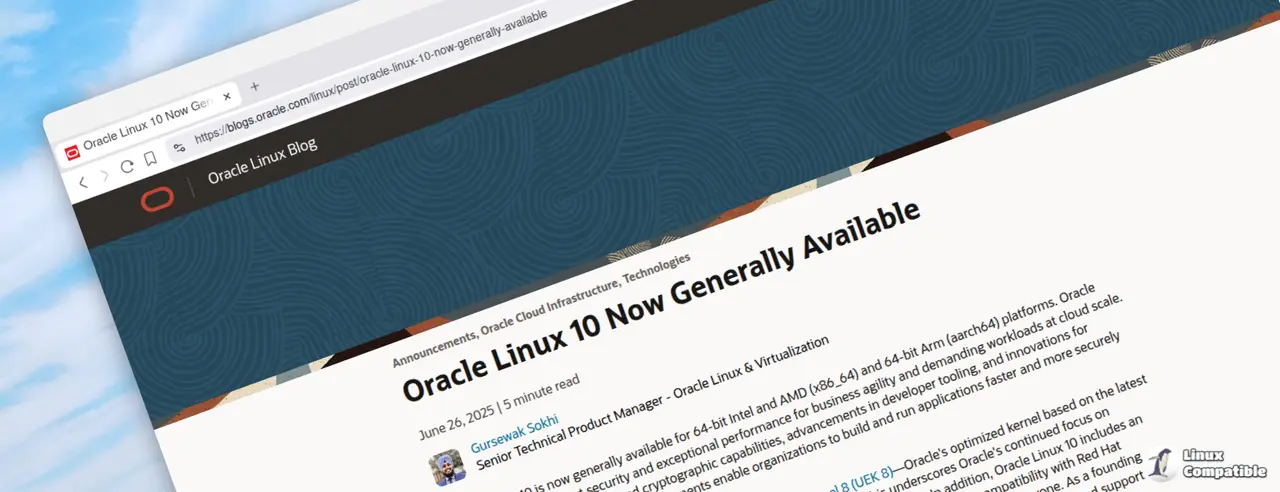
This version is powered by the Unbreakable Enterprise Kernel, UEK 8, specifically designed to tackle tough computing tasks. It incorporates cutting-edge innovations in memory management, file systems, and networking, thanks to contributions from Oracle and the broader Linux community. These changes ensure you get a highly reliable and top-tier performance experience.
Oracle isn't just rolling it out; they've already got major organizations relying on it across sectors like finance, government, and education. You'll find it underpinning critical systems, including Oracle Database, Exadata, and Cloud Infrastructure (OCI). Its applications stretch from everyday transaction processing to complex data analysis tasks, even those involving AI.
Keeping your systems secure is easier than ever, with zero-downtime patching via Ksplice. This means you can apply important updates directly, including kernel patches, glibc fixes, and OpenSSL fixes, without taking your servers offline or rebooting them at all. Your environment stays running and protected continuously.
Enhanced security also comes through in OpenSSH support. The team has significantly improved it to meet modern authentication standards and zero-trust ideas. Key features include hiding keystrokes to prevent side-channel attacks, stricter rules for using and forwarding keys, automatic removal of inactive SSH connections, and a new daemon that separates management tasks from regular operations.
Oracle Linux 10 throws in post-quantum cryptography (PQC) as part of its tech preview. It brings new algorithms ready for quantum computing threats down the line. Just be aware these early PQC tools are meant mainly for testing and development environments right now; they are not quite production-ready yet.
Beyond security boosts, you'll also find better developer tooling here to help build faster and scale effectively. The GCC compiler has been tweaked with fresh C/C++/OpenMP features while boosting safety and diagnostics; expect performance-focused updates too. Plus, the platform offers Valkey, a replacement for Redis that keeps all its compatibility but brings greater scalability.
And good news for .NET users: the latest iteration adds new network interfaces and data handling methods, plus expanded reach across different systems. You can also look forward to upgrades in common languages like Python or Perl, plus Node.js; MySQL benefits from performance improvements too.
To get started with Oracle Linux 10 Update 1, simply download the sources, binaries, ISOs, or errata from the Oracle Linux yum server.


