OBS Studio ships final RC before the 33.0 stable launch
The OBS Project has released its third and (for now) final release candidate for version 33.0, the big "under-the-hood" bump that the maintainers have been steering through testing all month. RC3 dropped on October 20, and while it's mostly a pile of bug fixes, it sits on top of two of the largest structural changes in the project's recent history. The current stable version is still 32.2.2, and the team is now asking everyone to go hunting for bugs before the final build ships.
If you've been following the 33.0 cycle, you know the drill. Beta testing kicked off September 27, followed by betas one through six landing between late September and October 2, and then RC1, RC2, and now RC3. Each candidate has been focused almost entirely on patching issues surfaced during testing rather than adding features. That's the point. By the RC stage a release is supposed to be feature-complete and all you're doing is trying to break it.
Under the hood: Chromium and the plugin overhaul
Two changes matter most here, and both are buried in the plumbing where you probably won't notice them at first.
The first is a massive CEF upgrade. CEF is the Chromium Embedded Framework that lets OBS run a real web engine inside the app, powering Browser Sources and Browser Docks. OBS is jumping CEF from version 127/6533 all the way up to 150/7871, closing what had become roughly a three-version lag in the underlying Chromium build. The team's own framing is that "all of this work is on the backend and should be invisible to users," though they've explicitly asked testers to report any new browser-source weirdness. Browser overlays run on this engine, so a current Chromium build means better security patches and more modern web API support for anyone building custom HTML/CSS/JS scenes.
The second is the complete rewrite of how plugins load, and this one actually has consequences for you.
First-party plugins now live in a new folder called core. Third-party plugins get an updated installation layout on Windows: module and data now both sit under C:\ProgramData\obs-studio\plugins\example-plugin\. Old plugins still load from their legacy locations until OBS 34.0, but they'll show a "Legacy" indicator in the Plugin Manager, and after 34.0 they simply won't load. Portable-mode installs work differently again, and macOS plugin paths stay unchanged. Linux details were still listed as "coming soon" at the time of writing.
Put another way, there's a deadline here. Plugin authors have been told to update their installers to the new structure so users don't hit breakage when 34.0 ships. Not cheap to keep track of if you lean on a handful of community plugins.
The small stuff that actually improves your day
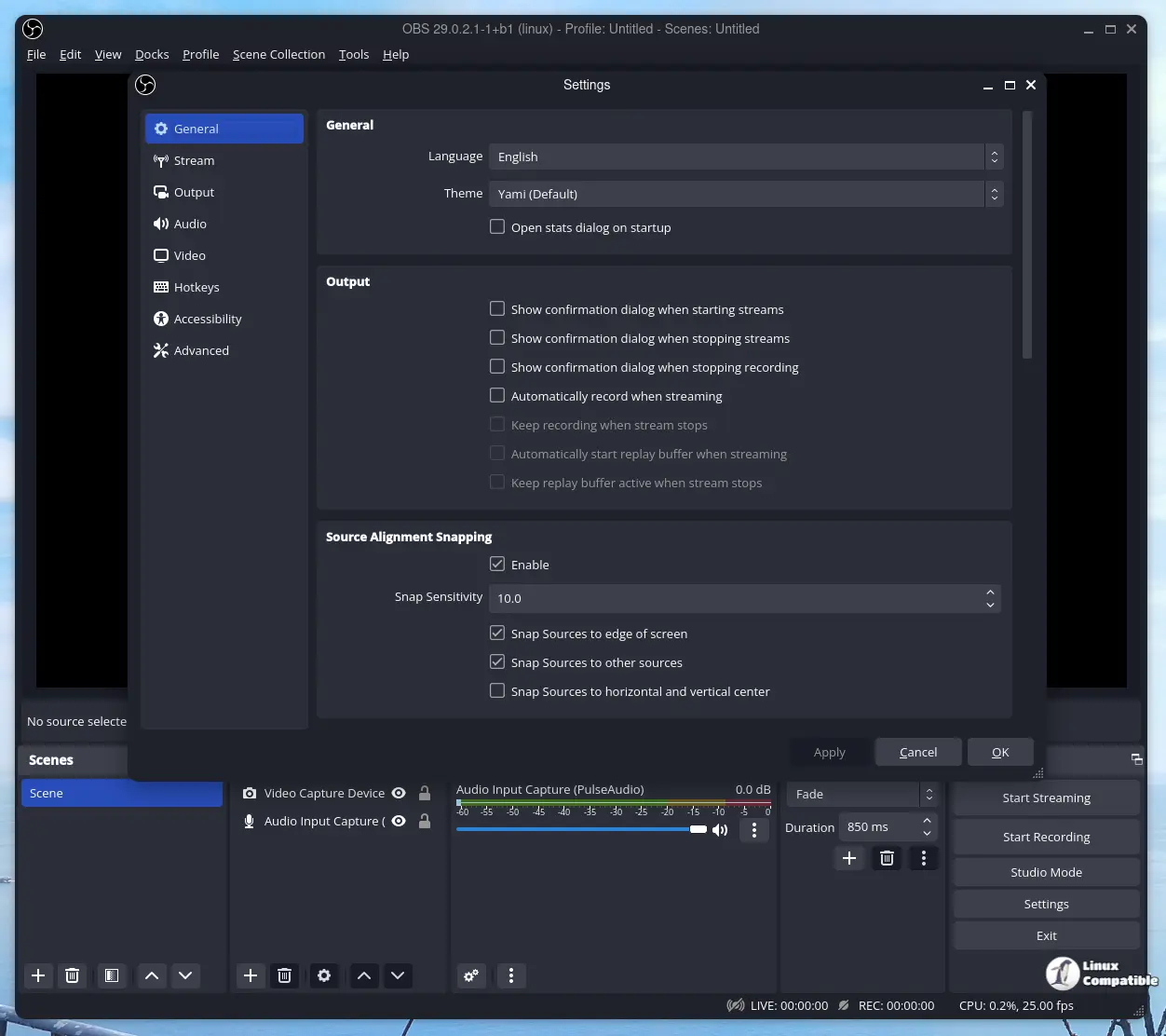
Beyond the big structural shifts, a handful of long-standing annoyances finally got fixed. Source snapping now shows a visual indicator when items align, snaps along the whole axis instead of only at edges, and no longer jumps to hidden sources, which is a genuinely common source of "why did my layout just move" moments. The numeric spinboxes scattered through the settings stop blocking typing and cutting off numbers mid-entry, and pressing Enter no longer closes the window while you're trying to edit a value.
There's also NVENC support enabled on ARM64 builds. That's a niche win on its own, it means ARM-based machines can lean on NVIDIA's hardware video encoder instead of leaning entirely on CPU encoding. Combined with OBS's long-standing presence on Apple Silicon, it's arguably one of the more quietly useful additions in this version.
The bugs, and the reality of a test build
RC3 itself fixed a specific issue: browser sources not working when OBS runs as an administrator on Windows 11. Earlier candidates caught a crash in the browser migration code on Windows when the plugin path contained unicode characters, plus a security hole where a browser local file handler could be triggered from a remote page over an insecure context. There's a long tail of stability fixes too, a crash on Linux when a USB mic gets unplugged, a deadlock during video/audio tasks, a B-frame offset bug in AMD encoders that could drop your stream.
As you'd expect from a pre-release build, the forum thread and Discord beta channel are full of realistic teething issues. Some Apple Silicon users hit Lua scripts failing to start until a fix landed in Beta 6. One person thought they'd lost dock functionality, which turned out to be an unrelated "Full-height docks" setting rather than a regression.
It's worth being clear about where this stands: RC3 is a test build. OBS still recommends the latest stable release for actual production work. Back up your scene collections and profiles before installing, as the project's disclaimer has said with every beta since forever.
Head here to the GitHub release page.


