The first release candidate for MX Linux 25, built from Debian GNU/Linux 13 (Trixie) and MX repositories, has been released for testing purposes. The RC1 version includes several major changes, such as the inclusion of systemd-cryptsetup on systemd ISOs and a workaround for a GRUB display problem affecting older Intel graphics hardware. In preparation for the upcoming official release, MX Linux will discontinue 32-bit ISO images due to Debian's decision to drop 32-bit kernels from their maintained packages, but existing users of MX-23 will continue to receive security updates until June 2028. Users can download various versions of RC1, including Xfce, KDE/plasma, and Fluxbox releases with systemd or sysvinit variants, for testing purposes.
MX Linux 25 Release Candidate 1 released
The first release candidate for MX Linux 25 is now available for testing purposes. This version of the operating system has been built from a combination of Debian GNU/Linux 13 (Trixie) and MX repositories. As in previous releases, all versions of MX-25 come equipped with systemd.
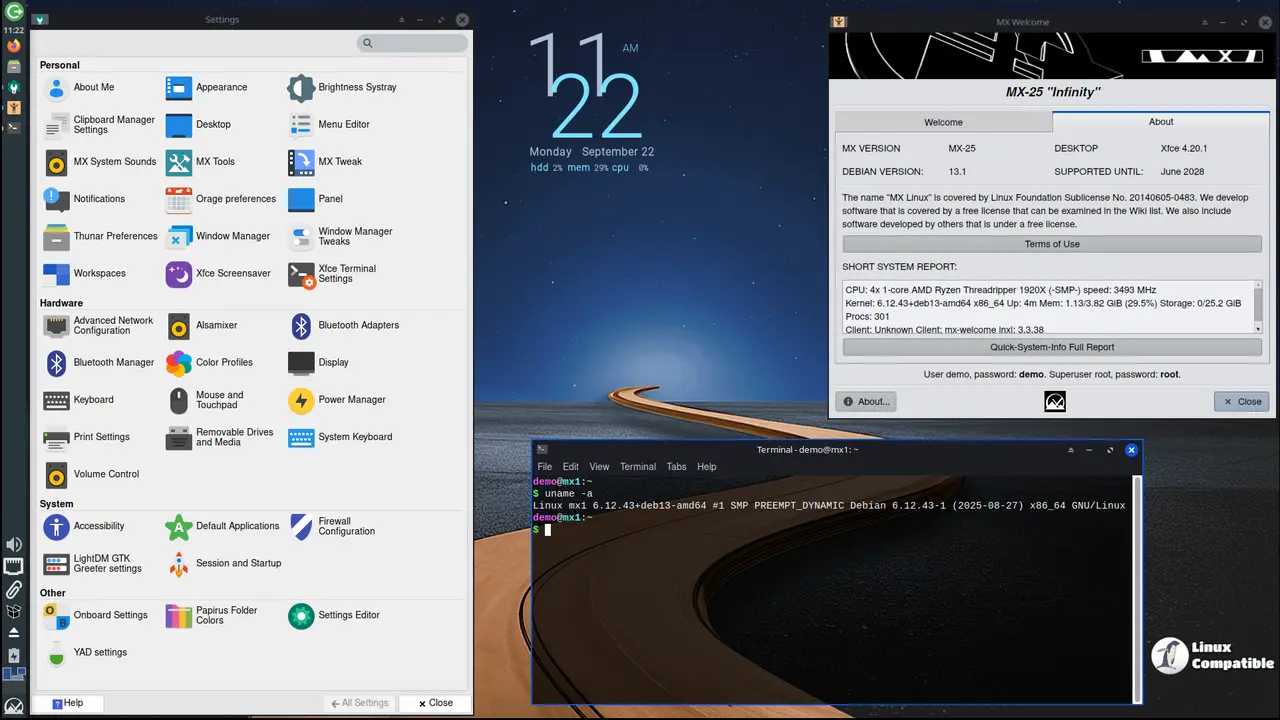
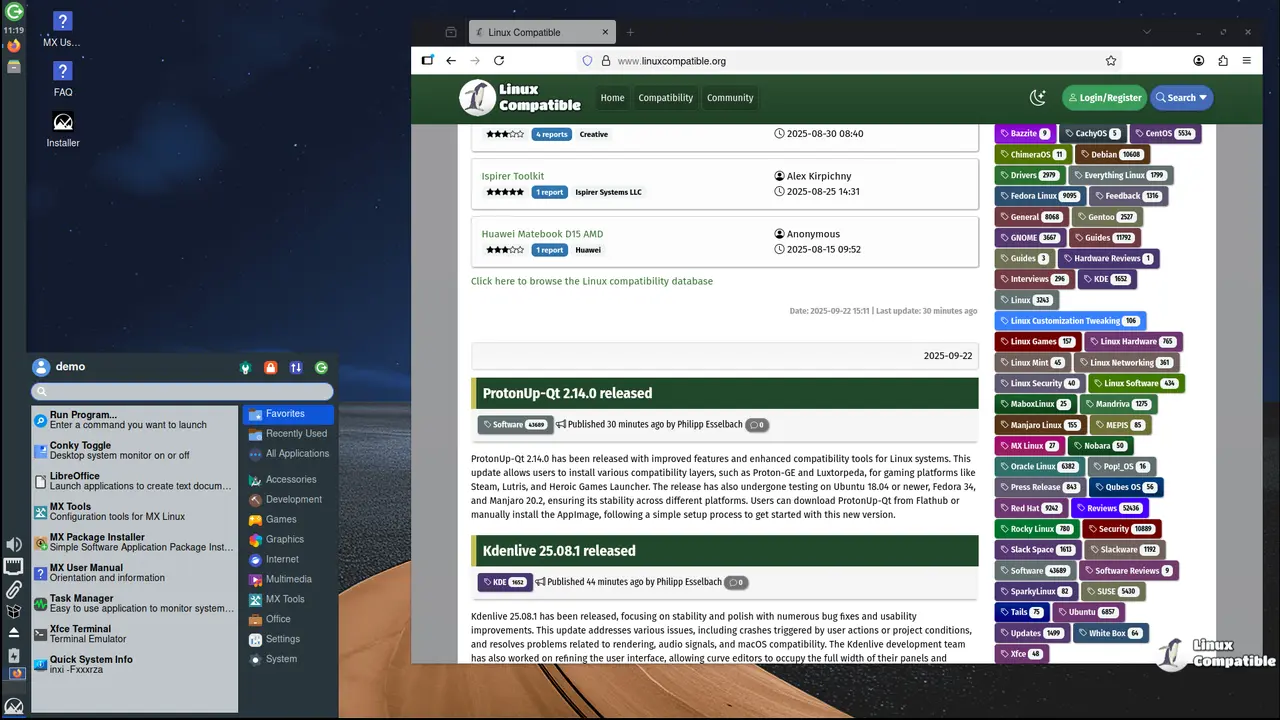
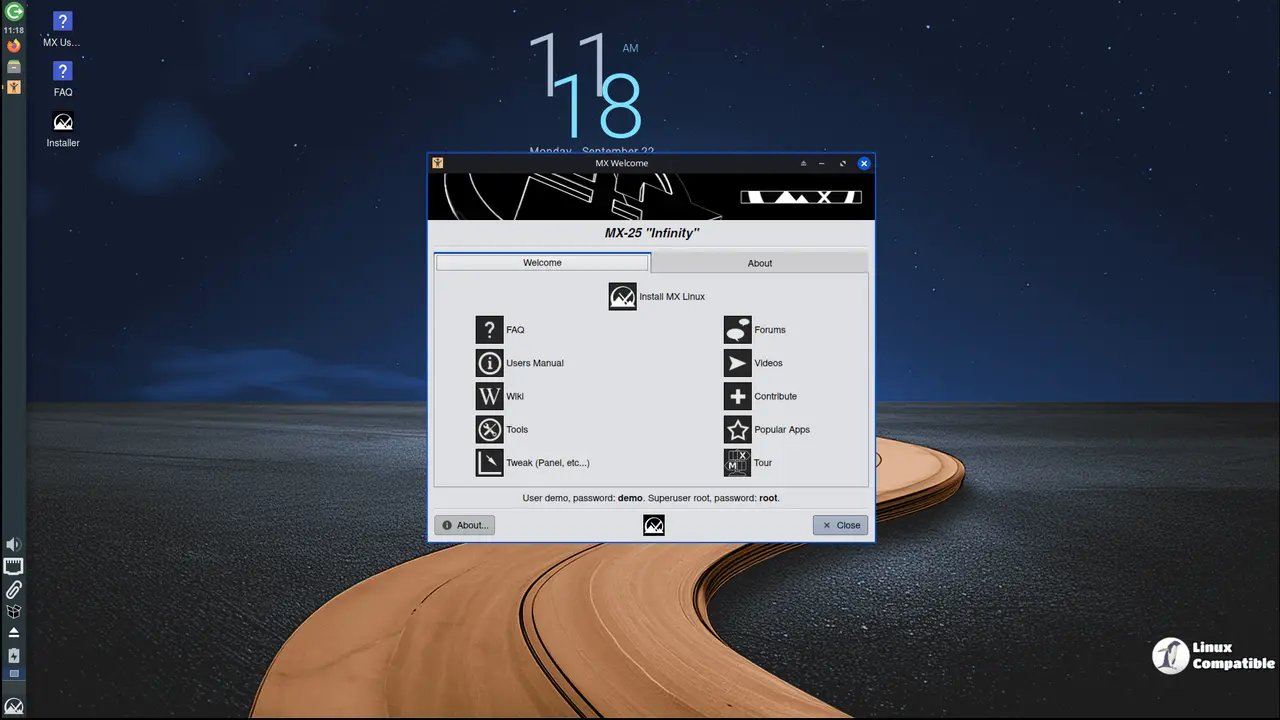
For those who prefer alternative window managers, RC1 offers Xfce, Xfce-AHS, and Fluxbox releases that can be installed using sysvinit variants. The sysvint ISOs are clearly labeled by their file name for easy identification.
The developers behind MX Linux are particularly interested in testing the installer with RC1, paying close attention to traditional ext4 and btrfs installations. Existing beta 1 installs have received all upgrades except for new package installations. However, these installs will not be updated to reflect the RC1 version yet, as they still need to track issues related to the ISO.
Compared to the previous beta release, there are several major changes in MX-25 RC1. Among them is the inclusion of systemd-cryptsetup on systemd ISOs, which fixes an issue with encrypted home directories. Additionally, a workaround has been implemented for a GRUB display problem that affects older Intel graphics hardware, specifically Ivy and Sandy Bridge models.
Other notable improvements include adjustments to the default .bashrc file and numerous bug fixes in various MX tools, such as service-manager and cleanup. There are also new Conky configurations available, along with an updated default Conky configuration that allows users to switch between 12-hour (am/pm) and 24-hour time displays based on their locale settings.
The installer has undergone several changes as well, primarily focusing on the new replacer function. Other notable updates include improvements to the MX-ease and MX-matcha themes, adjustments to the Nvidia installer (ddm-mx), and fixes in live-kernel-updater and live-usb-maker.
Users of Xfce can expect a migrated default settings format for whiskermenu, while KDE users will see the removal of tlp in favor of power-profiles-daemon. This change addresses an issue with the power profile widget. Furthermore, root actions and other service menus have been added to Dolphin. In Fluxbox, several issues have been resolved, including a problem where the installer would display on the desktop. Additionally, adjustments have been made to default toolbar configurations and styles, as well as replacing DeadBeef with the Audacious audio player.
Looking ahead to MX 25, which is expected to be released soon, several major changes are coming to the project. The most significant one is that instead of having systemd and SysVinit on the same ISO, separate ISOs will be created for each init system. This change is necessary due to the latest 6.12 kernels from Debian, which do not work well with systemd-shim packages.
As a result, official MX 25 x86 releases will all be 64-bit, and users who prefer sysVinit will have separate ISO options available for Xfce and Fluxbox releases. The KDE ISO will ship with systemd only.
Another major change is the introduction of Wayland sessions in the KDE iso, which will default to this mode but still include X11 sessions as well. However, Xfce's Wayland session is still in its infancy and disabled by default, while Fluxbox does not support Wayland at all.
In addition, basic support for secure boot has been added to the installer, but it will only be available on 64-bit UEFI machines using standard Debian kernels. Secure boot will rely on signed kernels from Debian for support.
Debian's decision to drop 32-bit kernels from their maintained packages means that MX Linux will follow suit and no longer produce official 32-bit ISO images. However, existing users of MX-23 (which is based on an older version of the operating system) will continue to receive security updates until June 2028 through Debian's LTS support.
For those who want a totally systemd-free distro using Debian repositories, antiX Linux has announced that it will provide official 32-bit ISO images and may even be available as a "Community Respin" if necessary.
Downloads
Xfce
MX-25_Xfce_RC1_x64.iso | sha256 checksum | Signature MX-25_Xfce_sysvinit_RC1_x64.iso | sha256 checksum | Signature
MX-25_Xfce_ahs_RC1_x64.iso | sha256 checksum | Signature
MX-25_Xfce_ahs_sysvinit_RC1_x64.iso | sha256 checksum | Signature
KDE Plasma
MX-25_KDE_RC1_x64.iso | sha256 checksum | Signature


