Matomo 6.0.0 Ships After Three Years, Baking Spam Filtering Into the Core
Matomo, the open-source platform that sells itself as the privacy-conscious take on Google Analytics, shipped Matomo 6.0.0 today. It's the first major release in roughly three years, landing well after Matomo 5 arrived in December 2023.
The update touches just about everything under the hood. It now requires PHP 8.1 (up from 7.2.5) and MySQL 8.0 or MariaDB 10.6 (up from 5.5), and it rebuilt the front-end toolchain from Vue CLI to Vite. Experimental TiDB support is gone too, which means some older hosting setups need a fresh environment before they can upgrade at all.
Keep in mind that Matomo itself flagged this. The release notes explicitly warn on-premise administrators to review the system requirements before clicking update.
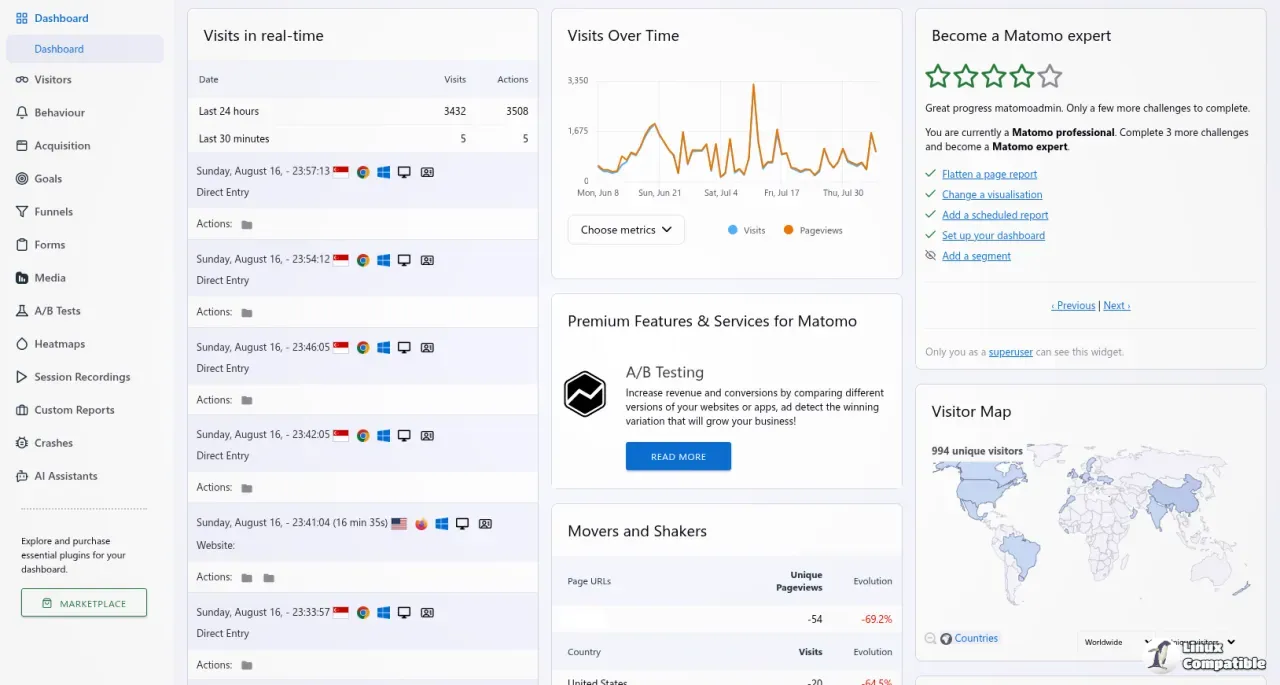
Built-in filtering, now permanent
The biggest change, if spam filtering can be called that, is that it used to be a separate Marketplace plugin. It's now part of the core, switched on by default, and there's no way to uninstall it.
The filter specifically targets headless-browser traffic from AI tools, blocking Headless Chrome, PhantomJS, Electron, and various load-testing and UI-testing frameworks. It also starts blocking traffic from big cloud providers' data centers using its own provider list and known IP ranges. The old Tracking Spam Prevention plugin has dropped out of the Marketplace entirely.
The practical result is that your traffic numbers may drop after the upgrade, because automated visits simply stop showing up in the logs. Independent Matomo partners have told operators to add an annotation on the day they upgrade, so a filter effect doesn't get mistaken for a real traffic change later on. Not cheap in terms of surprise, but predictable.
Beyond filtering, the release packs a wide range of changes. Average Time on Page now produces more accurate results automatically, measuring time per page view and storing it in a new log_page_view_time table, with support for a tracker-supplied pv_time value. Older periods are still handled the old way, so treat cross-version comparisons with a grain of salt.
Authentication tokens now get their own access levels, letting operators hand out read-only tokens instead of catch-all ones. It's a genuine step toward least-privilege setups when you're wiring up external tools.
API responses and every export format now carry a percent_of_total column for each metric. Scheduled email reports gain Visits (%) and Actions (%) columns, trimming the manual arithmetic. Set percent_of_total=0 to get the old column set back.
Visitor and real-time maps were regenerated with current geographic data, tightening region matching and fixing labels that used to bleed outside the right country. Dropdowns, search boxes, and report headers share a unified design system now, and the Transitions report was rebuilt as a Vue component. New installs archive page URLs and titles from a single flattened record for a speed bump on large sites. Existing installs keep doing exactly what they were doing.
Plan a window, then upgrade
Matomo 6 runs two potentially heavy database operations on upgrade. It adds a consent column to the log_visit table via an ALTER TABLE, and it creates the new log_page_view_time table. On installations with a large visits log, that's the part that takes time, so budget for a maintenance window.
Several legacy pieces are gone for good. The SEO plugin and its SEO.getRank API method have been cut (the SEO Rankings widget was already retired in Matomo 5.9), along with long-deprecated APIs like Archive::getBlob() and Report::getThirdLeveltableDimension(), the [APISettings] config section, the archive.sh script, and a handful of deprecated Git console commands. Plugin developers should read the migration guide before jumping.
Security gets folded in as well. Annotations now require Write permission via the API, user capabilities can't be granted when user management is off, signed cookies use constant-time comparisons, and the automatic deletion and CNIL retention prompts now want you to type "delete" first. Client errors at the tracking endpoint are properly separated from server errors now.
The bigger picture
Matomo markets itself on 100% data ownership, no sampling, and GDPR compliance, and it counts more than 1 million websites on the platform. It's one of the few tools France's CNIL approves for collecting data without consent under certain configurations.
The privacy-first space has gotten crowded since Matomo 5. Umami, Plausible, and Fathom and others are all in the ring, and critics argue many are simpler to run even if they offer fewer features. Matomo 6 seems aimed squarely at defending the "full-featured and self-hostable" angle. It's a heavier lift than a one-click install, but the control stays in your hands.
Confirm the system requirements are met and plan for the database work before updating. The stable release sits at matomo.org/download, with beta and release-candidate builds at builds.matomo.org. Paid support plans exist for those who want guided migrations.
Head here to the release announcement.


