Liquorix 7.2-23 Merges Linux 7.2.14 Into Its Low-Latency Kernel
Maintainer Steven Barrett folded the latest upstream stable release into the enthusiast kernel and kept the aggressive tuning in place.
Steven Barrett, the sole hand keeping Liquorix running, pushed 7.2-23 to GitHub on Monday. In the changelog it's about as terse as releases get: "merge v7.2.14" and "update version to 7.2.14-1." No new batch of custom patches. No ceremony.
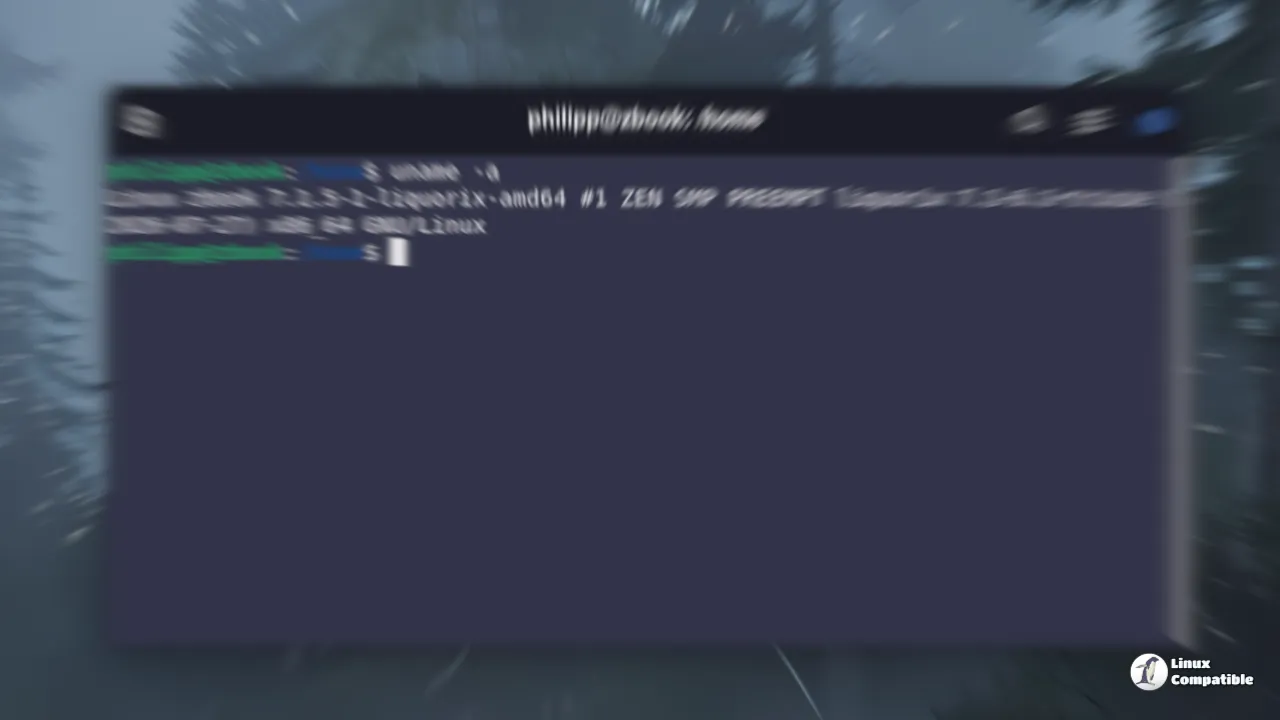
Think of this as a catch-up week in Liquorix's famously rapid cadence. Barrett tags roughly every few days to a week, tracking upstream stable point releases within days. And 7.2-23 is the clean-merge installment: he took the freshly stabilized Linux 7.2.14 and folded Liquorix's configuration and patchset into it, leaving all the low-latency tuning bolted on.
For the unfamiliar, Liquorix isn't an operating system or a radical fork. It's a kernel configuration layered on mainline Linux, packaged to quietly replace a distro's stock kernel on AMD64 hardware. Free and open-source, it targets the workloads where kernel scheduling quirks actually bite in daily use: gaming, live audio and video production, and a snappy interactive desktop.
The last ten tags tell the story. 7.2-22 was another plain merge, dated October 26. 7.2-21 shipped zswap v4 and zram v5 tweaks. 7.2-20 folded in the MGLRU Frequency Guided v4 memory tuning. 7.2-18 leaned on 17 separate zswap/zram patches. Then 7.2-23, and the pattern holds. Barrett merges upstream and layers in Liquorix-specific memory and scheduler work in between, and some weeks he just merges. Worth a glance if you've been watching the project.
The trade-off, and what's new under the hood
The trade-off here is deliberate. Liquorix chases tail latency, those occasional microsecond stalls that turn into audio dropouts, gaming hitches, and video-call freezes, and it buys that responsiveness at the cost of battery life and raw throughput. It's superb for a gaming desktop and far less useful for a battery-sipping laptop or a server. Barrett points users who need true hard real-time toward dedicated RT kernels, or PAZ0. However, at the same time, that aggressive preemption is exactly what can surface bugs fast, so it's not a set-it-and-forget-it install on anything mission-critical.
Then there's the base it rides on. Linux 7.2 went stable on August 16, 2026, per Linus Torvalds.
The one feature that actually lines up with Liquorix's whole pitch is cache-aware scheduling. The scheduler can now co-locate tasks sharing data within the same last-level cache domain, cutting cache misses on modern multi-die Intel and AMD chips. Layer on the ext4 and btrfs I/O boosts, a reported roughly 444-percent faster read of /proc/filesystems, and the MGLRU tweaks that reportedly lifted MongoDB throughput 30 to 100 percent, and you've got a cycle that complements the tuning well.
The rest isn't for everyone. USB4STREAM is a new Intel protocol for fast transfers over USB4 and Thunderbolt. AMDGPU gained initial HDMI 2.1 FRL support aimed at high-refresh displays. Those matter more to datacenters and monitors than to a gamer chasing consistent frame times, but they show the cycle had substance.
Barrett is a software developer based in Round Rock, Texas. He runs Liquorix alone and co-maintains the Zen Kernel. His GitHub bio is suitably understated: "Maintainer of Liquorix and co-maintainer to Zen Kernel." The project is community-funded, and he takes donations through Ko-fi.
Installing it is a one-liner. Pipe the install script from liquorix.net to sudo bash:
curl -s 'https://liquorix.net/install-liquorix.sh' | sudo bash
Keep in mind that you'll need to disable Secure Boot, and taking a system backup before installing is always wise with any custom kernel.
Head here to the Liquorix website for more information.


