Liquorix Linux Kernel 7.1-4 Released: Cleanup
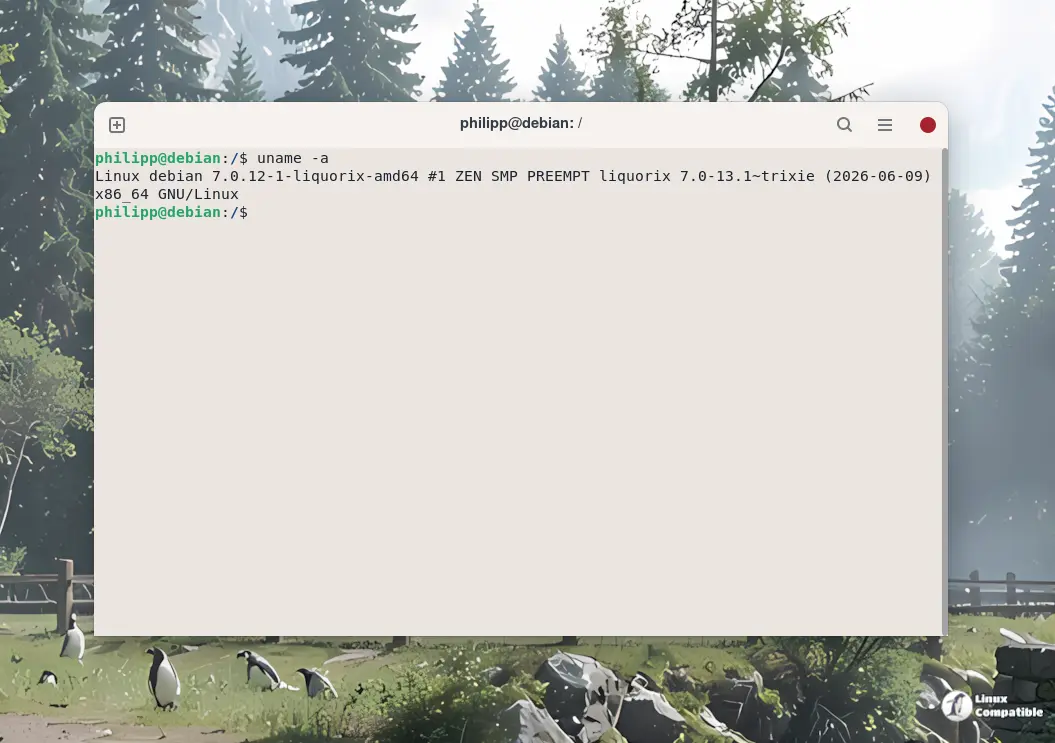
Liquorix has released version 7.1-4. Maintainer Steven Barrett, known as damentz, pushed the update on July 16, 2026. The package ships as linux-liquorix 7.1-4.1 based on Linux kernel 7.1.3. The package version bumps to 7.1.3-4.
If you know Liquorix, you know this project caters to a specific crowd. It's the kernel for desktop users who treat latency like a personal insult. Gamers, audio engineers, and multimedia pros flock here for low-latency compute and reduced frame-time deviations. The trade-off is real. You lose power efficiency. You sacrifice some throughput. But for interactivity, the tuning is aggressive.
Cutting the Dead Weight
The headline here is a major cleanup. Barrett has reverted six previously applied patches that are no longer relevant. This reduces the Liquorix patch delta against the vanilla kernel. That makes maintenance less painful. Debugging gets easier too.
The reverts include ACS override support. The current hardware and PCI stack no longer need that hack. Intel's remapped NVMe device support has made it into mainline. The stack conservation tweak for GCC is gone. Modern compilers handle it better on their own. Even the staggered spinup disablement for AHCI is dropped. Modern drive ecosystems don't need that legacy workaround.
Memory management got a scrub too. The kswapd early stop and the watermark boosting disablement are reverted. Memory behavior has changed upstream. These Liquorix-specific hacks are interfering with current tuning goals.
Maturing. That's the word. The project is stopping the accumulation of niche patches and relying more on upstream.
Project-C Takes the Wheel
Project-C integration is the other big move. This is the next-generation scheduling framework causing a stir in the Linux community. The 7.1 series includes extensive sync and fixups for Project-C compatibility.
You get TTWU optimizations for reduced latency. PSI is enabled by default. Wake affine optimizations help reduce cache thrashing. And the developers bound task walks in prio_balance() to mitigate hard freeze risks. This represents one of the most ambitious changes to Linux scheduling since CFS landed.
The Project-C scheduler handles mixed workloads better. For a kernel tuned for responsiveness, that's exactly where you want this code.
Availability and installation
Head to liquorix.net to grab the one-command install script. It works for Debian, Ubuntu, and Arch.
curl -s 'https://liquorix.net/install-liquorix.sh' | sudo bash
The tuning philosophy stays true to the root. Kyber is the default scheduler for multiqueue devices. BFQ handles single queue. The PDS process scheduler uses a 2ms timeslice. CPUFreq settings prioritize responsiveness with aggressive up thresholds. Split lock detection is off by default.


