Intel's Linux NPU Driver Adds "Nova Lake" Support Ahead of the Hardware
The v1.39.1 pre-release brings Intel's next-gen NPU to Linux well before the chips are actually on shelves.
Intel pushed a pre-release of its Linux NPU driver on Nov 19, and the lone line it flagged as the headline change comfortably points six months into the future. v1.39.1 is the newest build of the user-space stack that drives AI acceleration on Core Ultra laptops under Linux. Its single "Highlight" bullet is terse: "Added support for Nova Lake platform."That's a forward-looking call. Nova Lake is the codename for Intel's Core Ultra Series 4 family, and right now it's little more than a spec sheet and a launch window.The driver maps the upcoming silicon to a firmware family it calls NPU60xx, sitting at the top of Intel's generational numbering. Shipping that firmware before the chips are retail-ready is about as textbook a pre-enablement move as you'll see. It lets distro maintainers and developers validate the software stack before the machines actually hit stores.
What Nova Lake actually is
Nova Lake will first show up as the desktop "Nova Lake-S" line. Mobile variants follow later, per Intel's own cadence. It's built on the 18A process with the new Coyote Cove P-cores and Arctic Wolf E-cores, and the number people actually care about is the NPU. This is Intel's sixth generation of the thing, reportedly topping out at 74 TOPS. That blows past the 40 TOPS bar Microsoft demands for the "Copilot+" badge by a wide margin.
The desktop parts are also expected to reach up to 52 cores, switch to an LGA 1954 socket, and support DDR5-8000 memory. Launch lands in the second half of 2026. So this pre-release is really Intel pre-committing to the open-source side.
The rest of the stack
It isn't just the Nova Lake row. Intel also kept Ubuntu 26.04 LTS as an officially supported OS across the entire verified configuration matrix. It covers Meteor Lake, Arrow Lake, Lunar Lake, Panther Lake, Wildcat Lake, and now Nova Lake. The last stable tag is still v1.38.0, from Sept 11. Intel shipped v1.39.0-RC1 on Nov 10, then posted this pre-release nine days later. You get the picture: firmware beats features.
The user-space stack layers on top of the upstream IVPU kernel driver. It brings Level Zero up to v1.34.0, OpenVINO to 2026.4.1, and the NPU Compiler npu_ud_2026_44_rc1. Notably it sticks with the Compiler-In-Plugin model, re-enabled in the RC, compiling models at runtime instead of leaning on pre-compiled blobs. Keep in mind that this isn't a single binary you install. You're also pulling the Intel GPU driver at 26.40.40196.15 and libze1 1.34.0, both from the kobuk-team/intel-graphics PPA.
Intel ships .deb packages for Ubuntu only, GPG-signed since v1.22.0. Grab one of two archives, one for Ubuntu 24.04 and one for 26.04, then follow the official procedure: purge the old packages, extract the archive, install libtbb12, run dpkg -i, add your user to the render group, reboot. Confirm the driver took by checking ls /dev/accel/accel0 and grepping dmesg for intel_vpu messages. The packages carry GPG key fingerprint EA267657A608300C296B8F8AD52C9665A4077678, a small supply-chain guardrail worth remembering.
One thing worth flagging before you install this on production hardware. The NPU driver family has been linked to CVE-2026-20783, a denial-of-service rooted in an improper condition check in the firmware. The v1.39.1 notes don't mention it, so treat that as background rather than a confirmed fix. Check Intel's own security advisories before assuming this build clears it. If a release silently skips a known bug, that's arguably worse than admitting it exists.
All of which brings us to the bottom line. This release is about future-proofing, not today's machines. Adding Nova Lake ahead of a second-half-2026 launch while holding full Ubuntu coverage across the whole NPU lineup is Intel making sure the Linux AI stack is ready when the silicon ships. That said, it carries a Pre-release flag, so validate before rolling it out anywhere that matters. If you're running current-gen Core Ultra, you'll most likely see this land in stable packaging once v1.39.x fully matures
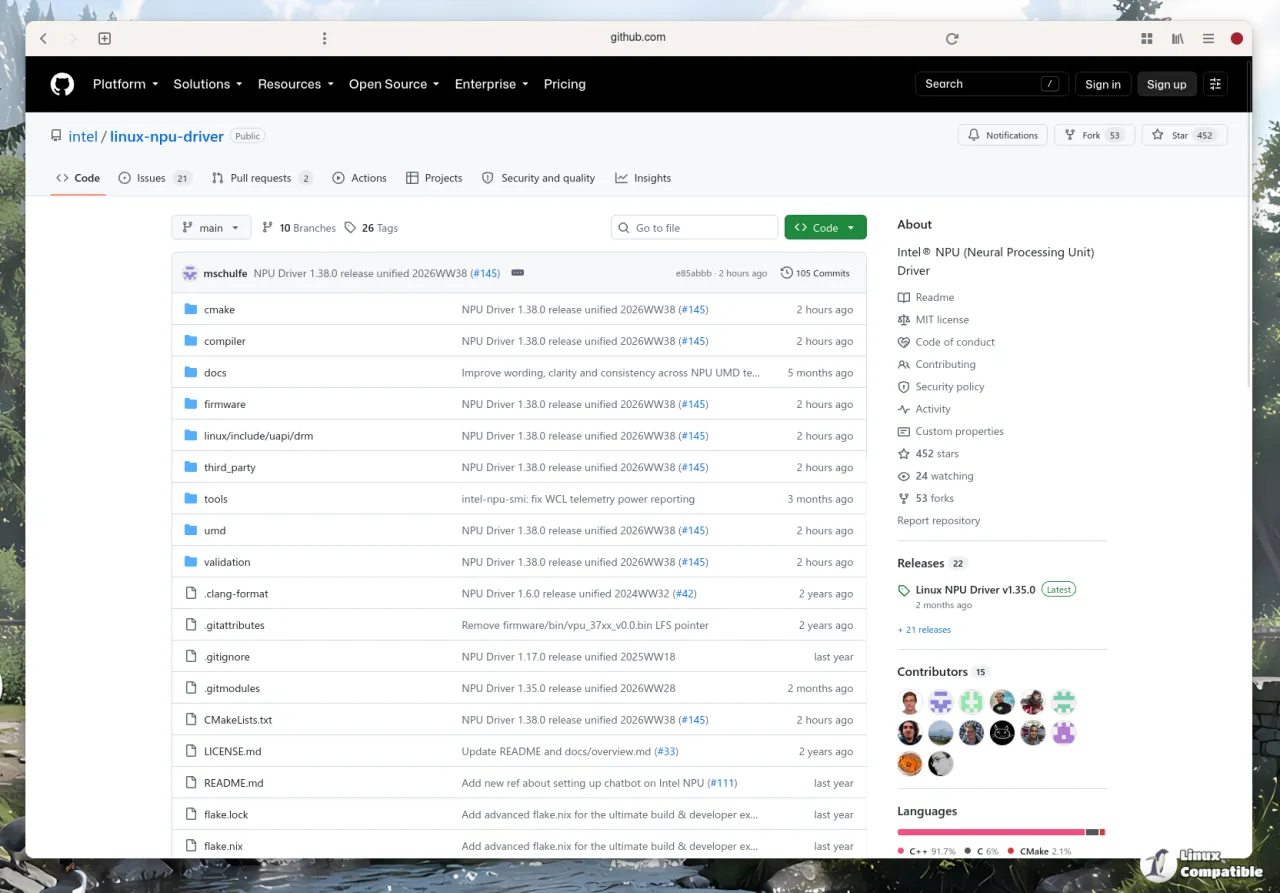
Head here to the GitHub release page.


