Godot 4.8 Beta 4 ships, and it might be the last beta before the stable release
The free, open-source engine settles into stabilization mode, with maintainers calling it a potential final chance to report bugs before the 4.8 launch.
Godot 4.8 beta 4 is out. It dropped on 18 November 2026, and the Godot Foundation says it may well be the final beta of the entire 4.8 cycle. That makes it less about shiny new features and more about a last sweep of fixes before the stable release locks in.
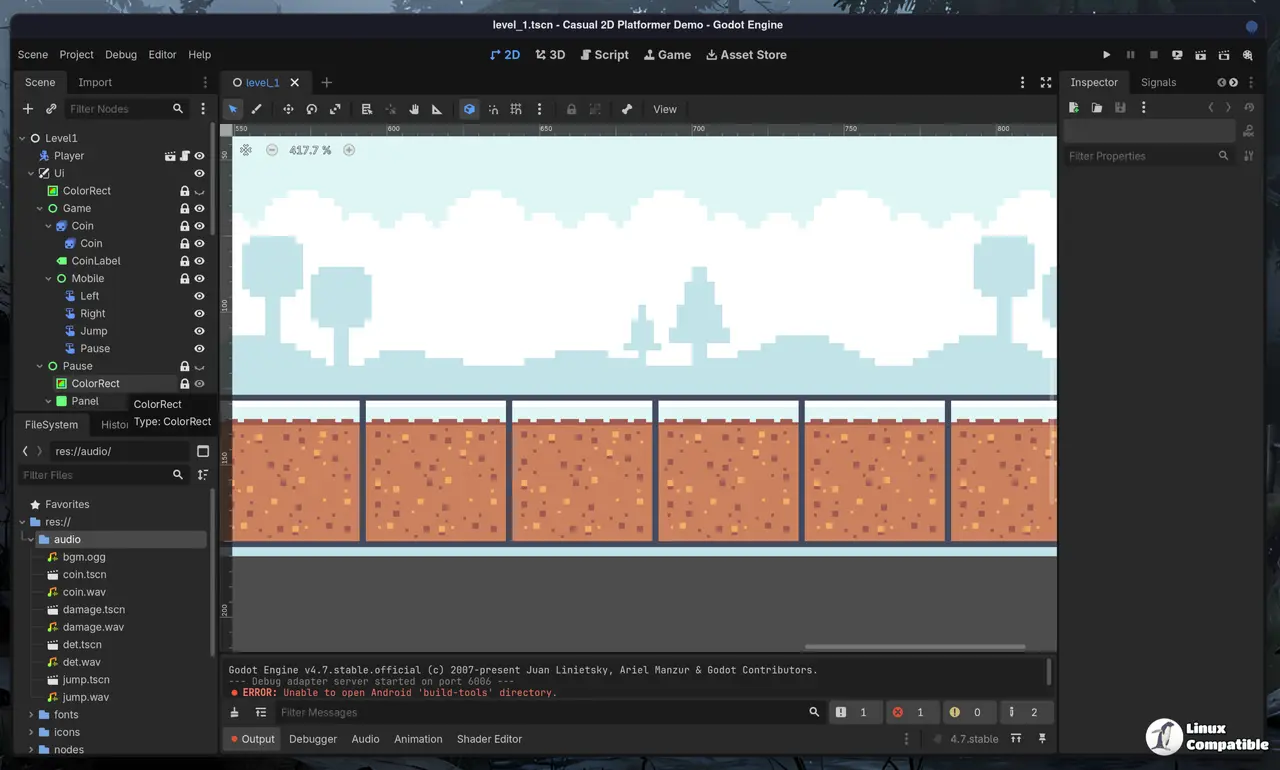
Not a long wait since the previous one. Beta 3 landed just nine days earlier, on 9 November. "We've already worked through the majority of remaining release blockers," Thaddeus Crews wrote in the announcement, flagging that beta 4 is "your last chance to report any new bugs/regressions." Crews authors the engine's dev-snapshot posts on behalf of the Foundation.
In practice, beta 4 is a cleanup pass. Instead of shipping new capabilities, the team went back and patched regressions, meaning the things that used to work quietly stopped working once newer features got folded in. The build was assembled by 58 contributors who pushed 123 fixes, and it compiles from commit b070e63b1.
Having followed these betas for a while, you can tell a release is winding down just by watching the fix counts. They fall from the hundreds into the dozens, and that's usually the sign the feature work is done. Beta 1 locked the 4.8 feature set back on 15 October, so beta 4 could be the closing act before the stable launch.
Godot itself is the cross-platform engine that's been around since 2014, built by Juan Linietsky and Ariel Manzur. Unlike a lot of the commercial engines people discuss, it ships under the MIT License, so you can use it for paid projects without handing over royalties. It's developed by a big volunteer community plus a small team of paid contributors funded by donations through the Godot Development Fund. It's an odd setup in an industry that thrives on lock-in, and it's worked out fine so far.
What beta 4 actually fixes
The changes here are deliberately small. Rendering and 3D got targeted fixes: Trail3D points were being scaled incorrectly, VoxelGI global illumination rendered outside certain bounds, and directional shadow culling was corrected for orthogonal cameras. Audio now starts playback paused when the player node can't process it, which avoids wasted work and random glitches.
The editor picked up a few quiet quality-of-life tweaks. The inspector clears when an object is invalidated, and GDScript's syntax highlighting now uses "Standard" mode while diagnostic underlines get offset so they stop overlapping adjacent lines.
The import pipeline also got tightened. The .mesh extension was finally recognized in the advanced import settings, and invalid dynamic fonts are now rejected instead of silently turning into broken assets. A Web build can now be served over HTTPS, and Windows exports should set up the Android SDK Manager without throwing errors.
Why 4.8 matters
Beta 4 is quiet, but it caps off what's shaping up to be one of the richest feature cycles in recent Godot history. Since the 4.7 stable release, 340 contributors have turned in 1,523 fixes for 4.8. That's a lot of patching.
The headline additions include multi-bounce ambient occlusion, a low-cost way to simulate interreflected shading so scenes don't look perpetually over-darkened. There's mip-level texture streaming to trim VRAM use on large 3D worlds, screen-space contact shadows borrowed from Bend Studios, and a native Trail3D node so you can make trailing effects without hand-rolling mesh and UV work.
The editor gets a genuine overhaul too. The main screen becomes a set of movable, floating docks, with new toolbars for the Game, 2D, and 3D panels. Fuzzy search across projects matches similar queries rather than exact ones, and a unified property system reportedly speeds up object access by about 1.6x while freeing roughly 12 megabytes of runtime RAM.
Physics gets non-allocating query methods to cut down on garbage collection, and it's now on Jolt Physics 5.6.0. XR support gains a reworked visionOS module plus hand-tracking and PSVR2 controller support on the Apple Vision Pro.
Then there are the breaking changes, which arrive in every major version whether anyone wants them or not. The .NET build now needs .NET 10 or newer, up from .NET 8. Undocumented enter_world callbacks were removed, scripts can no longer inherit their own inner classes, and a handful of editor, export, and physics behaviors shifted. You'll want to skim the "breaks compat" list before upgrading anything you actually ship.
Head here to download the release.


