Godot 4.8 Beta 2 Ships as the Free Engine Nears a Stable Release
Godot's most ambitious feature release in years narrows its focus to regression fixes, arriving after a massive 1,523-fix cycle.
Godot 4.8 beta 2 is here, and the point is that it isn't about new features. The Godot Foundation released the snapshot today, and the announcement is refreshingly straight about its goals. According to the post by Thaddeus Crews, beta 2 is less about adding tools than about not breaking the ones you already have.
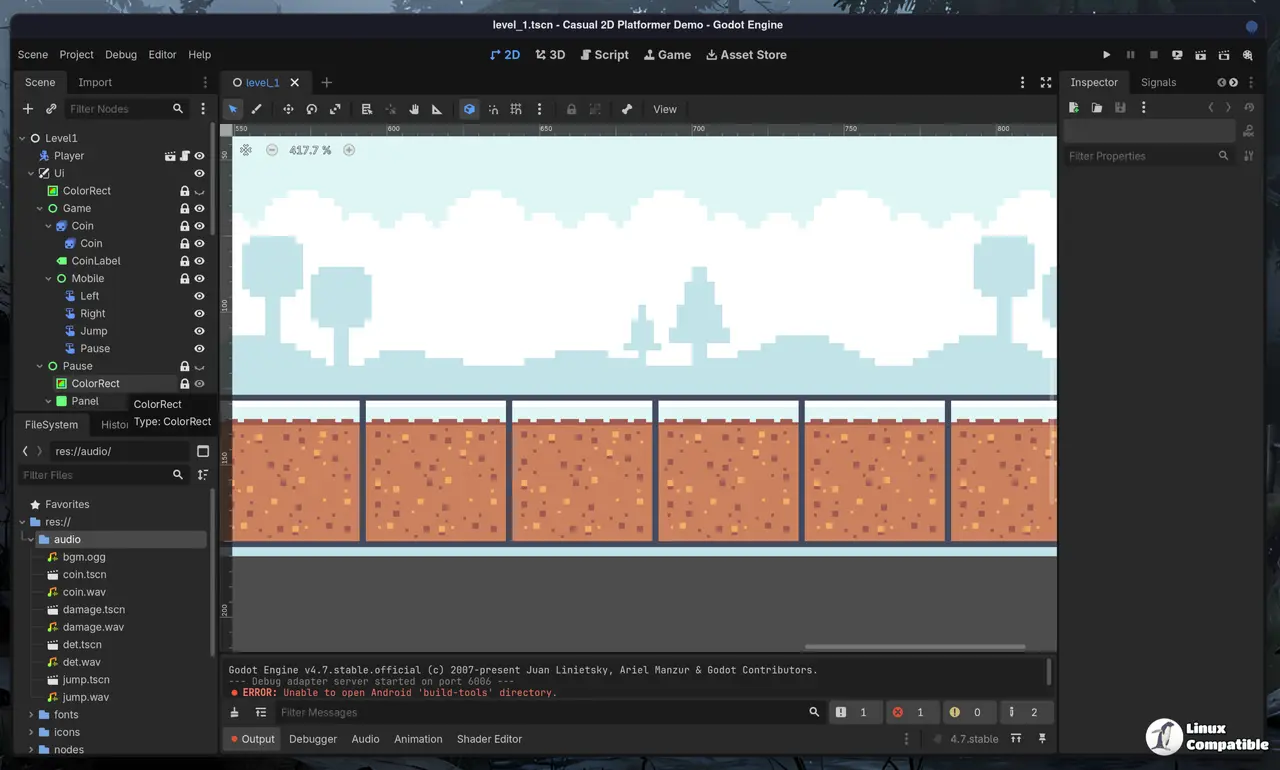
That framing matters more than you'd think. 4.8 is one of the single biggest feature updates the free engine has shipped in recent memory. It pulls in texture streaming, a redesigned editor, and rendering upgrades that have been requested for years. Getting all of that to cohere without snapping is a different problem entirely, and beta 2 exists to solve exactly that.
To situate things: Godot is a free, MIT-licensed cross-platform engine built by Juan Linietsky and Ariel Manzur, then carried by a global swarm of volunteers plus a handful of paid contributors kept afloat by donations. It goes head-to-head with Unity and Unreal Engine, but with no licensing fees, no runtime royalties, and no usage tracking baked in. That last bit is the reason adoption has climbed so sharply over the past few years, from indie prototypes to classroom tools.
The 4.8 cycle kicked off right after 4.7 went stable in mid-2026. Development ran through seven nightly dev snapshots, and by dev 7 the team declared feature freeze. Nothing new got integrated after that point. Effort flipped entirely to regressions and notable new bugs, beta 1 arrived on 15 October, and beta 2 landed two weeks later. Because the build is now feature-complete, these beta posts are deliberately lighter than the earlier dev updates. The job here is testing.
What beta 2 actually changes
Beta 2 only covers the gap between beta 1 and beta 2, so its scope is narrow on purpose. The team credits 59 contributors and 144 fixes for this snapshot, built from commit cafc17a19. The highlights read like a maintenance checklist.
You'll find fixes for incorrect undo data on bezier animation tracks, the Asset Store reverting to "most relevant" sorting, and the CI Python minimum bumped to 3.10. C# Debug builds now get an "Optimize for GodotSharp" toggle. The expression evaluator finally runs inside static functions again. And multiply blending in the Compatibility renderer is no longer painfully dark.
That last one is tiny on paper but something you actually feel mid-project.
Not every fix made the highlight reel. Full coverage runs across animation, core, GDScript autocompletion for loop variables, particle angle curves, and an update pushing Unicode files to version 18.0.0. Altogether the snapshot represents nearly 150 regression fixes caught over the two weeks since beta 1.
The full 4.8 feature set
Beta 2 won't tell you what 4.8 is really about. For that, you look at the feature round-up from beta 1, which summarized everything locked in during the seven dev snapshots. The scale is large: 340 contributors and 1,523 fixes since 4.7 stable.
The rendering upgrades are probably the headline. Multi-bounce ambient occlusion approximation gives you cheap interreflections without the over-darkened look most engines settle for, built on a 2016 SIGGRAPH technique now used across commercial engines. Directional lightmap specular finally lets baked light carry specular info close to real-time lighting, closing a gap with LightmapGI that's bothered people for years.
Mip-level texture streaming, long one of the most-requested features, loads only the mipmap level you actually need, which trims VRAM use in large 3D worlds. It isn't plug-and-play though: you have to enable a project setting and import textures as "Texture2D Streamed." As of right now, VRAM-hungry loading has been a real pain across the industry as memory and storage prices spike, so a feature that actively reduces VRAM is arguably more relevant now than it was a year ago.
The editor got a genuine redesign. Main screens became EditorDocks, so they're now closable and floatable, with refreshed toolbars for the Game, 2D, and 3D panels. You can move, resize, rotate, scale, and pivot nodes directly in the game view while testing a scene, full undo/redo included. Symbol renaming shipped at the very last minute before feature freeze, though it's experimental and opt-in.
A batch of quality-of-life touches rounds it out: drag-toggle visibility in the scene tree, pseudolocalization previews for localization testing, the ability to play scenes straight from the File System context menu, Ctrl+scroll zoom, a Clear Project Cache button, and auto-running the project upgrade tool on version updates.
Under the hood, property access sped up roughly 1.6x after moving property maps out of ClassDB into a unified GDType map, which also saves about 12MB of runtime RAM. Non-allocating physics query methods cut per-call allocations, and the physics engine moved to Jolt 5.6.0. Scripters get focused underlines that highlight only the offending part of a line instead of the whole thing, and C# now requires .NET 10, a jump from the .NET 8 minimum.
Platforms got their share too. Android gained an automated setup wizard and AAR export, macOS now ships separate architecture binaries for smaller downloads, and Windows got a fix for high-polling-rate mouse lag plus native desktop toasts. Screen-reader support via AccessKit expanded to iOS and Android. visionOS became a proper module, and the VisualShader editor picked up reusable node groups.
How to get it
Beta 2 is available right now across the usual platforms. Standard builds and .NET builds ship for Linux, macOS (arm64), and Windows (x64), with export templates in the download archive. There's a web editor build you can run straight in the browser, plus an XR editor for Meta headsets and an Android editor.
One catch worth flagging. The .NET build now wants .NET 10.0 or newer. If you're still on .NET 8, you'll need to update first.
The team also repeats its usual pre-release warning: beta software can corrupt projects or cause data loss. Back up often, or get on version control like Git before you start poking around.
Maintainers track regressions on a GitHub project board and specifically want testers to flag cases where something worked in an earlier 4.x release but broke now. That feedback is what tells the team whether stable is close. No official release date has been set. Community trackers estimate late 2026. Nothing's confirmed.
Godot stays funded through volunteers and donations, with the Godot Development Fund run through the Godot Foundation for anyone who wants to chip in. The interactive changelog lets you compare 4.8 against 4.7 directly, so head here to see the full picture.
Head here to download the release.


