GNOME 51.alpha lands, kicking off development toward A Coruña
The first unstable build of GNOME 51 is out now, officially starting the roadmap to the desktop's next major milestone. The release manager dropped the alpha tarballs on June 27, 2026, giving developers and testers something to break while the final code is still being hammered into shape. The stable release is locked for September 16, 2026.
GNOME 51 is codenamed A Coruña, named after the Spanish city that will host GUADEC 2026. The conference runs July 16–21. If you follow this project closely, you'll remember that A Coruña isn't just a random location pick. It's where the community gathers to decide what actually ships. That means the alpha we're looking at today is very much a working draft, not a preview of polish.
This cycle builds directly on top of GNOME 50 Tokyo, which shipped March 18 and stripped X11 support clean out. Tokyo made the desktop fully Wayland-only. GNOME 51 isn't trying to redo that architecture. Instead, the focus is squeezing better performance out of the existing setup, refining fractional scaling, and tightening up NVIDIA driver compatibility under Wayland. Display handling gets another pass, and the GTK ecosystem is getting incremental wins for HiDPI and ultrawide layouts.
On top of that, the build system is finally moving parts of the stack away from Autotools. gnome-user-docs has switched to Meson starting with this alpha. New build dependencies include xmllint and yelp-check. Tests now compile by default. It's a smaller shift than the Wayland transition, but it matters for downstream packagers who've been wrestling with inconsistent build setups for years.
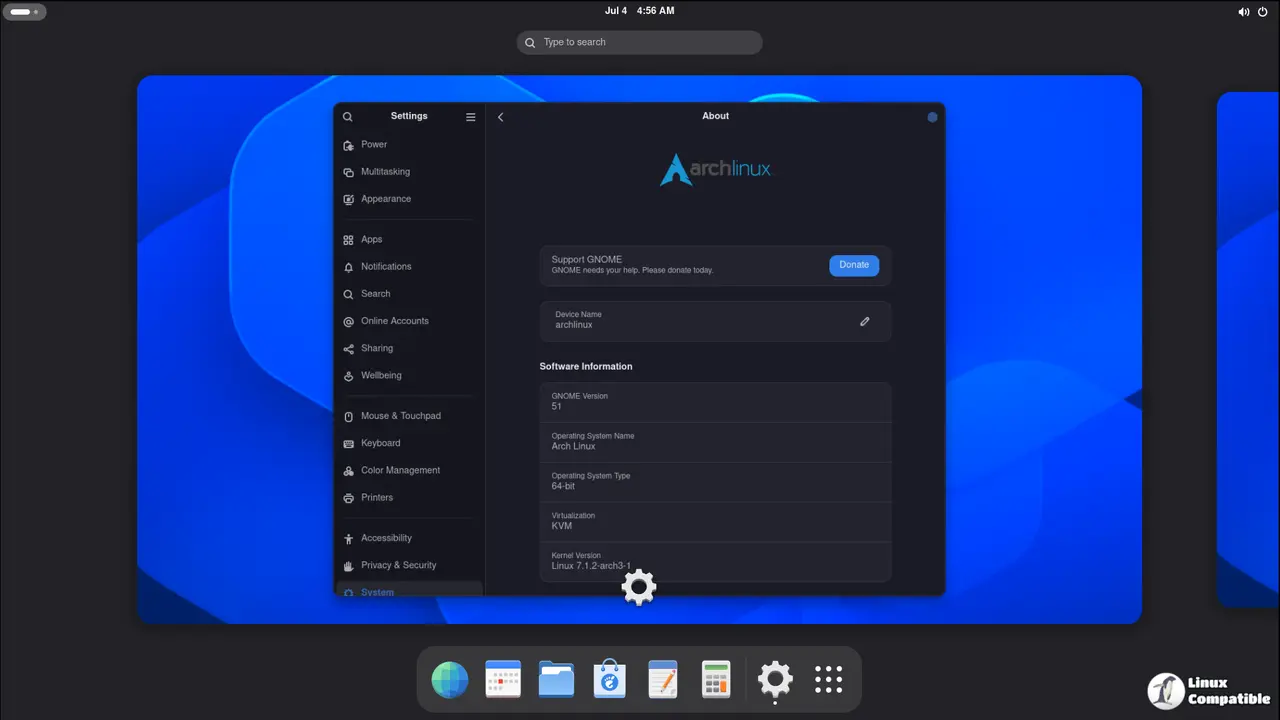
What actually shipped in the alpha
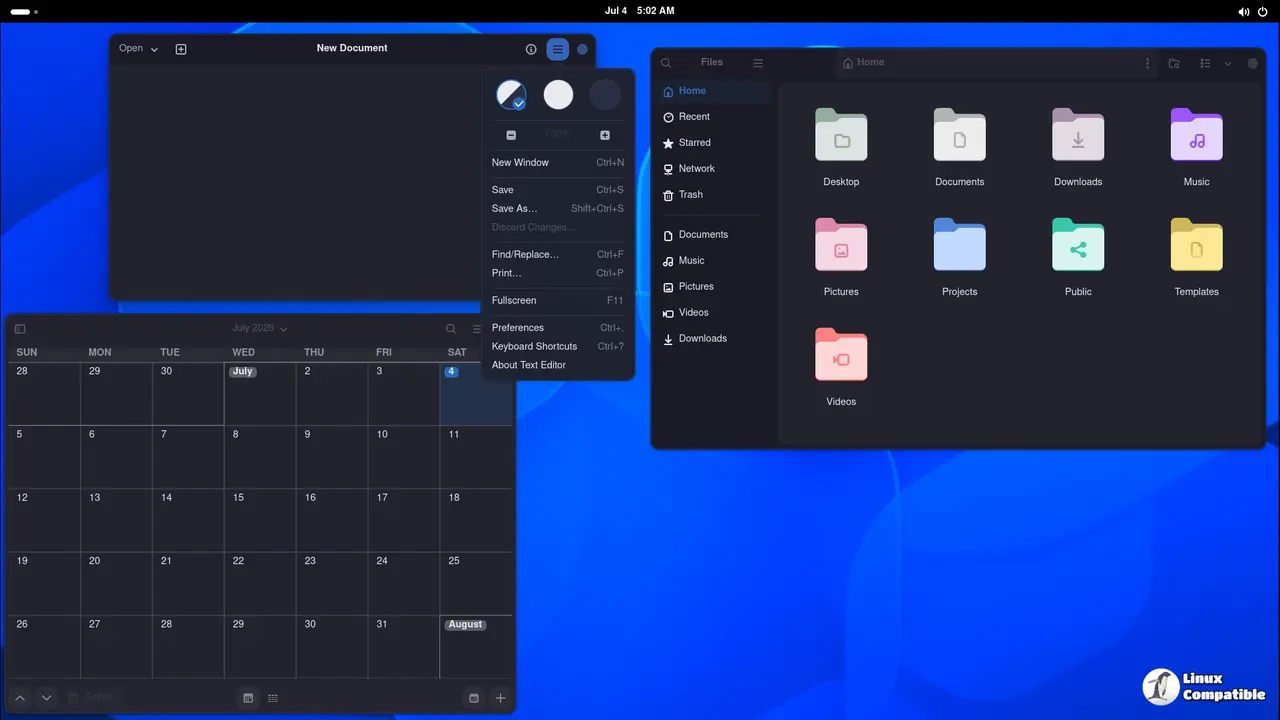
The tarball contains 73 updated core modules. gtk is at 4.23.2, libadwaita sits at 1.10.alpha, and gnome-shell is at 51.alpha. Several applications got notable changes. gnome-calendar switched to GListModels across its timeline and view layers, which should cut down on the data traffic with Evolution Data Server. nautilus has cleaner file validation, better thumbnail loading, and a few accessibility label fixes. epiphany keeps chugging along with crash fixes for the password manager and search engine handling.
Security work is scattered throughout. evolution-data-server tightened IMAP and POP3 input handling, added MIME nesting limits to prevent stack exhaustion, and sanitized SMTP parameters against command injection. glib-networking patched several OpenSSL return-value checks that could trigger out-of-bounds reads. It's the kind of maintenance that never makes headlines but keeps the stack from being a liability.
The alpha isn't meant for production machines. The release notes warn it directly: use it on test systems or in virtual machines only. You can grab a GNOME OS install image, compile components via the BuildStream snapshot, or point a Flatpak unstable runtime at the development branch.
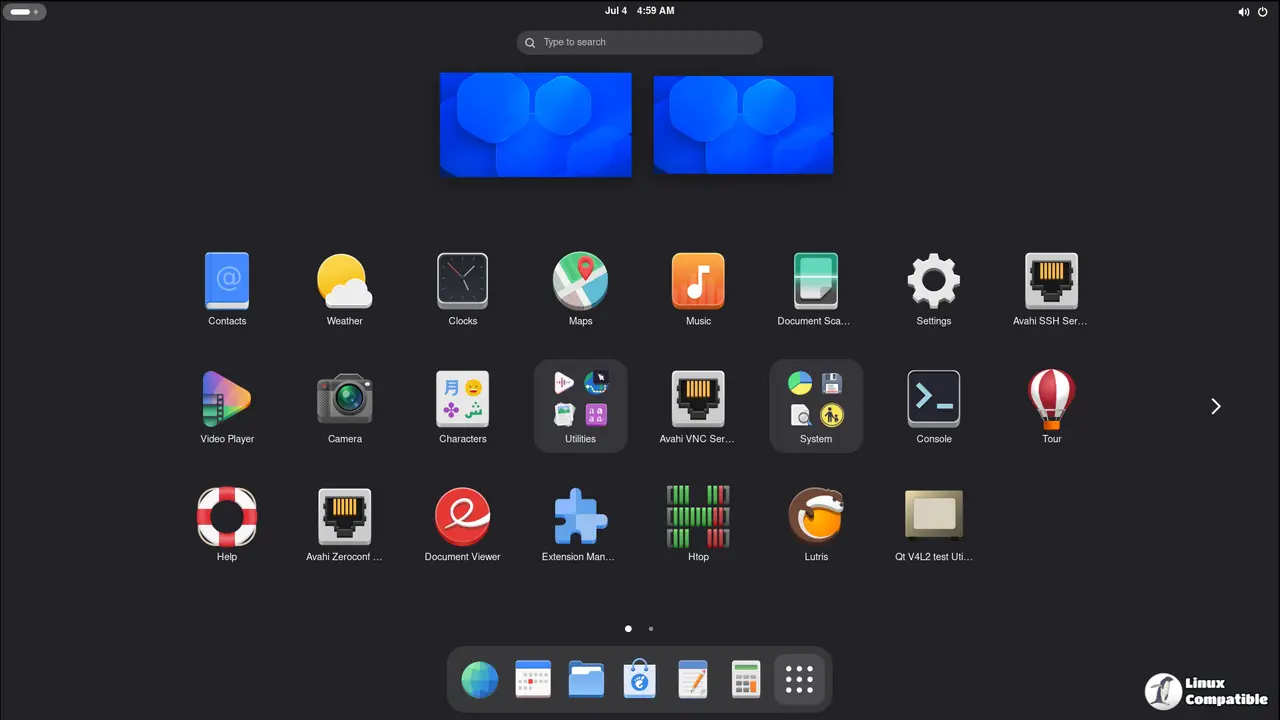
Distribution timelines follow the usual cadence. Fedora Workstation will land on Fedora 45 later in 2026. Ubuntu 26.10 will pick it up depending on which point release window catches the stable date. openSUSE Tumbleweed and Arch Linux typically roll with the stable build within days. Enterprise timelines vary, as they always do.
If you're tracking the freeze schedule, the API, ABI, feature, UI, and string announcement freezes all trigger August 1. That's when the code stops growing. The final string freeze comes August 22. After stable ships September 16, the first point release (51.1 stable tarballs) lands October 10.
GUADEC in A Coruña is two weeks away. Contributors will use that window to finalize priorities, lock down regressions, and push what's left into the release branch. The alpha we have now is where most of that work happens behind the scenes.


