Fwupd 2.1.10 ships with a metadata-spoofing fix and Synaptics touchpad support
Linux's go-to firmware updater got another round of hardening this week, and the headline change isn't the shiny new hardware support. Richard Hughes ("hughie") released fwupd 2.1.10 today, bringing a fix that stops tampered XML files from spoofing metadata trust, plus a wave of memory-safety and crash fixes. The lone new device is a Synaptics 96F1 touchpad.
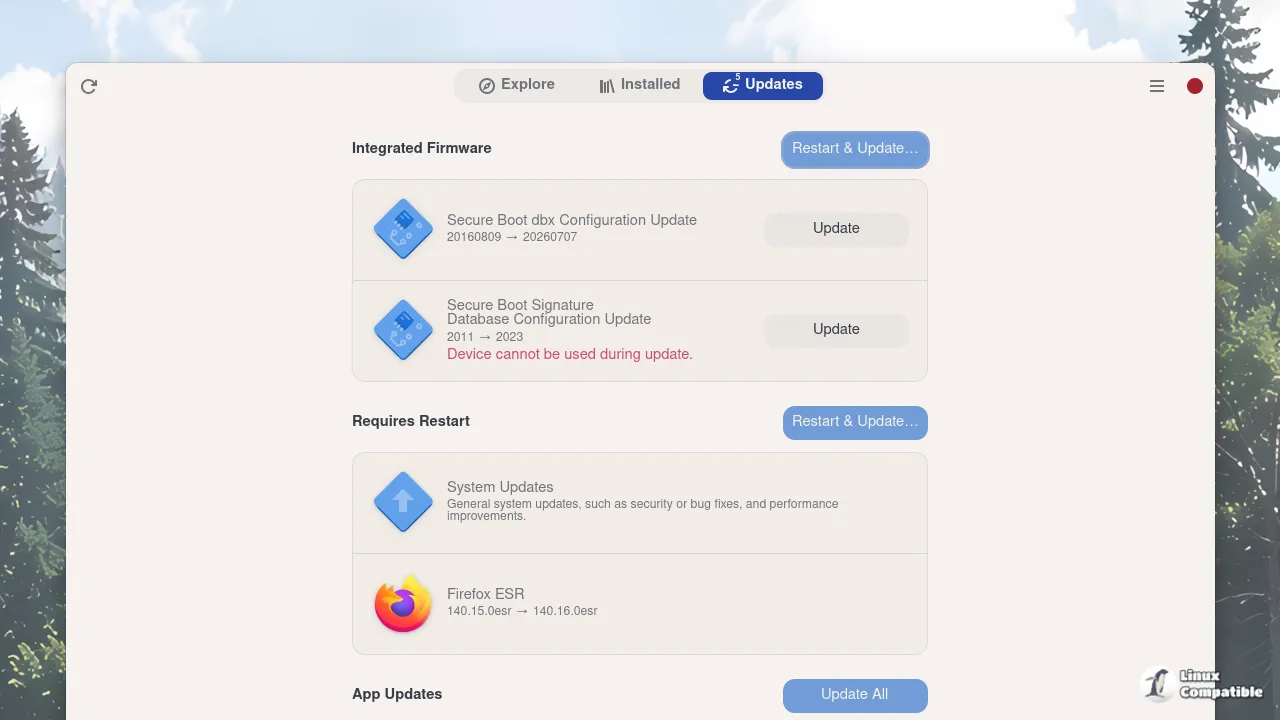
Fwupd is the thing that lets you update BIOS, TPM, SSD, and Thunderbolt firmware directly from Linux instead of rebooting into a Windows-only tool. It's written in C, licensed under LGPL v2.1, and Hughes first shipped it on March 17, 2015. It now sits at about 4,200 GitHub stars and quietly backs the firmware-update flows in GNOME Software, KDE Discover, and SteamOS.
The new-hardware story is small. Really. The only add in 2.1.10 is Synaptics' 96F1 capacitive touchpad, which NVIDIA acquired a while back (NVIDIA is also an fwupd premier sponsor, in case you're keeping score). Firmware for those pads can now roll through the Linux Vendor Firmware Service like everything else.
The metadata fix is the story
Here's the line that matters, straight from Hughes' release notes: "Do not allow modified XML files to spoof metadata trust."
Fwupd trusts signed XML files that vendors push through the LVFS to decide whether a firmware package is legit before you install it. Break that trust and an attacker can trick the client into accepting rogue firmware. That's a supply-chain attack aimed squarely at the update mechanism itself, so closing the gap protects every vendor and user on the service, not just one device.
It's a small change to read but a meaningful one to have. The netlink bounds check that landed alongside it does the same kind of thing, bounding string reads by attribute length. Unbounded reads are the classic recipe for out-of-bounds reads and information disclosure in a long-running daemon.
Fwupd is a big codebase. This 2.1.10 tag sits 1,272 commits ahead on main, which says a lot about how fast this thing moves between "stable" cuts. Most of that churn comes from specialists who know a specific vendor or bus type by heart, and it all rides through automated tests.
The rest of the list is exactly the low-level correctness work you'd expect from a tool that speaks dozens of protocols. There's TPM chunk-size fixes, NVMe version reporting fixes, Redfish IPv6 formatting, and Intel GSC PCI power policy restoration after updates. It even fixes the INFO UF2.TXT read check for USB-FAT bootloaders.
A few changes are about behavior rather than hardware. Fwupd now filters its Message Of The Day output to supported entries only, which cuts both noise and information leakage. It also stops auto-starting Bluez when setting up the backend, so it won't spawn your Bluetooth daemon just because it feels like it.
Then there's the crash work. A benign empty HTTP body used to be able to take down the local client. Jabra headset paths reported their errors backwards. Huddly conferencing devices that return failures now set a proper error. Not all glamorous, but a crash is a crash.
The previous 2.1.9 release did the heavy lifting: a heap buffer overflow in Nordic HID validation, an out-of-bounds read in DFOTA modem parsing, a path traversal in firmware backup, and a fwupd domain check bypass under Qubes. So 2.1.10 fits a pattern. This whole 2.1 line has been steadily turning fwupd into something harder to subvert, and a release like this is how that trust gets maintained.
Head here to the GitHub release page.


