Epic Games shipped its first-ever native Linux launcher today, available today as an optional "Preview" across Windows, macOS, and Linux. The faster, lighter client was built partly with AI tooling in a self-deprecating "vibe coded" project that engineers still supervised. It officially supports Ubuntu 22.04+, Fedora 43+, and Debian 12+, running Windows games through GE-Proton while keeping the old launcher fully intact. Meanwhile, Epic outlined an ambitious plan to bring Fortnite to Linux via its rebuilt EAC Linux v2 anti-cheat, though the demanding security requirements leave Steam Deck and SteamOS behind for now.
Epic Games ships its first-ever native Linux launcher, and quietly bets on Fortnite getting there
Epic Games just rolled out its first native Linux build of the Epic Games Launcher. The store team released it today, in optional "Preview" form across Linux, Windows, and macOS. It's faster, lighter, and picked up a fresh look in the process.
That's the headline. The bigger story came an hour later. The same morning, CEO Tim Sweeney announced a sweeping pivot toward AI-assisted development, and Epic didn't hide how it actually built the new client. Its announcement post read plainly: "Programming is hard. So, instead of doing that, we vibe coded a new Epic Games Launcher that's way faster and more responsive than the current one."
The word "vibe" is a self-deprecating joke. Epic later clarified that engineers still supervised every line. Still, it landed the same week Bloomberg reported an unannounced Disney title told to expect "no more hand-written code." The timing is hard to ignore.
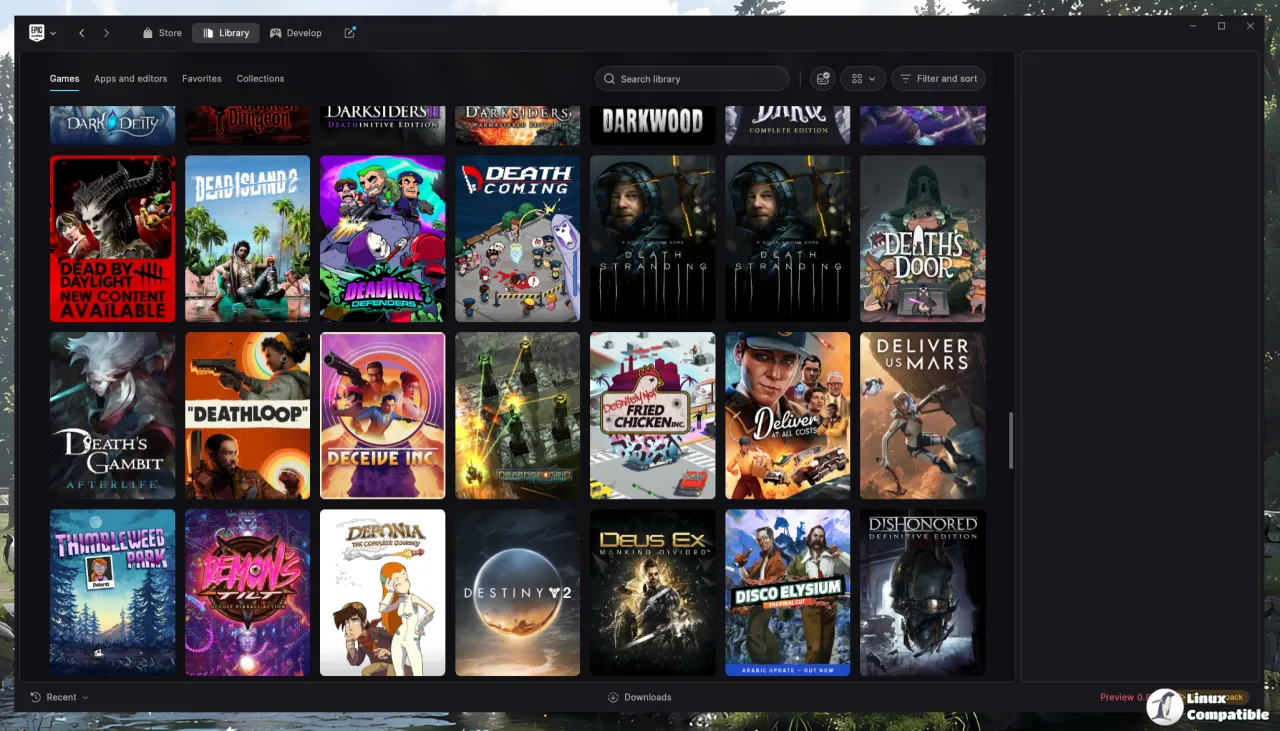
What you're actually getting
The new launcher is available today as an optional Preview on all three platforms. Epic keeps stressing it's a Preview, not the finished product. The team's own tagline: "Think of it as a speedboat and not a yacht." In other words, this first cut leans on a fast, responsive core and skips the bells and whistles.
Keep in mind that the old launcher isn't going anywhere. It still works, there's no forced migration, and Epic gave no hard deadline for when you'd have to switch over.
Feature-wise the Preview mostly chases speed and a cleaner library. Cold starts launch faster, store-to-library navigation snaps along, and background system load reportedly drops lower. There's also party and voice chat that spans Fortnite, the store, and the Epic app.
If you've ever complained the store lacks a basic shopping cart, that ship is finally sailing. The cart carries over, along with purchased games, installed games, cloud saves, and progress — everything ties to your account. Each title now gets its own page showing status, activity, and play controls. You can wire in existing PC libraries too, so your whole collection shows up in one place.
Download monitoring gets a facelift as well. It tracks read and write speeds alongside download rates, and lets you juggle active, queued, scheduled, and failed jobs from a single screen.
The Linux bet, and the Fortnite gamble
Epic is officially backing three distro families, with newer versions also in scope. Ubuntu starts at 22.04 LTS. Fedora needs 43 or newer. Debian sits at 12 or newer. Other distros may work, but Epic won't test or support anything off that list.
It already runs Windows games too, but only through Proton. Under the hood the build leans on GE-Proton and drops its runtime into a Flatpak-style path, com.epicgames.eglv2. So it's genuinely native on Linux while using Proton to carry Windows-only titles, a pragmatic middle step ahead of true native ports.
The boldest claim is that Epic plans to bring Fortnite to Linux through the new launcher. That isn't happening today, and no timeline was given. The blocker has always been anti-cheat.
Epic's Easy Anti-Cheat already supports Linux, but only in a userspace mode that disables several security features. Back in February 2022, Sweeney said Fortnite couldn't come to Linux because Epic lacked confidence it could fight cheating at scale across Linux's many kernel configurations. Linux is fragmented, unlike Windows, which offers a single kernel to lock down.
The fix is EAC Linux v2, a from-scratch rebuild aiming for Windows-parity protection. The plan leans on signed kernels, signed kernel modules, and secure boot with attestation. Epic wants to work with distro maintainers so more distros meet those requirements by default, and it's reaching out to community leaders, including a panel discussion co-hosted with Fedora Project Leader Jef Spatela.
Epic will pilot EAC v2 in Fortnite first, refine based on live use, then open it to other developers.
The required security stack is demanding. Steam Deck and SteamOS don't currently support the features EAC v2 needs, though Epic says it's actively talking to Valve and hopes to support the handheld later. Fortnite will arrive through Epic's launcher, but Epic has no plans to bring it to Steam.
Building it with AI
The launcher took "most of this year" to build, according to Martin Keely, Epic's VP and GM of the store. Keely said the team had agents write and review all the code, used AI to replicate core functionality, but that engineers managed and supervised the entire process. The "vibe coded" line was tongue-in-cheek, even if Epic insists real oversight was in the mix.
The reveal came a day after Sweeney announced a "huge pivot" toward AI acceleration, framed as letting people build more and better things rather than doing the same work with fewer people. Epic laid off more than 1,000 staffers in March 2026; when pressed about AI and headcount then, Sweeney insisted the cuts weren't related to the shift. Commenters connected the dots anyway.
Reaction to "vibe coded" was mixed. Some read it as a poor look for a multi-billion-dollar studio. Others pointed out the whole announcement dripped with irony, the speedboat, the shopping cart, and was clearly a joke. Notably, commenters leaned toward praising the EAC v2 approach as proof that Epic still employs real engineers, with one framing it as a win against spyware and backdooring in games.
What's next
Epic says the Preview is just the beginning. It plans to keep shipping updates and optimizations until the client hits feature parity and feels stable enough to widen the rollout. You can follow progress and leave feedback on Epic's Discord community server and the Epic Developer Community forums.
Head here to the Epic Games Store announcement and here to the technical anti-cheat blog post.


